
Gallery guide: Generation 2026
Generation is an exhibition, held every three years at Amos Rex, of the work of artists aged 15-23. It is a unique snapshot of an emerging generation of creative young people, many of whom are exhibiting their work in public for the first time.
The participants are chosen by a jury, including the director of Amos Rex, artists from previous Generation exhibitions and outside experts. The only selection criteria are that you must be in the age range and have a connection to Finland. There are no creative restrictions.
Generation 2026 is the fourth edition of the exhibition.
Snowdrop Áine-Fae Belmont | Duc Anh (Ducky) Cong & Nguyet Minh Hoang | Erial Dolores | Tara Haikka | Aarne Heikura | Rosa Helenius | Rauha Helin | Eeli Hilme | Eino Intosalmi | Eevi Kaila | Elli Kavén | Tekla Kokkonen | Paavo Kärki | Konsta Laaksosaari | Emilia Lehikoinen | Hafsa Mahamed | Stanislava Ovchinnikova | Sofia Parland & Erix Aboltins | Lena Patta | Veera Pelkonen | Arvi Penttilä | Aarni Pieski, Eeva Airavaara, Lilja Kervinen & Lucian Lovén | Gabriella Presnal | Esteri Punin, Elsa Kerava, Aaro Uusitalo, Iiris Itäkannas & Joanna Linnapuomi | Ly Rahtu | Rafael Rainti | Viola Rauta | Tapio Rokkonen | Elli Roth | Lari Rouvinen | Oiva Rytkönen | Melissa Sende | Nóra Somos | Taika Sorjonen | Alva Strang & Rafael Denisov | Leo Terävä & Aliina Kemppainen | tibs | Vilma Tietäväinen | Aura Tiira | Veikka “pvp” Toivari | Sani Tolonen | Victoria Torboli | Siiri Torvinen | Siiri Turpeinen | Johan Urrutia | Iida Viio | Sofia Vuorenmaa | Helmi Westerlund | xyny | Mira Özdemir
Snowdrop Áine-Fae Belmont
Snowdrop Áine-Fae Belmont is a multimedia artist who creates immersive experiences that always leave the audience changed. In 2024, they began their studies at The Academy of Fine Arts in Helsinki. Belmont has presented their work at Nuori Taide 2025, Finnkino, Maa-Tila gallery, Sibelius Academy, Helsinki Academy of Fine Arts, and many other venues. They won first place in the Digital Big Screen 360° competition in 2024.
A version of the work performed in Generation 2026 was presented at the 2024 edition of PAU festival.
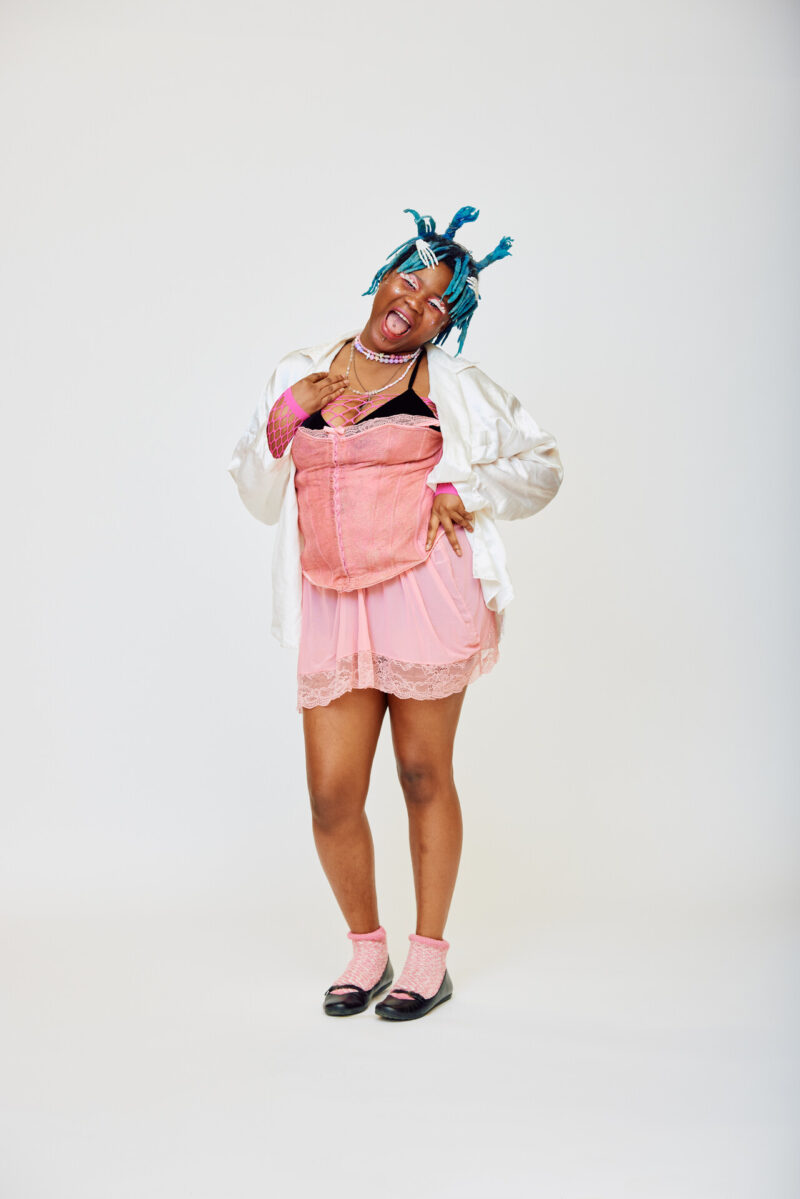
Dance of Silence
2026, perfomance
”Dance of Silence is a performance that invites you to dance with silence and space.
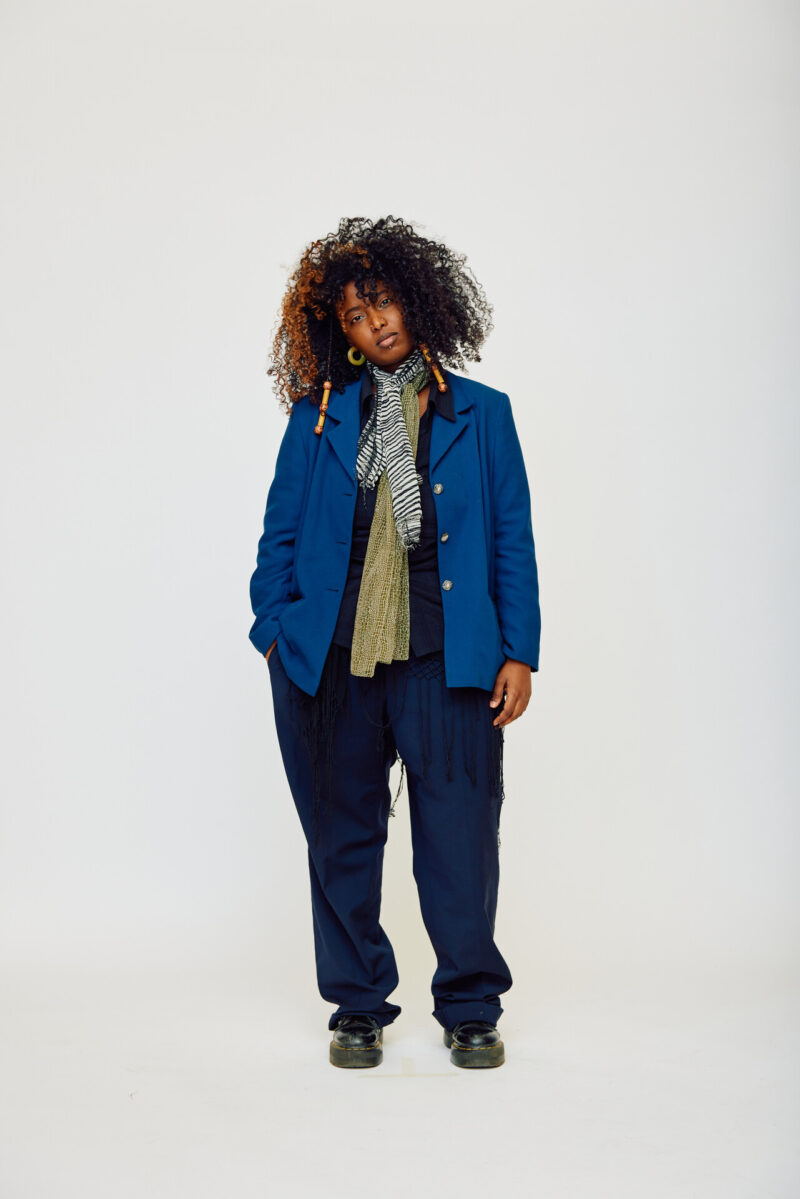
The artist dances quietly through the museum, the only sound coming from the beads they wear. They are in a meditative state as they move, seemingly unaware of you, yet you are a part of the work. You are welcome to follow the dance, but remember to stay silent and present.
I explore my cultural heritage as an Ijaw person, a minority tribe in Nigeria, through creating clothing and dancing Ijaw dance steps. The crocheted, beaded outfit is inspired by my heritage and accessorised with traditional pieces.”
Duc Anh (Ducky) Cong & Nguyet Minh Hoang
Duc Anh (Ducky) Cong and Nguyet Minh Hoang first met at a high school music club in Hanoi. Their friendship and shared passion for art grew as they started creating digital artworks together. After graduating high school, they left for art universities on different continents but stayed in touch through late-night calls. As high school memories blur, their drive remains the same: blending Vietnamese culture with design, stories and visuals informed by personal experience.
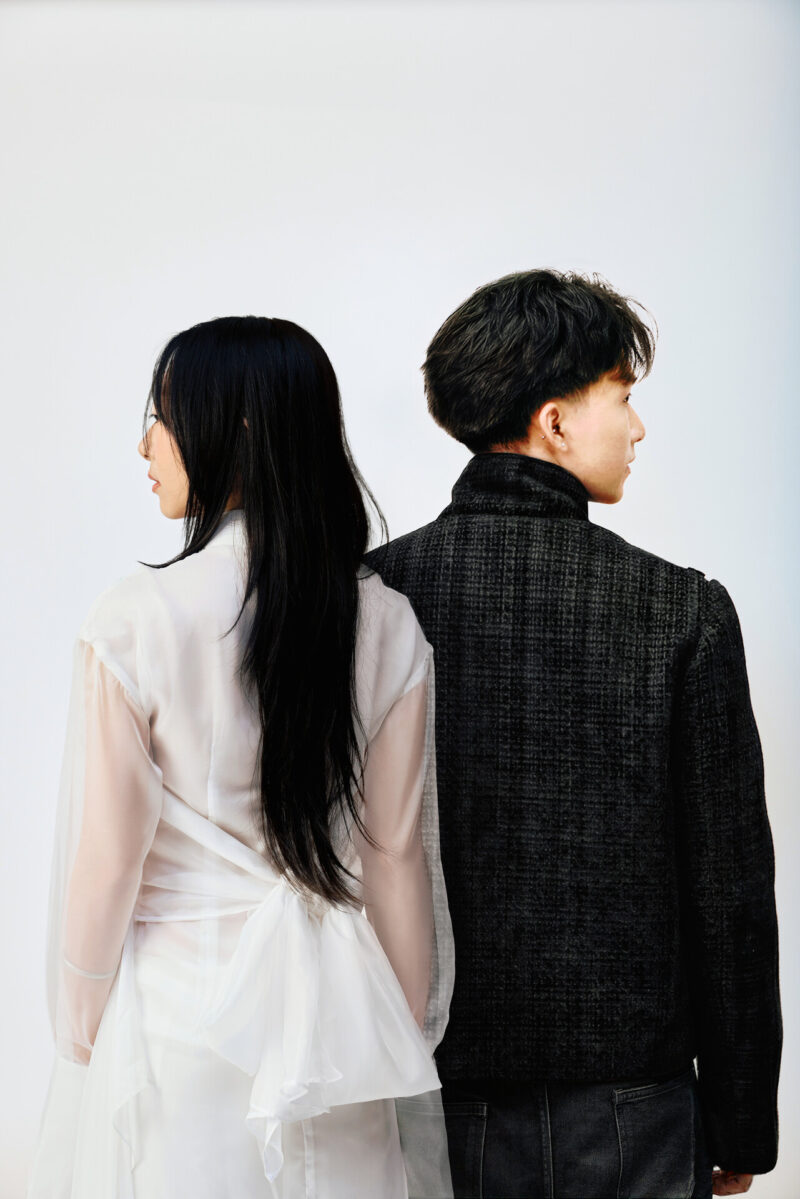
Tết – Vietnamese Lunar New Year, Reimagined
2022-2026, participatory installation
”The series arose from our wish to celebrate and share the traditions we grew up with.
In the lunar calendar, time is told through a cycle of twelve animals, each year carrying the spirit of the rat, buffalo, tiger, cat, dragon, snake, horse, goat, monkey, rooster, dog or pig. This cycle is paired with the ten heavenly stems (Giáp, Ất, Bính, Đinh, Mậu, Kỷ, Canh, Tân, Nhâm and Quý), each connected to yin and yang and to the five elements (metal, wood, water, fire and earth). Together, they form a system that shapes how we understand time, direction and the nature of all things.
Through digital art we reimagine the traditions, fashions and architecture of Vietnam during Tet, inviting you to step into its festive rhythm and timeless beauty.”
Erial Dolores
Erial Dolores is a wasteland. Confused, curious and cheap. They are an electronic musician and interdisciplinary artist trying to find a place in the world. They work with found media and objects; remixing, re-signifying and resonating.
Erial, Daniel, James.
The artist bears many masks and names.
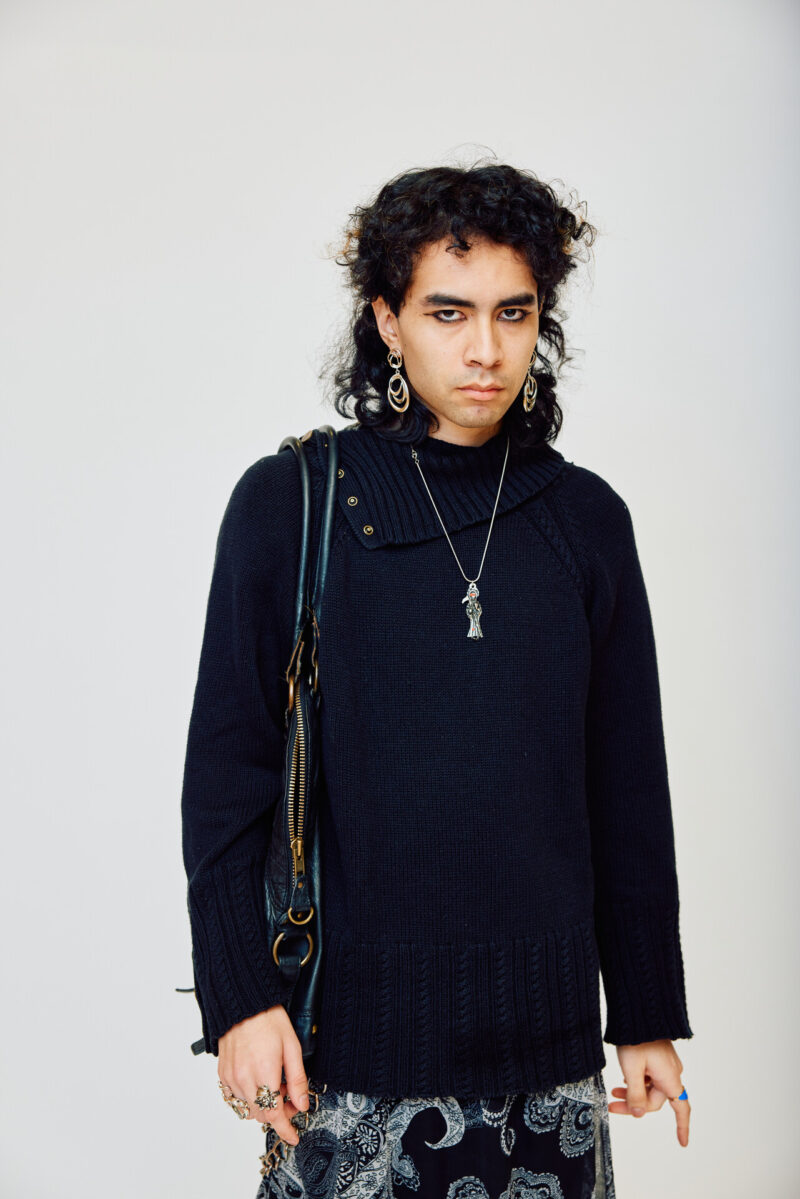
hechizo
2025–2026, sound installation
”Art is what we turn to when words and thoughts are not enough to understand ourselves.
I am afraid of the future, the present and the trash. As a species, we have poisoned the waters in search of conceptual greatness. Someone washes their clothes in that poisoned water. Someone’s broken phone is another’s chance to send a job application.
We throw things away in hubris and expect them to be forgotten.
hechizo is anxiety. It is the nagging feeling that the trash is alive, and at some point, it is going to bite back. ”
Tara Haikka
A story is a message and comedy its sharpened tongue. Serious topics do not lose significance when clad in laughs, quite the opposite, in fact – they become more approachable, more human, part of the everyday.
Tara Haikka is a scriptwriter and director who uses humour as a key tool in her films to break down difficult topics and societal themes. To Haikka, a film is a shared experience that belongs to everyone. Reaching the audience is not a compromise, it’s the goal: without an audience, a story cannot come to life.
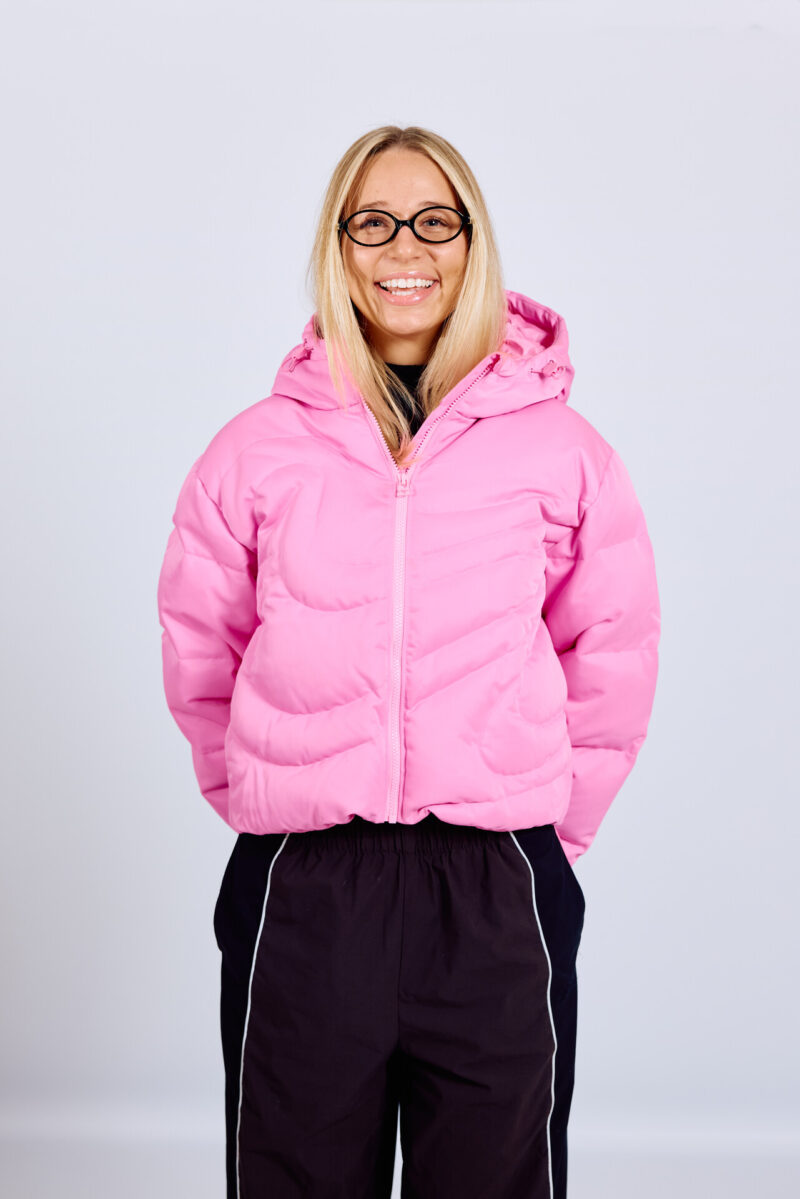
Päivänkakkara
2024–2025, video
”Three women, strangers until that point, meet in a forest and to their surprise discover that they share the same secret.
A couple of years ago, a young man asked me if I’d ever farted. The question was naive, but my answer – “of course not” – revealed something deeper. Why was I denying something so human?
Päivänkakkara is a film about shame, womanhood and the power of community.”
Aarne Heikura
Aarne Heikura lives in Helsinki, where he is pursuing a degree in landscape architecture. In his artistic work he explores themes of mundanity, ugliness, naivety, and imagined futures. Aarne is drawn to observing, borrowing, reusing, and flipping things on their head.
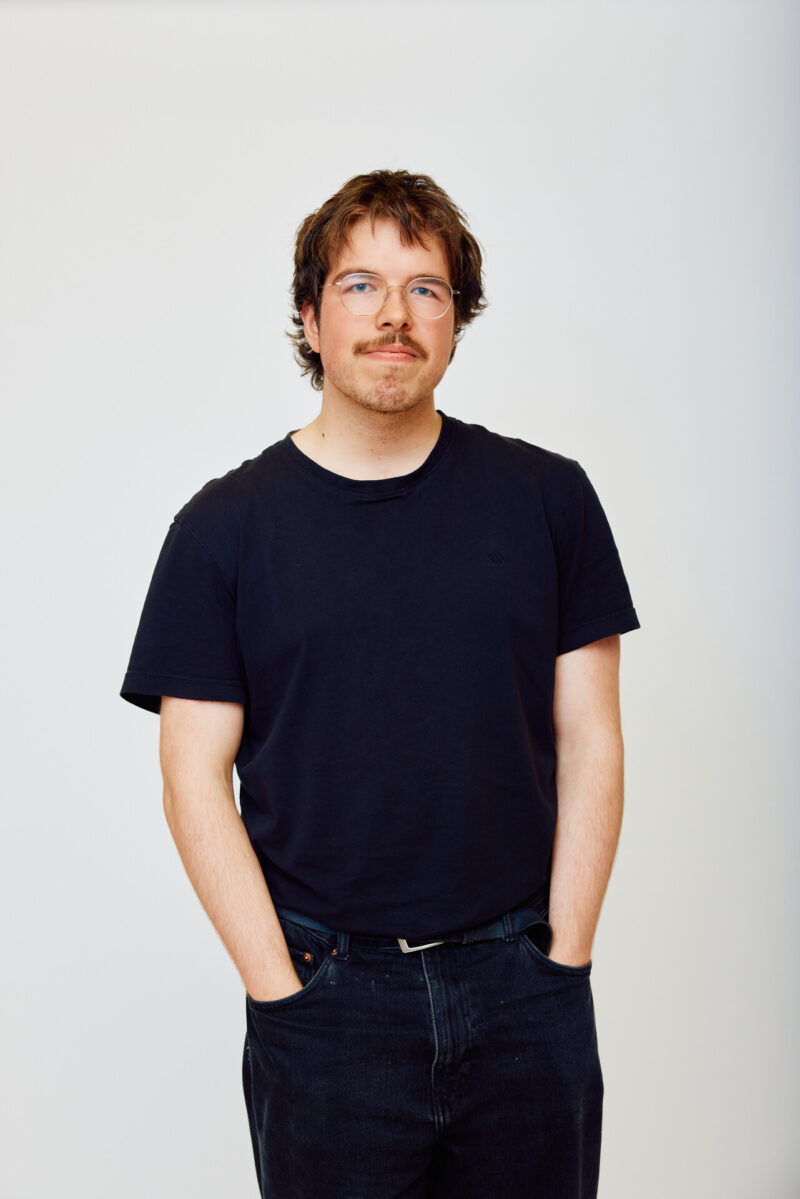
Have a seat
2025–2026, sculpture installation
”Some places invite, and some push away. I first encountered hostile design as a child at a public transport stop in my hometown. Since then, the use of power and its manifestations in the public sphere have continued to fascinate me.
With this series of uncomfortable chairs, I wanted to explore the disillusionment we experience when we become aware of signs that we are deliberately unwelcome in a place. To observe human curiosity towards violence and the general topic of discomfort, both in the physical and psychological sense. I like looking at and using humour as a tool for revealing something in a new light.”
Rosa Helenius
Exploration of big, complex emotions, both visually and through storytelling, is the guiding force behind Helenius’s artistic work. Their pieces are based on their own experiences and thoughts, which they process primarily through drawing and painting. Their current working practices also span ceramics and animation, which has proven particularly useful in illustrating their own inner world. Key to Helenius’s art is experimentation with and study of techniques and materials, as well as a desire to find new means of self-expression.
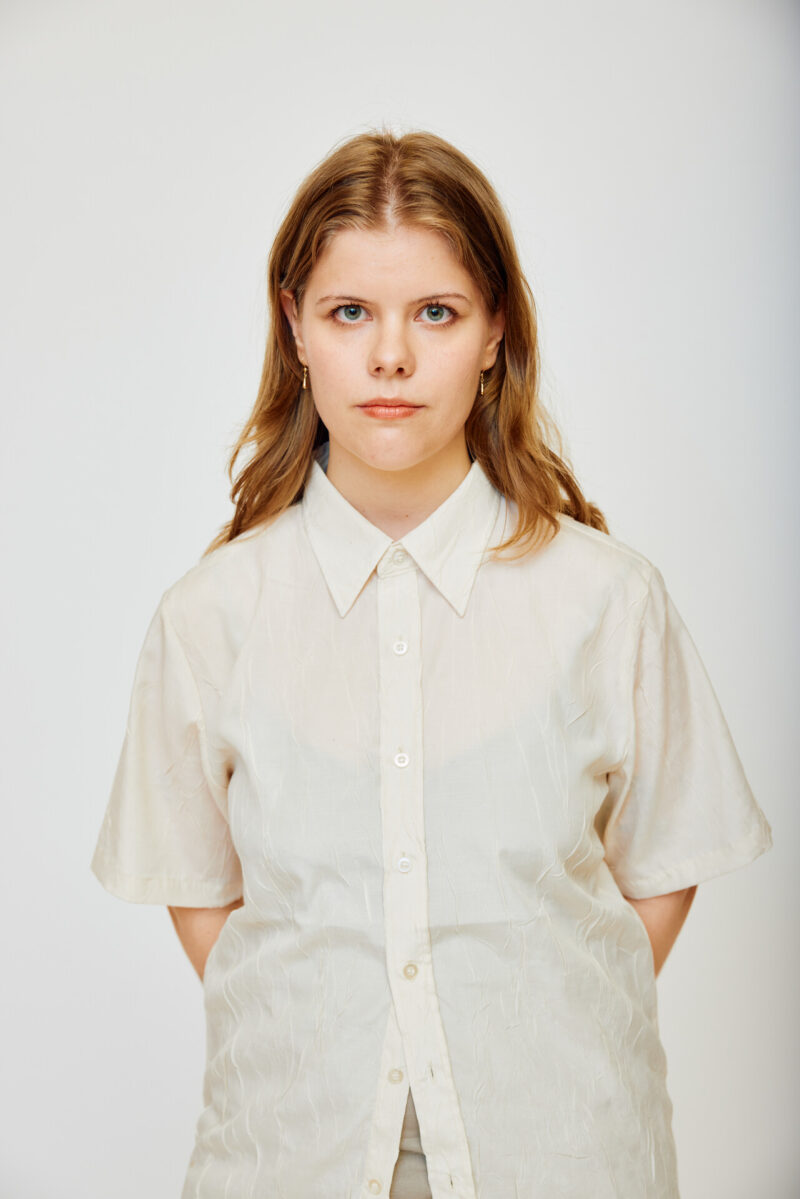
Muutokset (Changes)
2024, ceramics installation
”Muutokset forms part of the bachelor’s thesis for my design studies. The idea was to combine two of my interests: animation and ceramics. What happens if you see ceramics as a paper-like base and approach it from the perspective of traditional 2D animation? Engravings on tiles and glaze changes create the animation.
The unpredictability that is characteristic of ceramics forces us to relinquish control and takes on the role of storyteller, bringing change and texture to the animation. The video invites viewers to examine individual tiles more closely.”
Rauha Helin
Rauha Helin is a visual artist who works primarily with lens-based methods. In her art, she is interested in the documentary nature and evidential value of photographs. Her imagery is influenced by the world she has seen and experienced, and her own personal observations of reality, through which she explores the positioning of the gaze, presence, and their shared significance. Helin’s works have been included in a number of group exhibitions and publications.
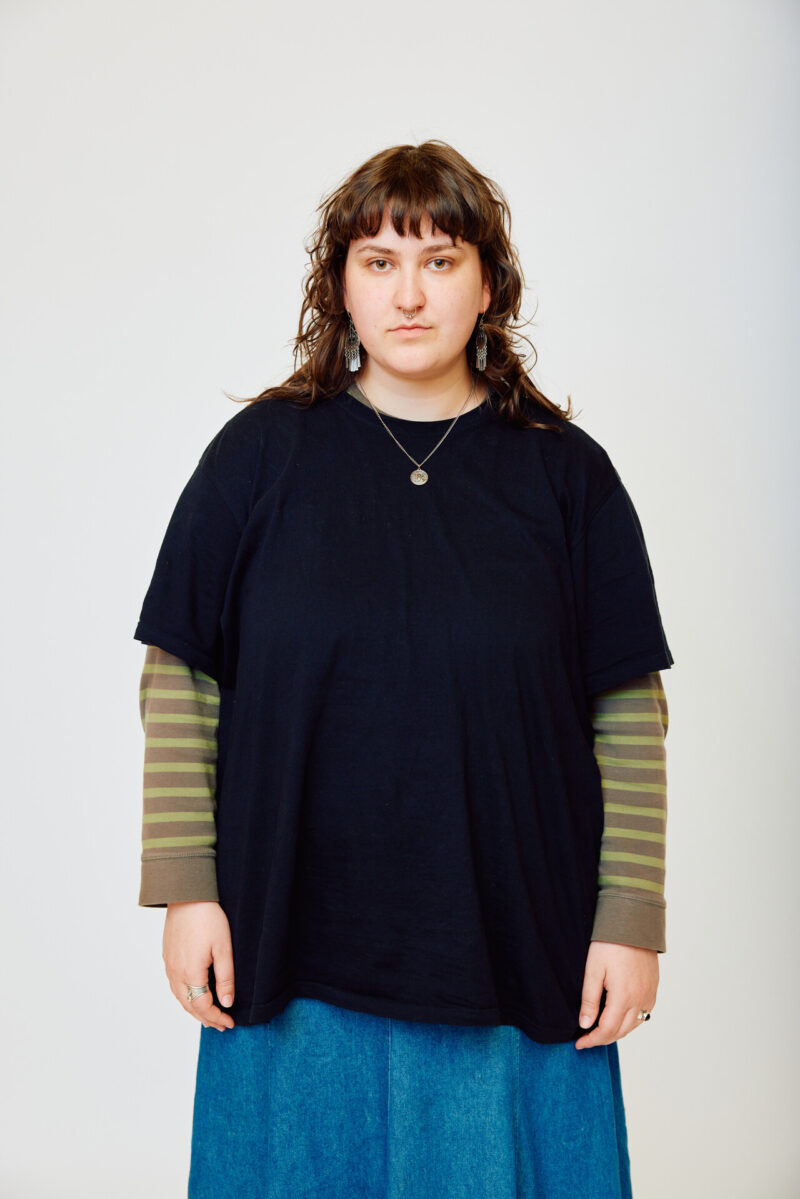
Katoan katseelta
(I disappear from gaze)
2025, photography installation
”The camera is a substitute for a mirror. Appearance and identity are becoming ever more closely intertwined. We are our images.
Katoan katseelta is a performative study influenced by the question: can self-image change if you do not see yourself for long enough? Through this piece, I consider how our appearance in both the mirror and photographs affects our self-image in our appearance-centric society.
Instructions: let go of something that you have got used to forming your sense of self around, open up and create new patterns.
The piece comprises 140 daily self-portraits and diary entries spanning five months.”
Eeli Hilme
Eeli Hilme works primarily on the peripheries of sound art and music, as well as with photography. As an artist, he is guided by slowness and idleness. The documentary nature of the material forms the heart of his work with both sound and photography. In his art, he seeks to serve as a bridge between the private and the public, the tangible and the abstract.
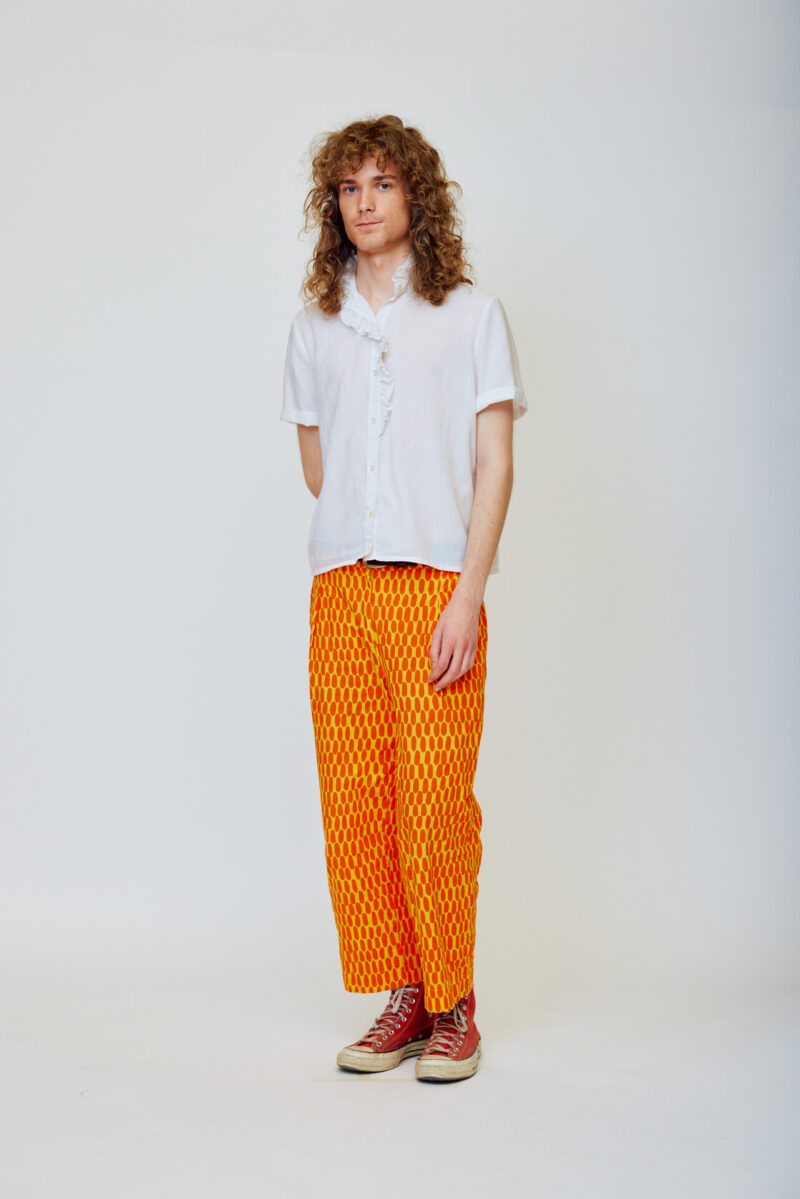
Ultima Thule (susurrus)
2026, photograph, sound
”Ultima Thule (susurrus) is a take on irrelevancy. The escapist side of nihilism, which can be found from the right angle. I explore nihilism primarily with joy and optimism.
In the photographs, I tried to capture the reference points I used to orient myself on the side of a fell in a blinding snowstorm. In these blind moments, I found my angle and felt lighter than ever. The piece also serves as a document and artistic interpretation in which everyday reality takes on new meaning.
For the audio piece, I tuned the notes playing in the background by tweaking the cassette player itself. I slowed down the cassette just enough to put the pitch between two notes, outside the equal temperament system we are used to.”
Eino Intosalmi
Eino Intosalmi combines his interests in information technology and aesthetics in his experimental game pieces. He is intrigued by seemingly incompatible things and concepts, as well as by the use of intensive, surreal effects in digital media and music.
memory leak garden
2025, videogame
”Some kind of ritual. An overview of an abstract dystopia. A set of buried statues. An ominous skyscraper. A look into a closed layer of existence. A heap of bodies. Colours, shapes and concepts tremble in the air. Angular figures follow each movement you make.
Virtual spaces that the player can explore freely and at their own pace have always interested me. This piece has no start and no finish, allowing viewers to dip in anywhere and any time.”
Itäkannas Iiris, Kerava Elsa, Linnapuomi Joanna, Punin Esteri & Uusitalo Aaro
Our working group has brought together storytelling, creation of characters, and a desire to assemble something tangible from disjointed stubs of ideas. As art students, a certain mental image has been fostered within us of what belongs in a museum and what does not. It can sometimes seem that the very existence of our project constitutes a challenge to what can be considered credible art. For that reason, it feels good to have the chance to share the fruits of our work.
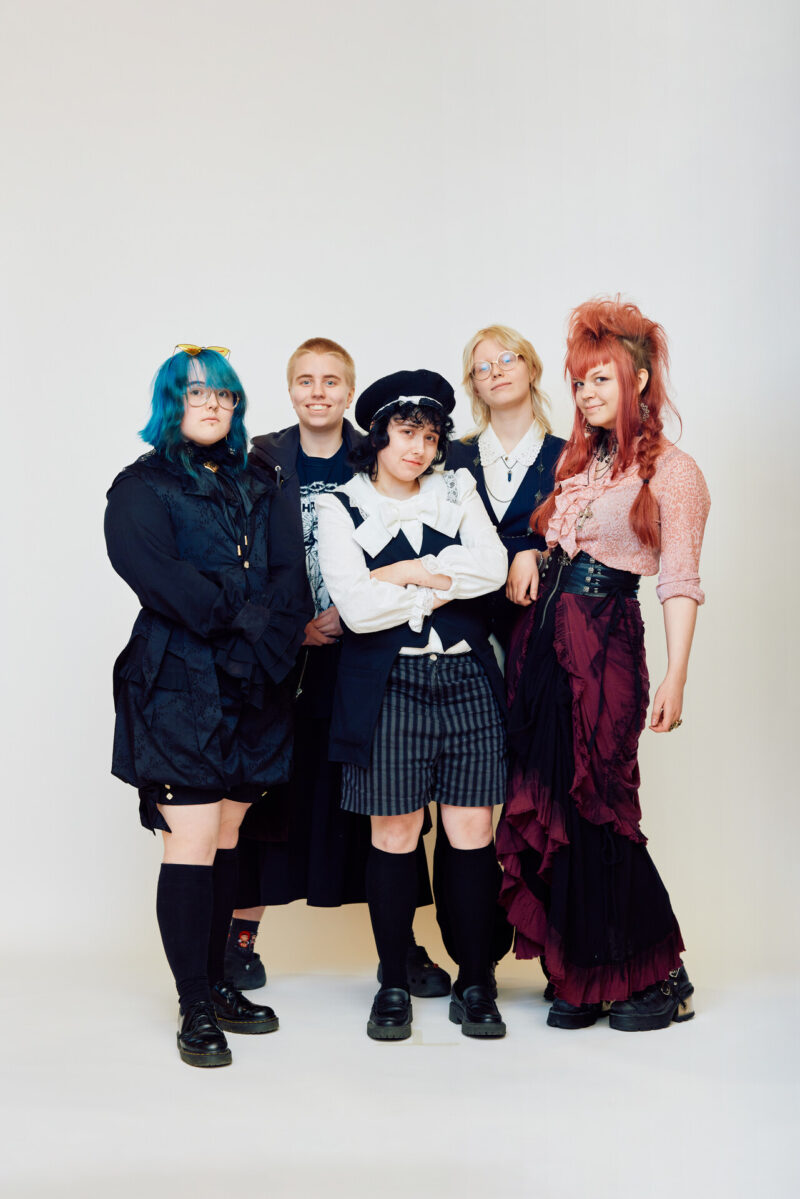
Dungeon of Desperation
2025, videogame
”The concept for this game came about from a joke that started at a summer camp, like all the best ideas tend to. We wanted to make something of our own that clearly demonstrated what we like: macabre imagery and humour, classics from the world of art, and pop culture. This combination gave rise to Dungeon of Desperation: a visual novel game sincerely dedicated to its genre. The game is a tale of love, magic and finding meaning in the most desperate of circumstances.
The influence each of us has had can be seen in the game, so it’s only fair that it can be seen in this text too. Below, we take turns in explaining the initial idea behind the project, one word at a time:
The game tells of a dungeon inhabited by souls who failed in life.”
Eevi Kaila
In her illustrations, Eevi Kaila often explores natural utopias and details of life, walking the boundary between reality and augmented reality. She is also interested in visualising and highlighting ecological phenomena.
Kaila is studying global sustainability at the University of Helsinki and visual communications design at Aalto University.
Näkymättömät
(The invisible ones)
2025, drawing installation
”The invisible has been made visible so that it can be noticed.
Of the 2,667 species classified as endangered in the Red List of Finnish Species (2019), a fifth are critically endangered. These 489 species have been drawn at the same size and the illustrations hung on a wall. The piece shows in visual terms the scale and diversity of species extinction.
Stopping at every species helps the viewer to comprehend the real variety behind the statistic. How many of these species are still around today? How can we increase people’s motivation to care about species if we do not know what to cherish?
The background work for the piece relied heavily on the collections and experts of Finland’s Natural History Museum.”
Elli Kavén
Elli Kavén works with photography, moving images and text. She is currently studying photography at the Royal Academy of Art in The Hague. Kavén is interested in the impact of the environment on how people relate to and care for each other. Her work involves exploring communities, the prevailing roles within them, and power structures.
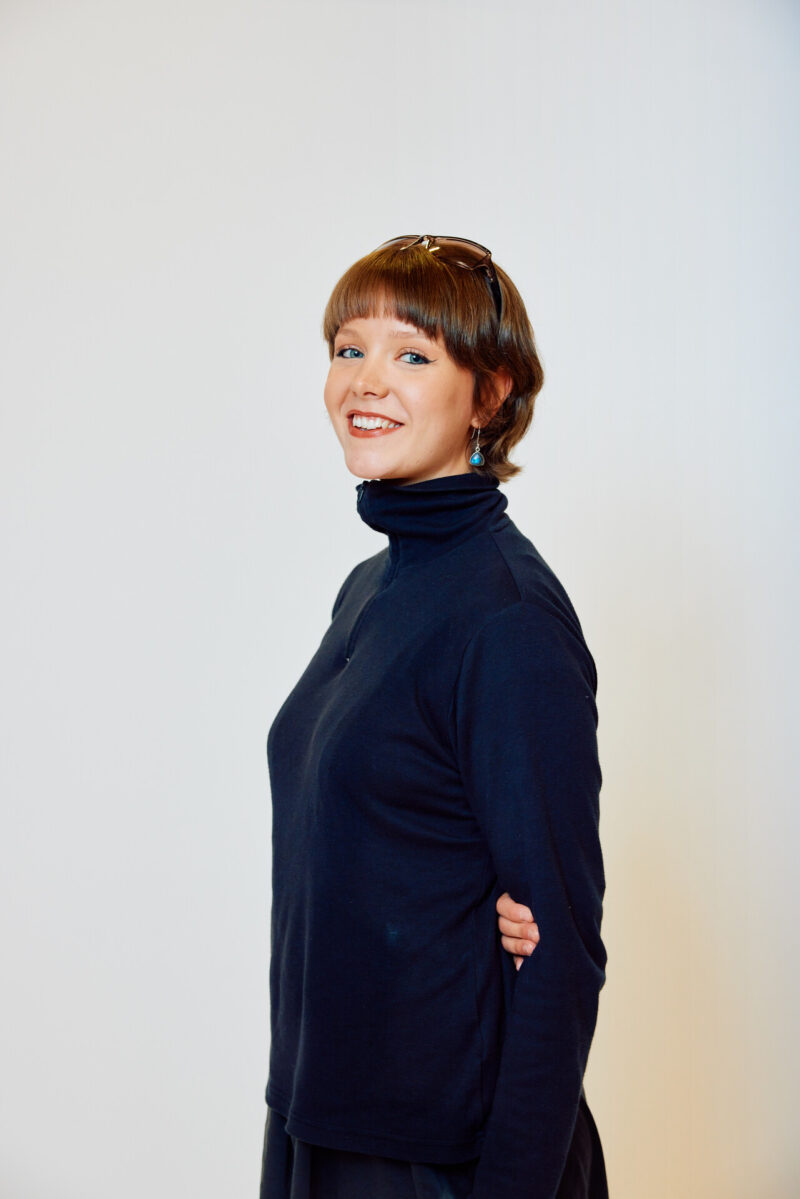
Henki kotonaan
(Spirit at Home)
2024, photography series
”The cabin has fallen silent. The clock has stopped and the calendar languishes behind on a month that ended long ago. Grandma’s spirit floats around the cottage, watching life continue outside the window.”
Tekla Kokkonen
Tekla Kokkonen is a queer artist based in Helsinki. Their work focuses on themes of gender, sorrow and love. In their artistic work, they seek to take an honest approach to themself and feel a connection to something more meaningful. They are inspired by passion, embodiment, and magical moments. Creating is like standing on the edge of a gaping abyss: seeking answers, but at the same time surrendering to the mysteriousness of life.
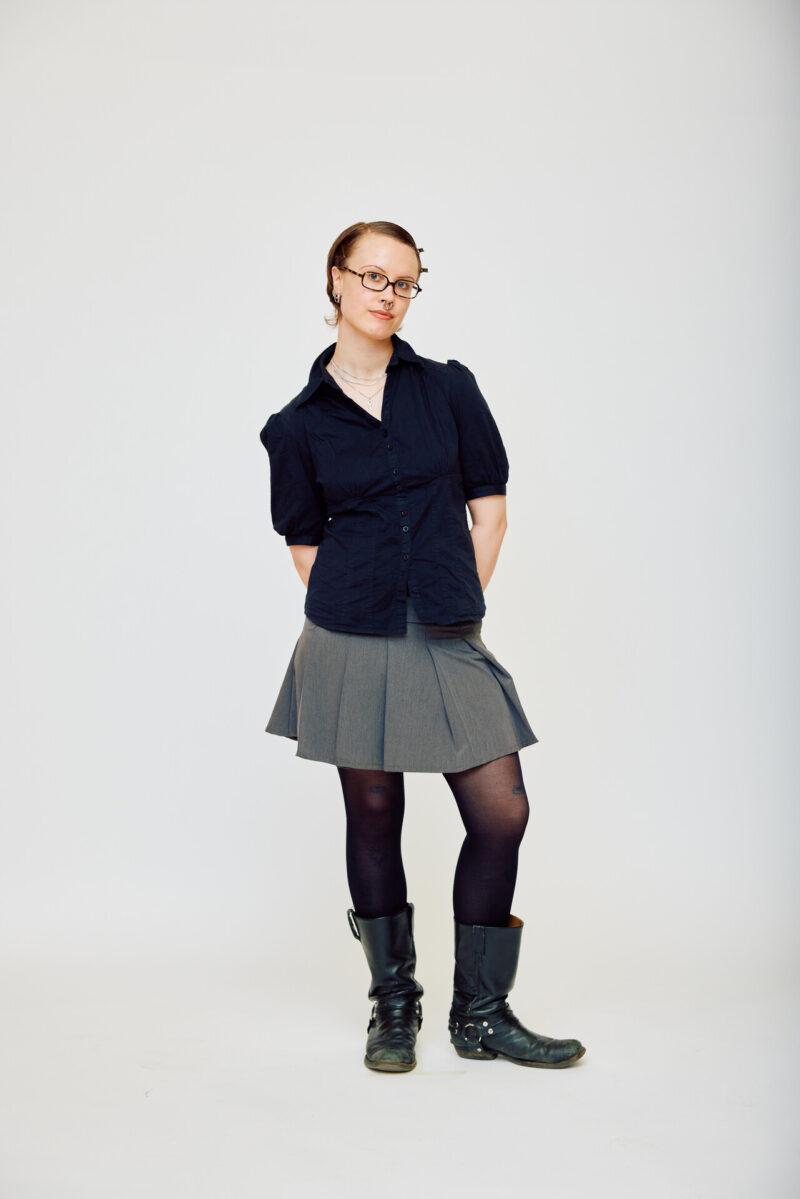
Meeting Myself
Sometimes Loving Yourself is the Thing That Hurts the Most
2024, drawing
”Meeting Myself explores my relationship with my body. In the piece, two versions of me stand face to face, fusing together yet at the same time separating from one another. I want to explore the meeting of femininity and masculinity, how energies can be contradictory and harmonious at the same time. Gender is an interesting theme: my relationship with my body is constantly changing. Gender is an unclear, blurry game.
Sometimes Loving Yourself is the Thing That Hurts the Most explores choosing oneself and recovering from co-dependency. The idea came about when I was wondering what it really means to love oneself. Sometimes it’s light-hearted and carefree, other times it involves deep soul searching. Sometimes the right decisions are painful. Letting go of someone for the sake of your own wellbeing can be simultaneously deeply crushing yet freeing.”
Paavo Kärki
Paavo Kärki is a Helsinki-based visual artist who uses his painting-based practice to explore the medium’s object-like nature, relationship with the surrounding world, and ability to construct places. Recurring themes in his work are networks, power and archives. His finished pieces are reminiscent of theatre stage props, for example, while also retaining references to the painting object and art history. His work takes shape through tracing of the related agencies and examining the structures and practices of art. Kärki is currently pursuing an MFA at the Academy of Fine Arts, Helsinki.
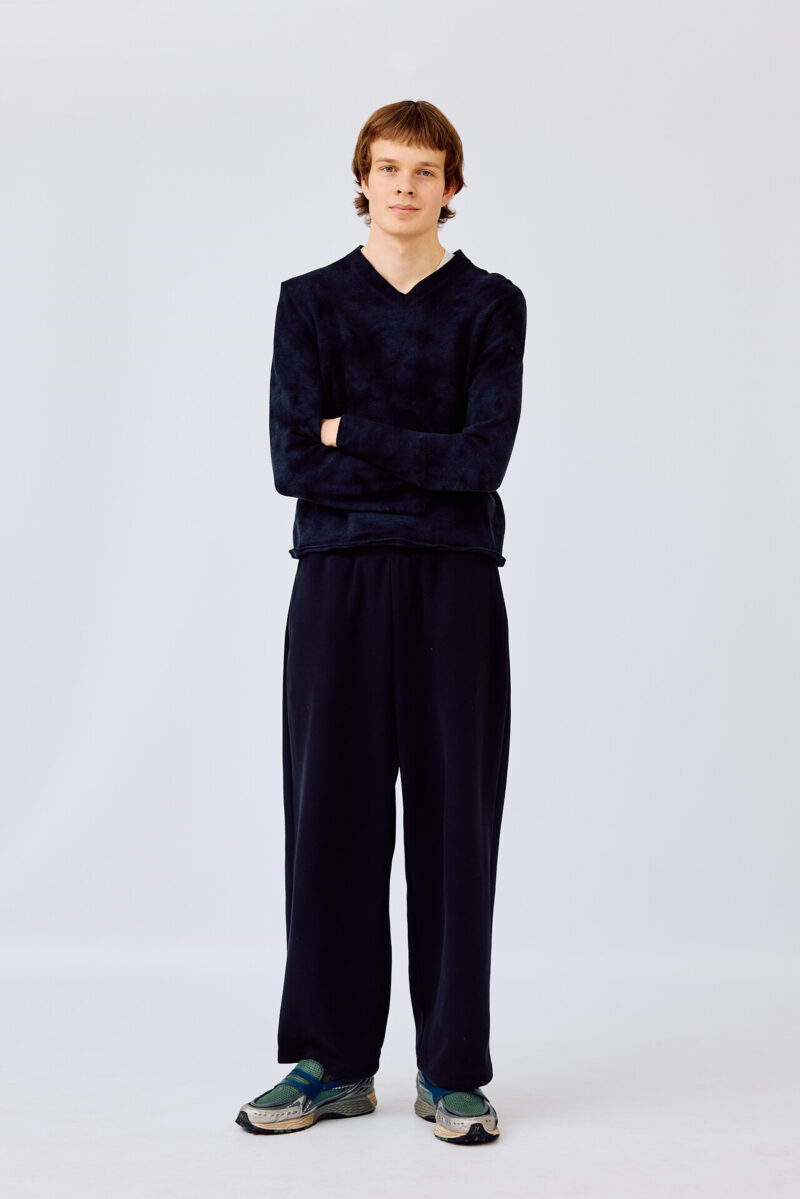
Crowd control
2025, painting
”Crowd control is an eight-piece series of paintings depicting crowd control barriers. The barriers serve as a reference to their many various uses, at events, for traffic and audience routing, in marking out parking spaces, and for managing demonstrations and riots, to name just a few examples. I am interested in what happens to them when they are moved into an exhibition space. At the same time, I am also experimenting with what happens when you perceive a painting as a utility object. In the context of Generation 2026, I see myself as renting the barriers to the event organiser, and I encourage the museum to use them freely in and during the exhibition. ”
Konsta Laaksosaari
In his art, Konsta Laaksosaari explores nature and natural environments, as well as the human mind and world of experiences. Undertones of peace, stagnation, subsidiarity or yearning can often be found in his works. The places and things they depict are already in themselves important or close to the artist himself, but much of the meaning comes only when creating the pieces. In addition to painting and drawing, Laaksosaari uses video, photography, music, and soundscapes as means of expression.
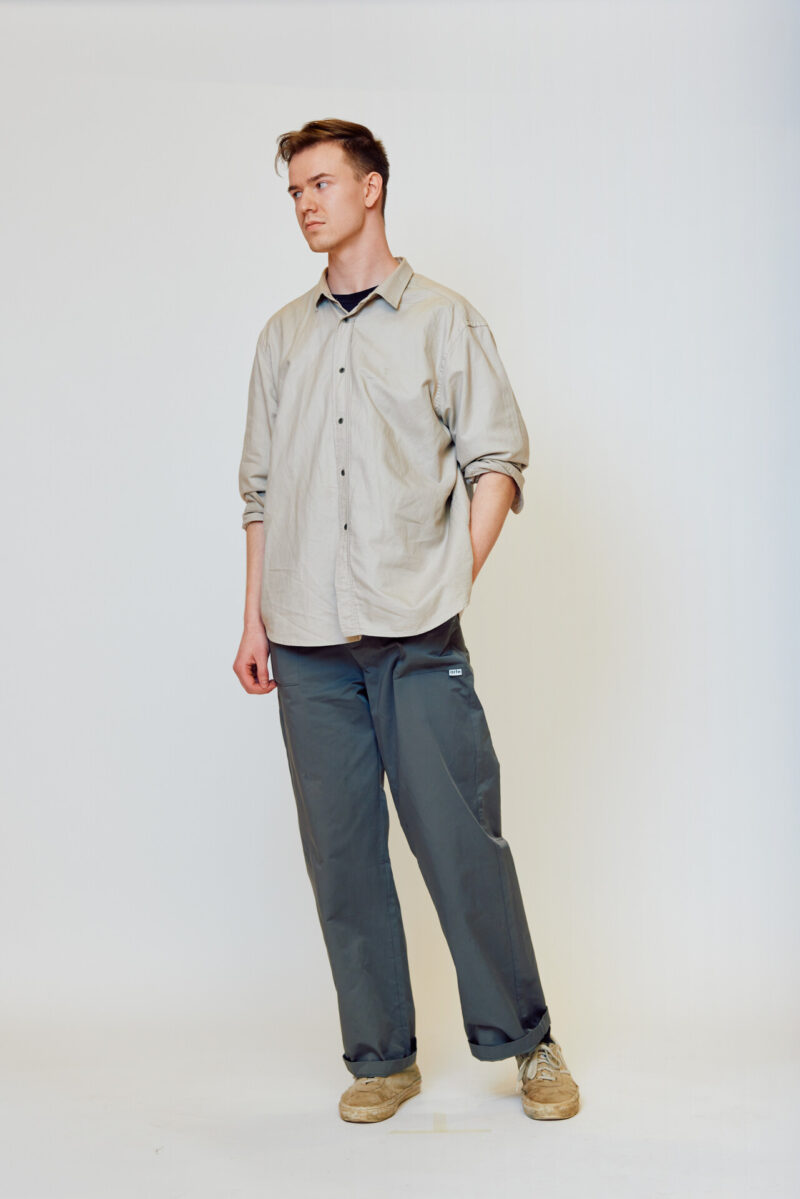
Hajamaastot
(Scattered terrain)
2024, painting
”The elements of nature, coloured motifs and sharp demarcations in Hajamaastot form a complex whole.
In this painting, I explore scattered observations captured from the flow of life. Perhaps it could be seen a small memoir of sorts. It is dedicated to those fleeting places and constantly changing landscapes in life that both stick with us and yet remain just slightly out of grasp. I thought about natural environments, the feeling of a place, the passage of time, and the stratified nature of memories and mental images. The painting is somewhat collage-like and fragmented in nature, and it came about, in part, as the result of an intuitive working process. The canvas, which was found outside, shows signs of wear and tear caused by the environment and weather.
Emilia Lehikoinen
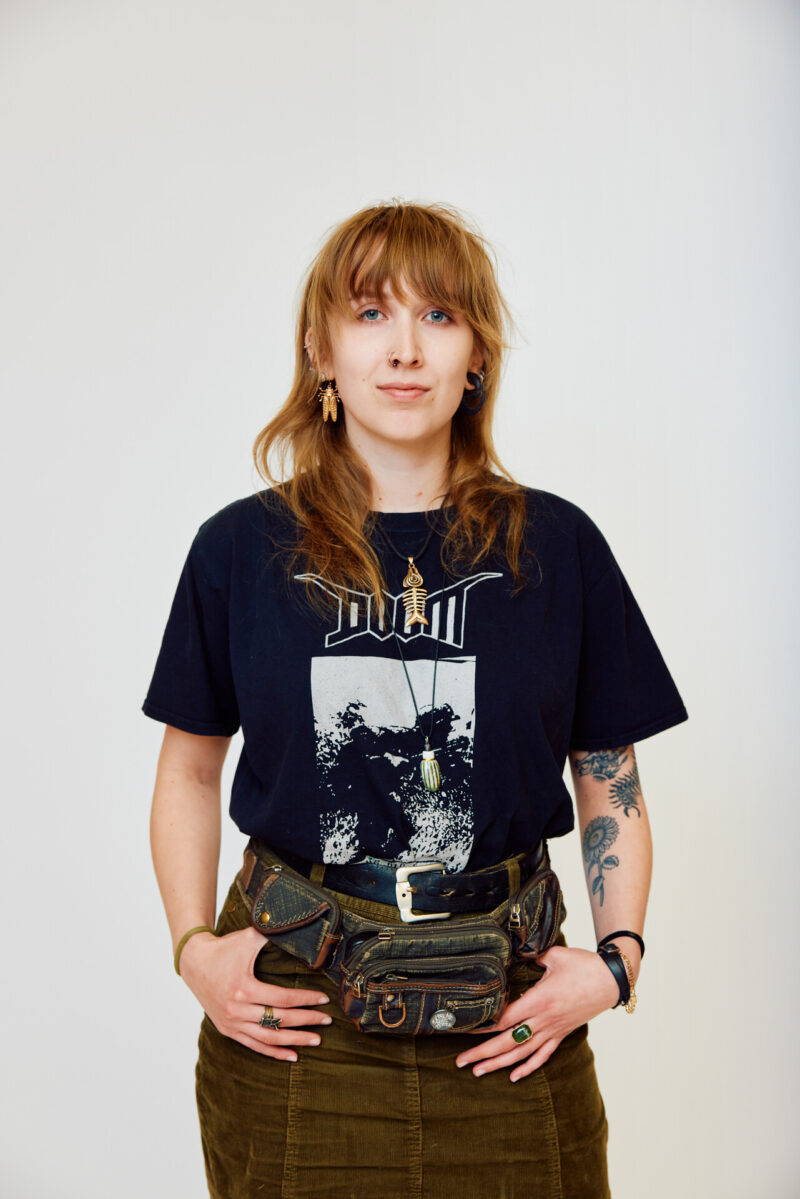
Emilia Lehikoinen lives and works in Porvoo, and her primarily technique is oil painting. Her art is often built on an investigative perspective that transforms, breaks down, and expands as she works. An all-encompassing transience kindles a desire to preserve fragments through painting. Her work is fundamentally also an attempt to structure and understand changes both in the surrounding world and on a personal level.
Kantarellihattu
(Chanterelle hat)
2024, painting
Kevät
(Spring)
2023, painting
”A strained human figure surveys the surrounding transience and hopes for uncertainty. Exhausted and with a chanterelle mushroom hat on their head, they hope that they might perhaps find simplicity there.
In the work, mushrooms represent something comforting and disconnected from the here and now, something escapist. At the heart of my paintings is a nameless longing. Its sources are hard to define, although they seem to be everywhere. The restlessness that is a defining feature of our times makes us long for a place that we cannot quite pin down.”
Hafsa Mahamed
Hafsa Mahamed is a visual artist from a Somali background and an art education student at Aalto University. Her work is based on consideration of who a person is and what they carry with them. Influences of cubism and abstraction can be seen in her paintings, with the faces and figures that appear in them falling apart and turning on themselves. The colours and shapes serve as the artist’s voice, and the figures in the pieces are given permission to exist without being forced to reveal themselves completely.
Enkelit astuvat sisään I
(Angels enter I)
Enkelit astuvat sisään II
(Angels enter II)
2026, painting
”What even is a face?
I grew up in a strictly religious family where we were not allowed to draw faces. We were told that it might stop angels entering our home. This experience gave rise to feelings of restriction and shame. As a result of this ban on drawing faces, I started to express myself by creating intentionally ugly figures and stepping away from the desire for perfection, instead accepting incompleteness as a part of human nature.
In my pieces, the human faces are also unfinished and misshapen, reflecting my childhood experience. Depicting faces like this is a way of rebelling against those childhood rules.
I still do not know how faces should look, but I know that when I create, I am opening the door to those angels.”
Stanislava Ovchinnikova
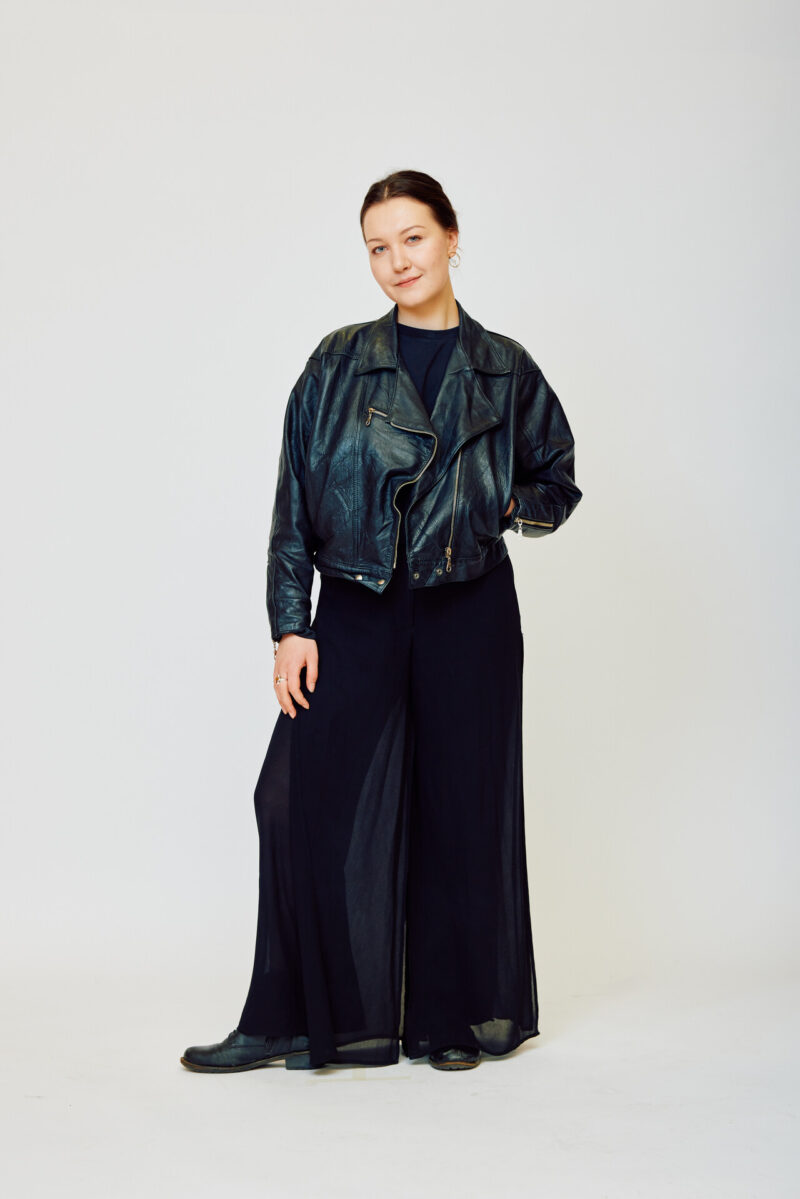
Stanislava Ovchinnikova works with photography, performance, and writing to examine how (memories of) interpersonal, structural, and institutional violence shape our relationships with one another and the spaces that we inhabit.
She is also a member of the collective Bark! – alongside Kush Badhwar, Maria Batchenko, and the dog Los’ – which approaches multi-species companionship as a site of artistic, social, and spatial inquiry.
A Performance for Two
2026, performance, installation
”In the USSR in the 1980s, while filling in a form to receive his first passport, my father was asked to provide a Ukrainian-language version of his surname. It had been pre-typed in Russian, and the equivalent was to be added by hand. Instead of adapting the spelling in accordance with the Ukrainian orthographic rules, my father simply transliterated it. Thus, ‘Ovchinnikov’ was recorded where ‘Ovchynnikov’ should have been.
Timeline splits occur in all kinds of places. Regretfully, I have carried the faulty surname into the present. But at last, Stanislava Ovchynnikova will join me to rectify this mistake in our four-month-long live work, A Performance for Two.”
Sofia Parland & Erix Aboltins
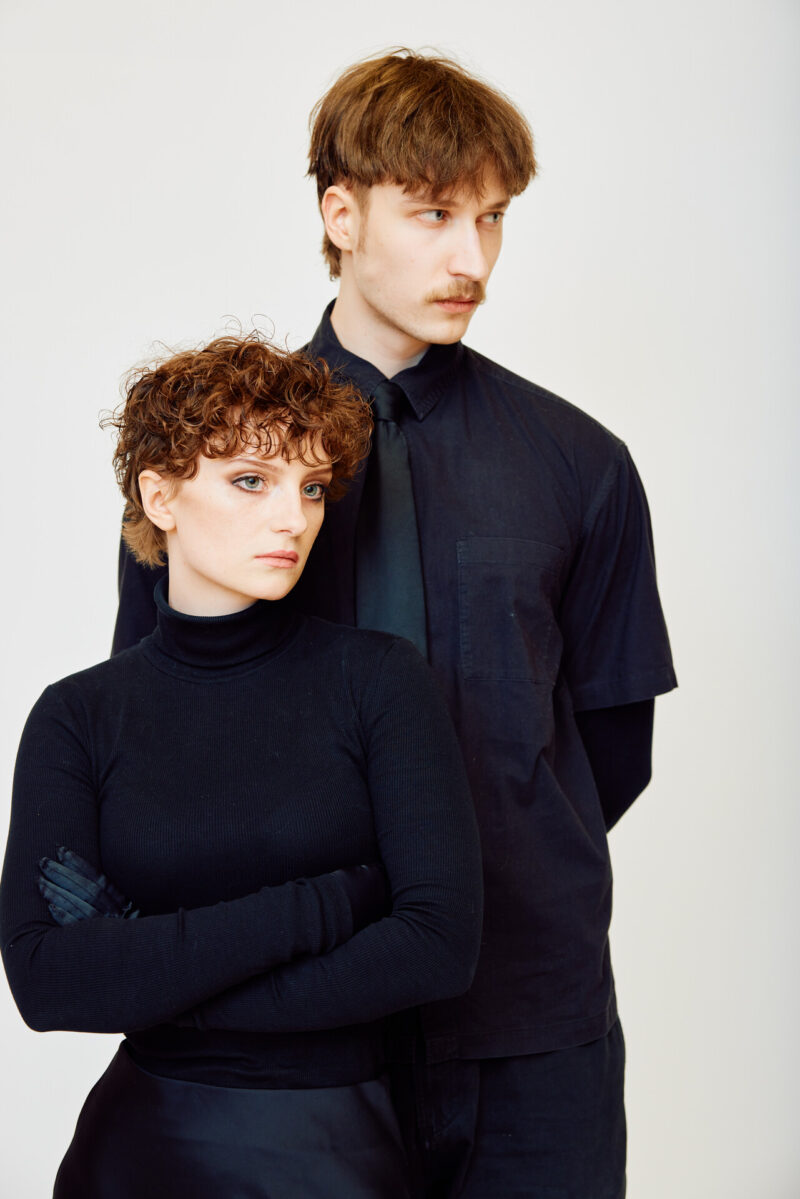
Sofia Parland is an award-winning author, hailed in Göteborgs-Posten as the wunderkind of Swedish-speaking Finland. Parland was awarded the Svenska Yle literary prize in 2023, the Argh-column writing prize in 2022, nominated for the Runeberg Prize in 2023, and finalist in The Critical Text of the Year award 2025.
Erix Aboltins is a synth freak, mainly working with modular synthesizers and drum machines, a notable presence in the Helsinki electronic music scene.
The long-term duo explores dialogical synthesis of sound and text; during “research” hours, Parland and Aboltins can be found either at the club or in the club, sharing cigars behind the DJ decks.
Love Box
2025–2026, sound installation
”Technology is not ideologically neutral, and the internet, in its structure, is a postmodern invention.
Virtual environments enable behaviours that people would not normally exhibit in physical social situations, while thought is inconceivable due to the dissolution of truth and meaning.
In his essay The Rebel, Philosopher and Author Albert Camus (1913–1960) talks about killing God and the subsequent nihilism leading to what he calls the “collective suicide”. If we consider philosopher René Descartes’ (1596-1650) idea, “I think therefore I am,” the collective suicide means the societal death of thought.
With Love Box, we take this to a personal level. The work is an audio-isolated 9 m² box inhabited by voices.
The visitor may enter. ”
Lena Patta
Lena Georgia Patta is a Finnish-Greek artist whose work is built around the diversity of sound. She is particularly intrigued by how the emotions arising from societal phenomena can be shaped into multisensory pieces, where experience and fact intertwine.
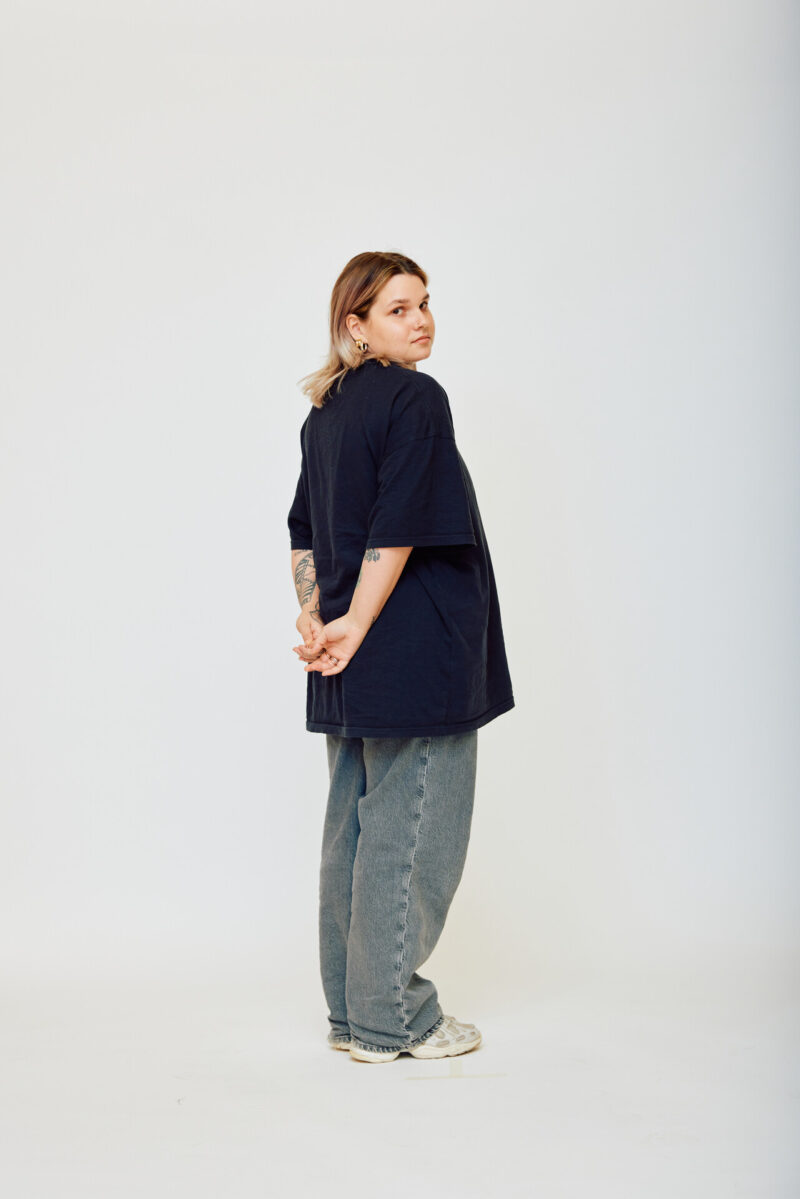
Kun perhoslaakso paloi (taas)
(When the valley of the butterflies burned [again])
2025, sound
”Southern holiday destinations attract swathes of tourists to enjoy the local sights. If you look closely, you might find your rucksack-clad, fifth-grade self stepping through your school gates, immortalised in the holiday album of some unknown couple.
Kun perhoslaakso paloi (taas) challenges viewers to think about who owns culture, whom a holiday paradise is designed for, and what the price of maintaining it is. The piece is simultaneously a personal experience and broader exploration of home, identity and the underside of tourism.”
Veera Pelkonen
Veera Pelkonen’s art, which draws from the environment and elements of the subconscious, expresses private and isolated experiences of reality.
Pelkonen uses traditional oil painting techniques when depicting pieces of her experiences of the alternating flow of sleep and wakefulness.
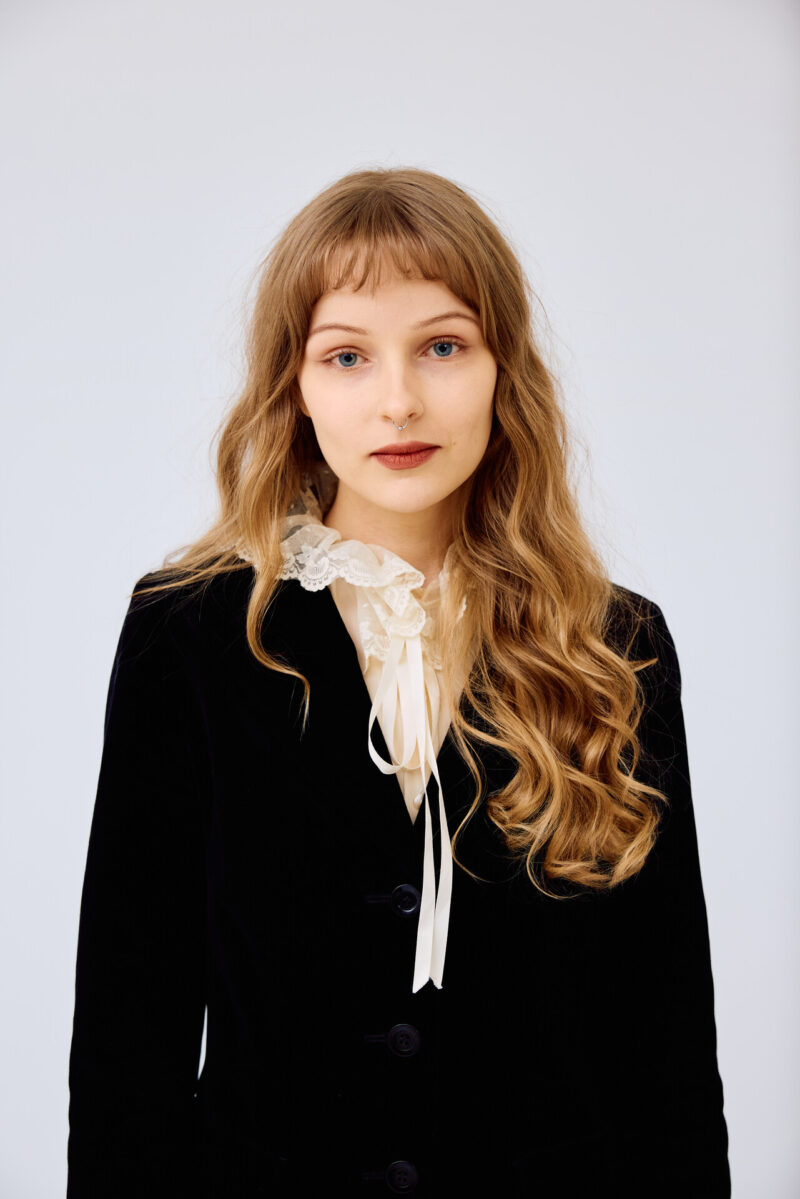
Pearl
Nostalgia
Kuivan kesän morsian
(A Dry Summer’s Bride)
2024, painting
”My paintings are positioned at the threshold of the subconscious and conscious. They centre around a vulnerable moment of understanding your own limits and susceptibility to the environment. Despite being made up of familiar elements and memories, the setting still feels entirely alien – like a dream. ”
Arvi Penttilä
Arvi Penttilä takes an interdisciplinary approach to working with photography, poetry, and movement. With the help of a passion for kickboxing and photography, they explore physical forms of existence that are not restricted by gender binaries.
When it comes to movement, Arvi Penttilä is working to untie the knots created by intergenerational trauma and living in this society in a trans body. Physical grounding using movement is important to them. They want it to also be possible to create art from one’s own foundations, without the need for money.
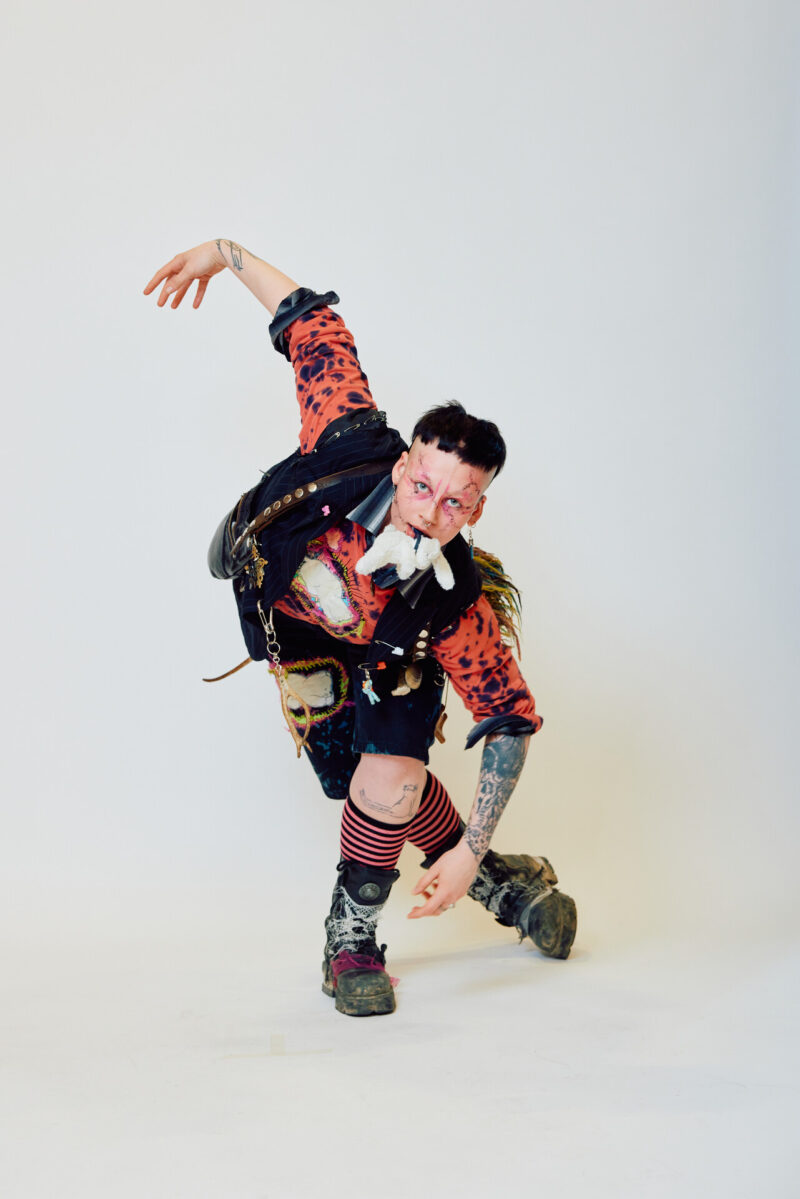
Sulaminen
(Melting)
2026, performance
”The piece Sulaminen explores the effect of war trauma on both me and society, as well as how war trauma is passed genetically and socially from one generation to the next.
I’m now the third generation post war, but the first in my family ready to process the trauma it has caused.
Collective trauma is still present on a daily basis in my family. Instead of being a shared grief borne together, it keeps us distant from one another.
Sulaminen is a suggested rite for dismantling war trauma in a society that has not created any substitutes for now-lost shared approaches to unravelling grief.”
Aarni Pieski, Eeva Airavaara, Lilja Kervinen & Lucian Lovén
Aarni Pieski is a Sámi dramaturge, playwright, scriptwriter and curator, as well as the convenor of the working group behind the piece Rituals for living with.
Lilja Kervinen is an actor and performer whose strengths include physical expression.
Lucian Lovén is a musician and sound designer whose work explores the relationship between the body and sound.
Eeva Airavaara is a sound designer and artist who works primarily with experimental electronic music.
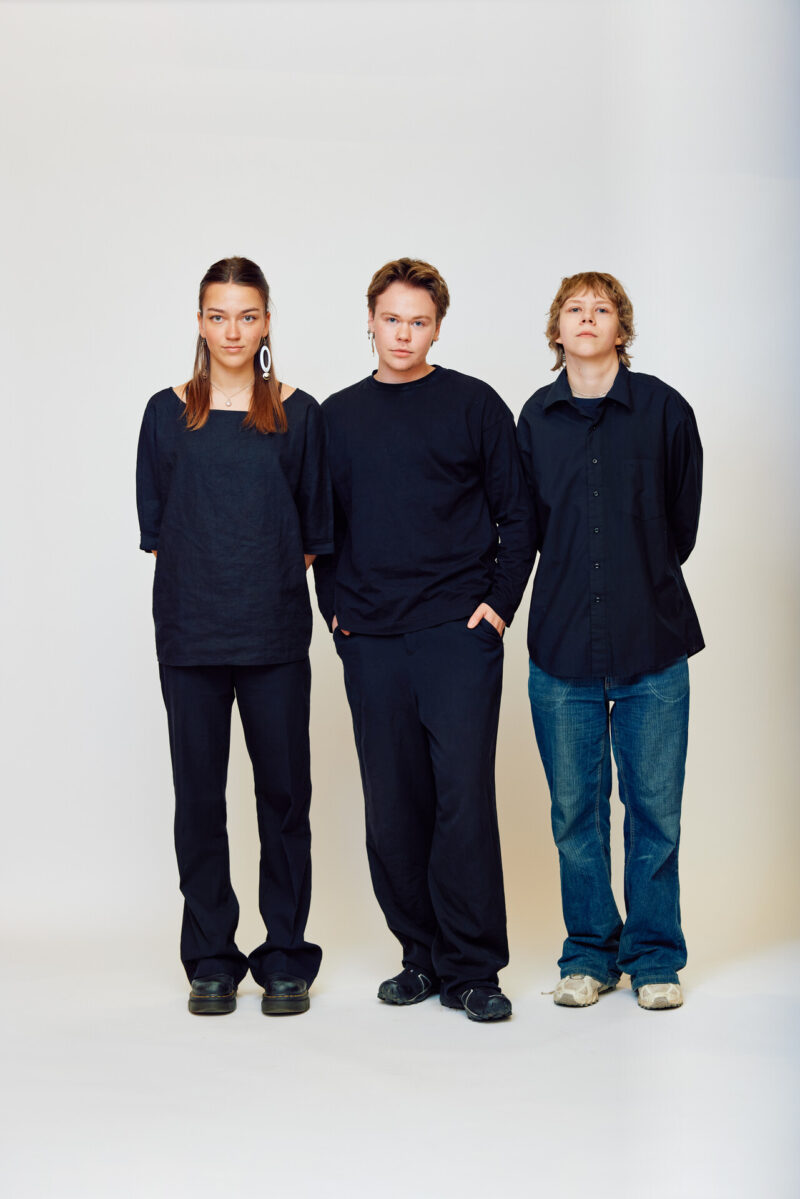
Rituals for living with
2025-2026, performance, installation
”In the piece Rituals for living with, we explore building and being built, and how we position ourselves in relation to the environment. We consider how a relationship with the environment is built at both individual and societal level, along with the interplay with identity, nationalism, nature and family relationships. The piece travels through time, using archives and architecture to question belonging. How do we belong in and find our place in our environment: do we just take from and exploit it, or do we first ask for its permission?
This overall work comprises an installation and a performance. Using process-based and group work, the piece came to life from a manuscript written by a dramaturg, through which the working group jointly explored how text can come to life in a material, auditory and corporal way.”
Gabriella Presnal
Gabriella Presnal is a Finnish-American multidisciplinary artist whose practice emerges from research on artivism, reclaiming visual symbols, and philosopher Gilles Deleuze’s (1925-1995) concept of nomad art. At an intersection of nostalgia and community-based practices, their work focuses on how memory, voice, and agency are embedded in the spaces that we inhabit. Their works are influenced by having lived in Sweden, Canada, Denmark and multiple states in the U.S., as well as the bittersweetness of leaving and arriving.
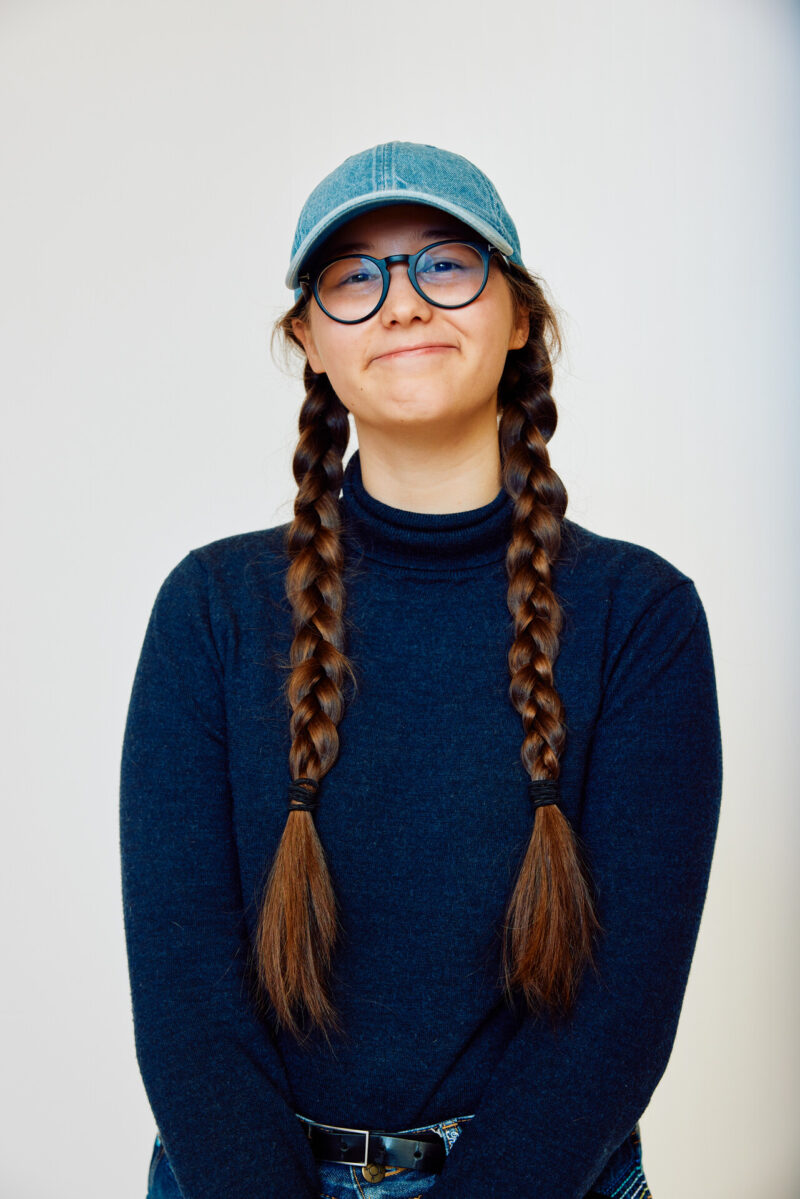
Becoming Queer Nomad
2022–2026, audiovisual installation
”Becoming Queer Nomad is a woven piece and video work that delves into queer time and space. I have interviewed over two dozen queer nomadic people about their memories, stories, relationships, and cultural backgrounds. Nomadic, meaning a person carrying mixed nationalities, moving around, and/or having recently immigrated.
In the work, I aim to reclaim weaving from being striated or ‘controlled’, transforming it into a porous, hollow space where queer nomadic stories can grow. The wires represent artificiality in cultural identity, as many grapple with belonging. They also signify learning queer history independently, understanding, and finding community when connection used to only be found through online platforms.
Ly Rahtu
Ly Rahtu is a Turku-based artist whose work centres around autobiographic themes, archive material, collecting, and photography.
Rahtu works with digital photography, as well as combining it with other materials and techniques, such as textile arts and installations.
They pick pieces from here and there, childhood photos, shopping lists, bones, and whatever glitters.
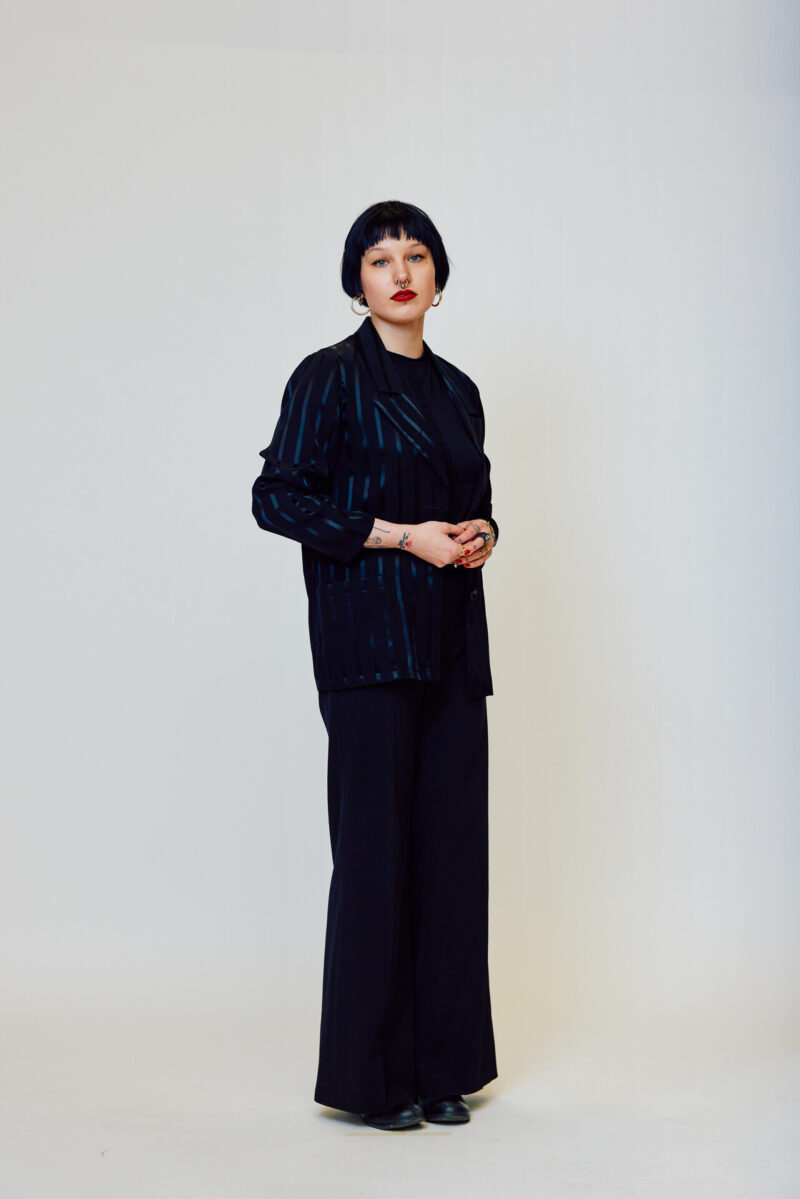
Punk’s not dead
2025, video, installation
”My first musical memory is of my dad’s garage. There was some raucous shouting playing on his stereo. My dad was, and still is, a punk rocker. And now I am too. What was punk when my dad was young and what is it now? If I can’t find anything to talk about, I talk about music. Punk’s not dead.”
Rafael Rainti
Rafael Rainti seeks humanity in different materials, making them off-putting and repulsive, or fascinating. At the same time, he is a self-confessed meat lover in his art, distancing the person, reducing them to their body, flesh and tissue. Is the body a symbol of humanity/humans? Why replicate humanity, imitate it, or create something depicting it? Rainti explores charming forms and strange curves and hollows. He is interested in the physical boundaries and definitions of a person.
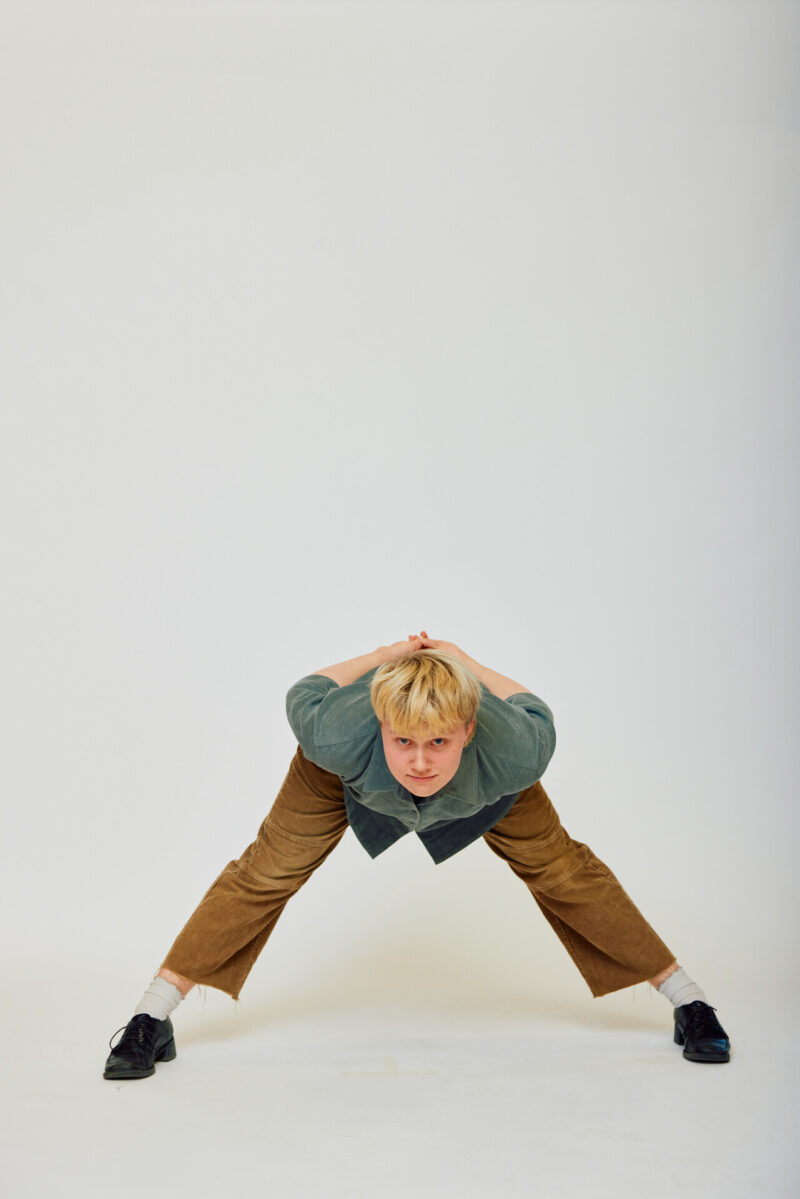
kalpea elollinen eloton lihaton iholla ihollinen (Piukea nahka)
(pale living lifeless fleshless on the skin with the skin [Tight skin])
2025–2026, sculpture
”In my piece I use familiar materials in unusual ways, taking approaches for which there are no set-in-stone rules, or even advisory guidelines, in sculpture. In my work, I can clearly see the interaction between the material and me; how I express myself regardless of the technique and what stays the same even when I change tools.
In the work I explore meat and bodily experience. Why does something seem like meat when it isn’t actually? When is meat meat, and why is meat imitated? What counts as living and is it all edible?”
Viola Rauta
In her art, Viola Rauta explores details, with the human mind often serving as inspiration. She is particularly fascinated by the persistence of invisible feelings that arise from watching. The artist often permits perhaps too much perfectionism when finishing her works, but at the same time feels that the best ideas come about impulsively. Rauta seeks to retain her childhood enthusiasm for crafting in her work, and to enjoy creative challenges and learning all manner of new things.
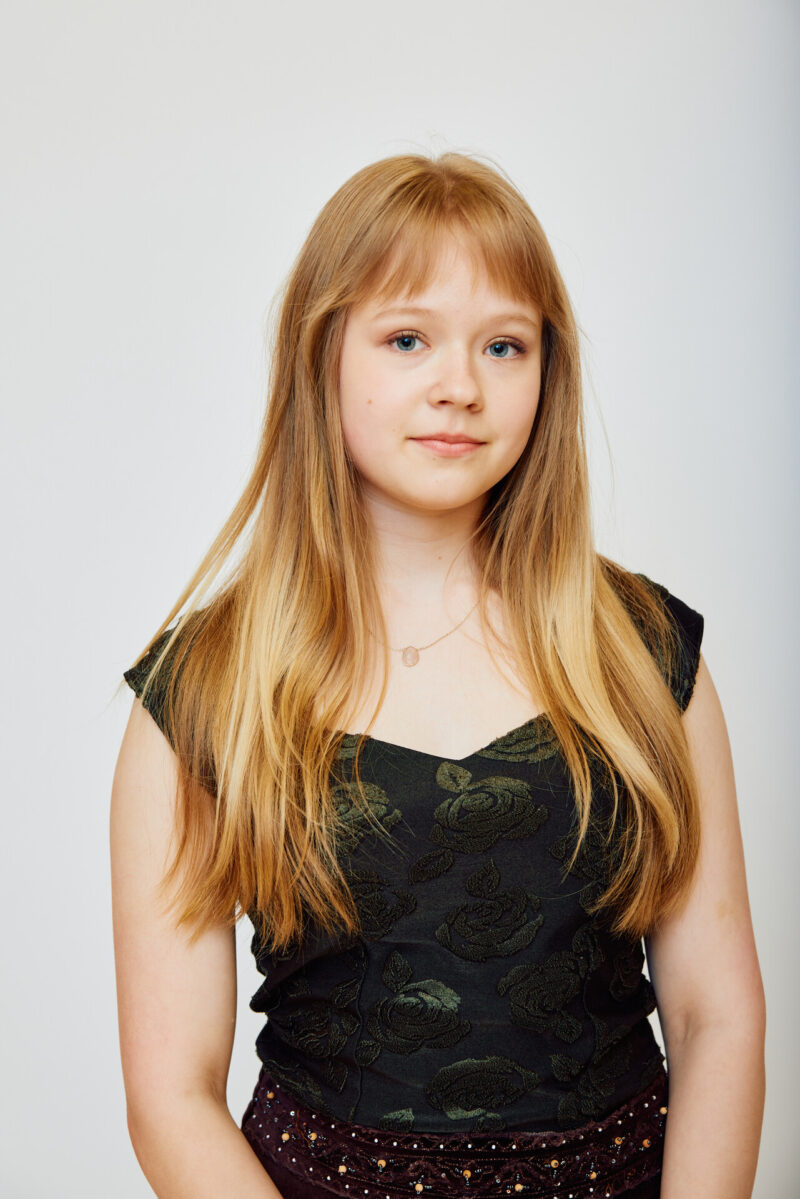
Muistatko minut?
(Do you remember me?)
2024, sculpture
”You built me with your small hands during a long summer day drawn out by boredom. We played together in the evening gloom, until the growing shadows chilled your fingers. I promised to stand guard at your cabin, under the big spruce. The pines around me stretched their branches and your toy basket was filled with glittering plastic animals. Before long, I ended up left out of all the fun. That last autumn, your cries of joy faded through the forest, while I stood guard outside the empty cabin.
Now I’m nothing but a distant memory of your childhood forest. Nice to see you after such a long time, though I guess we’re both too big to play now. Do you remember me? Do you still remember the trees of your childhood? Do you ever wonder how big and old they would be now?”
Tapio Rokkonen
Tapio Rokkonen is a textile and pattern designer who lives in Helsinki. In addition to his design studies at Aalto University, he paints with oil paints and draws, taking inspiration from pattern design and illustration. Oil painting, which is often the primary technique in his work, was also the technique used for his photo-like and colourful pieces featured in the Generation exhibition. Tapio is currently also exploring incorporation of digital tools familiar from his design work into his art.
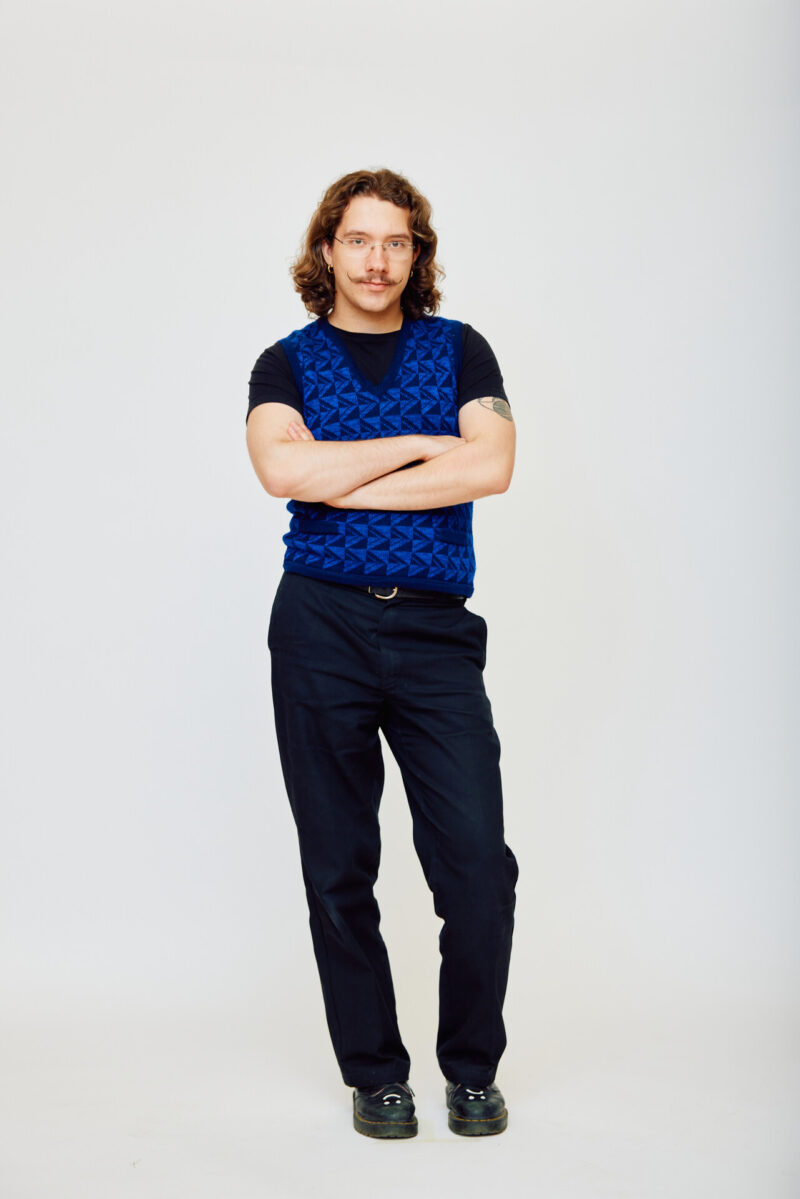
TJ100
(T-minus 100)
2024, painting
Veljekset
(Brothers)
2023, painting
Vastavalmistuneet
(Graduates)
2023, painting
”Growth comes from those moments that stick in your mind like photos saved in your phone’s camera roll. In my paintings, I slow down and pause at exactly those moments: a selfie on a café terrace with my twin brother, a lively school leaving party, and my journey through military service with fellow conscripts, when war in Europe forced us to question the value of our own lives and souls. My works are photo-based, rich in detail and with strong colours. In them, everyday life is transformed into stories about growing up, how siblings, friends and societal rituals shape young people. This series of paintings is my own coming-of-age-story, but at the same time, it could also be yours.”
Elli Roth
Elli Roth graduated from the Danish National School of Performing Arts in 2024 and is now a dance artist working in both Helsinki and Copenhagen.
Roth has worked as a dancer and performer with numerous groups both in Finland and abroad. Most recently, she has performed in the likes of Helsinki Dance Company’s piece DREAMER (2025), the Finnish National Opera’s The Ostrobothnians (2024–25), Pori Dance Company’s piece Sumua/farewell (2024) and the Netflix film An Honest Life (2024).
As a choreographer, her work includes SOFT BLAST, which was performed in Dansehallerne’s New Shit Vol.8 in 2024.
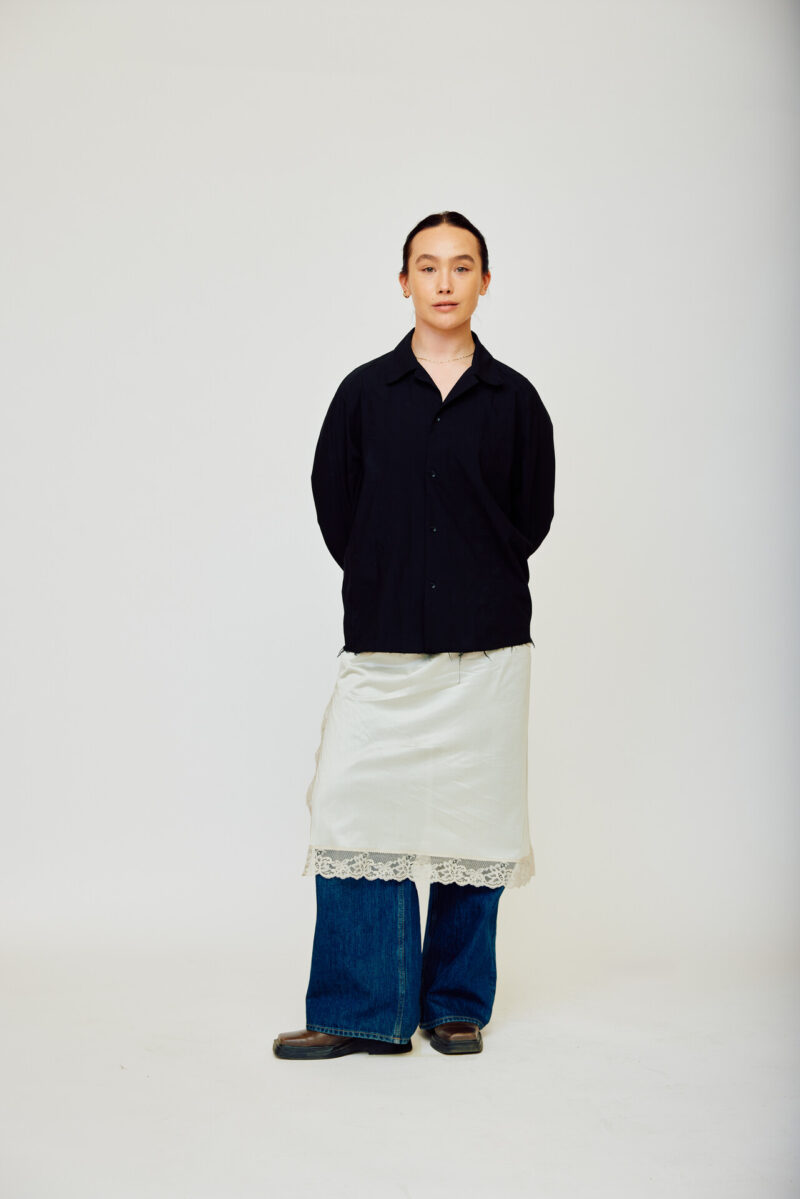
SOFT BLAST Vol. 2
2026, performance
”SOFT BLAST Vol. 2 is an interdisciplinary whole in which dance, music and performance intertwine in an exploration of a new kind of stardom and aesthetics.
The piece draws inspiration from rich cultural heritage and asks what kinds of stories and forms of expression go unseen in popular culture. At the same time, it examines female empowerment and a critical perspective on it: what does it mean to be a woman in the world of stardom and publicity, who can shine bright and what are the conditions for doing so? Sound, movement and visuality are used to build a multisensory experience that both celebrates a woman’s right to become iconic on her own terms and challenges the structures that prevent it.”
Lari Rouvinen
Lari Rouvinen is a world-builder and game designer. His journey began with Lego bricks, continued through the vast landscapes of Minecraft, and now unfolds in 3D art. He channels his passion for light, rhythm, film, and environment design into immersive worlds. Exploring the artistic potential of games, he invites audiences to wonder, imagine, and discover experiences yet to exist.
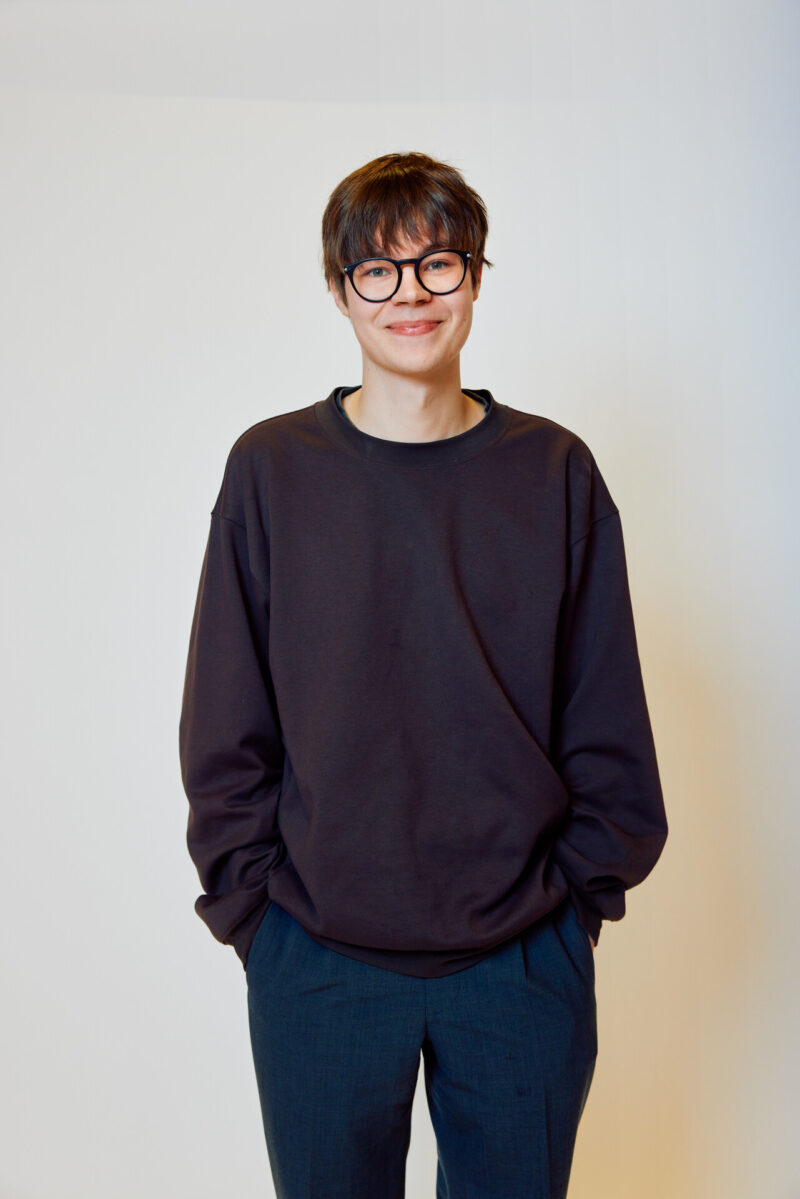
Tuonpuoleinen elämä
(Hereafter)
2025, videogame
”Tuonpuoleinen elämä is a game that explores funerals as timeless, emotionally charged rituals of loss and legacy. You follow a widow through ornate Baroque halls. Her journey is framed by shifting perspectives and encounters that reveal the complexity of loss. For me, creating this work became a deeply personal process, shaped by longing and remembrance of those I miss. Through the game, I aim to spark emotion, reflection, and interpretation.”
Oiva Rytkönen
Oiva Rytkönen is a photographic artist from Turku. Behind his work is a background spanning over 15 years in theatrical arts. Rytkönen treats his photographs as a stage upon which he tells a story. Narrativity and a storytelling approach are particularly important characteristics of his art. In his pieces he often explores the absurdity of existence and the nonsensical nature of modern life through his own experiences, societal themes, and irony.
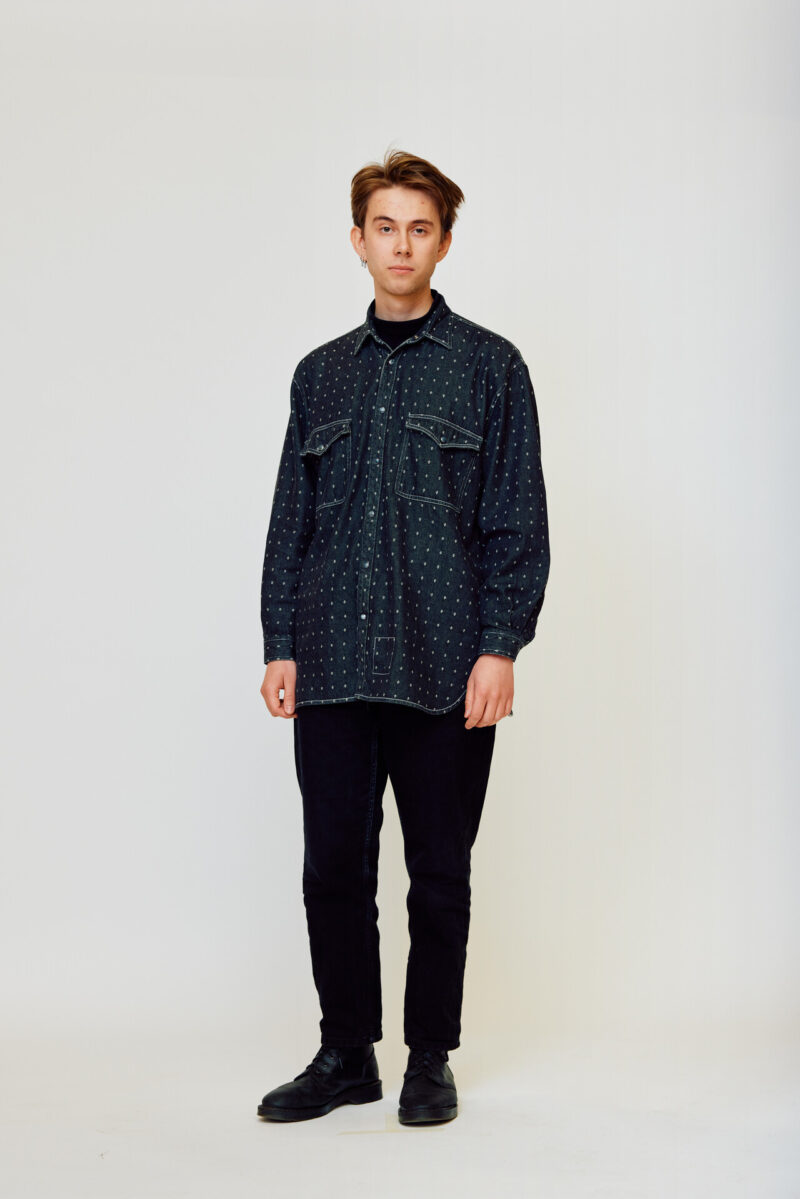
Soittele kun tarvitset minua
(Call Me When You Need Me)
2025, photography series
”The air smells stale. Steps echo far and it is difficult to pinpoint where different voices are coming from. Here, I feel cut off from the rest of the world. Only rarely do I bump into another person. By nature, open spaces feel threatening, unprotected. I get disorientated by the unerring emptiness of the spaces. When does empty become deserted? When does deserted become wasted? Before, these buildings caused nothing but disgust, but amidst the disgust, I start to see something human.
In spring 2022, I moved to the foot of Kakolanmäki hill in Turku, known for the former prison that sits atop it, right by the city’s harbour. Lots of new apartments were being built around the Linnanfältti, Iso-Heikkilä and Portsa neighbourhoods at the time, and later on, parking garages started to spring up between them. I started to explore these buildings and later to photograph my trips.”
melissa Sende
melissa sende is shaped by the cities that live within.
melissa walks the fool’s journey.
she is her mother’s daughter and her father’s son.
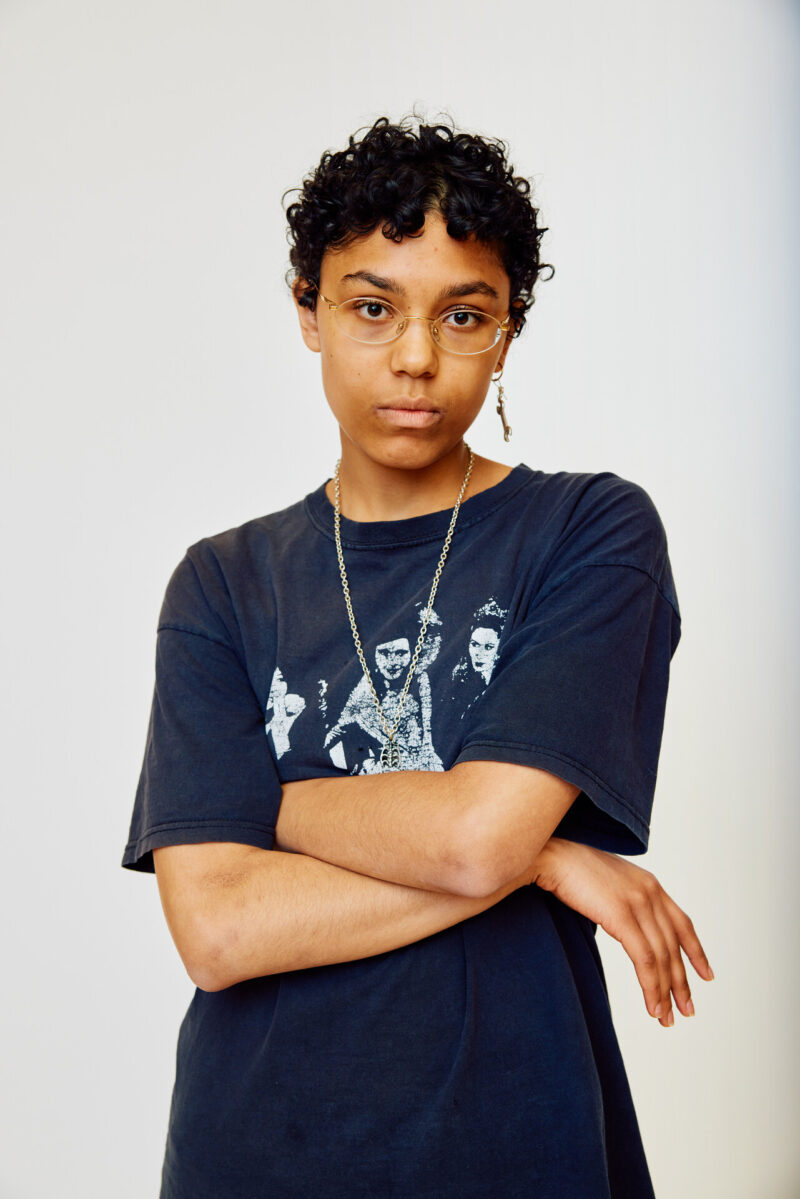
own Room
A Daughter is a dam
2025–2026, sound, installation
”The threshold.
The handle. The window. The creak on the door.
The light from underneath the baseboards.
The cigarette smell rising all the way to your room in the attic, your brazen angry steps of remission come down to ground me.
The hushed whispers in the dark through every hour of the night, the mask I portray the next morning—
The mountains of secrets, the search party.
Follow the smoke, for there is always a fire: Ablaze in my room on a school night.”
In collaboration with Viena Honkala (sewing and textile work) and ruslan mihti (sound engineering).
Nóra Somos
Nóra Somos imagines and paints figurative scenes in bold, bright colours. She is a Helsinki based, Hungarian visual artist, who works mainly with oil colours and draws with a variety of techniques. Her most recent body of work explores love, lore, intimacy, fantasy, femininity, rite and origin.
She is interested in what it means to depict a symbol, what makes a visual language symbolic, and whether unregulated, freely expressed artistic depictions can lead to the creation of new symbolism.
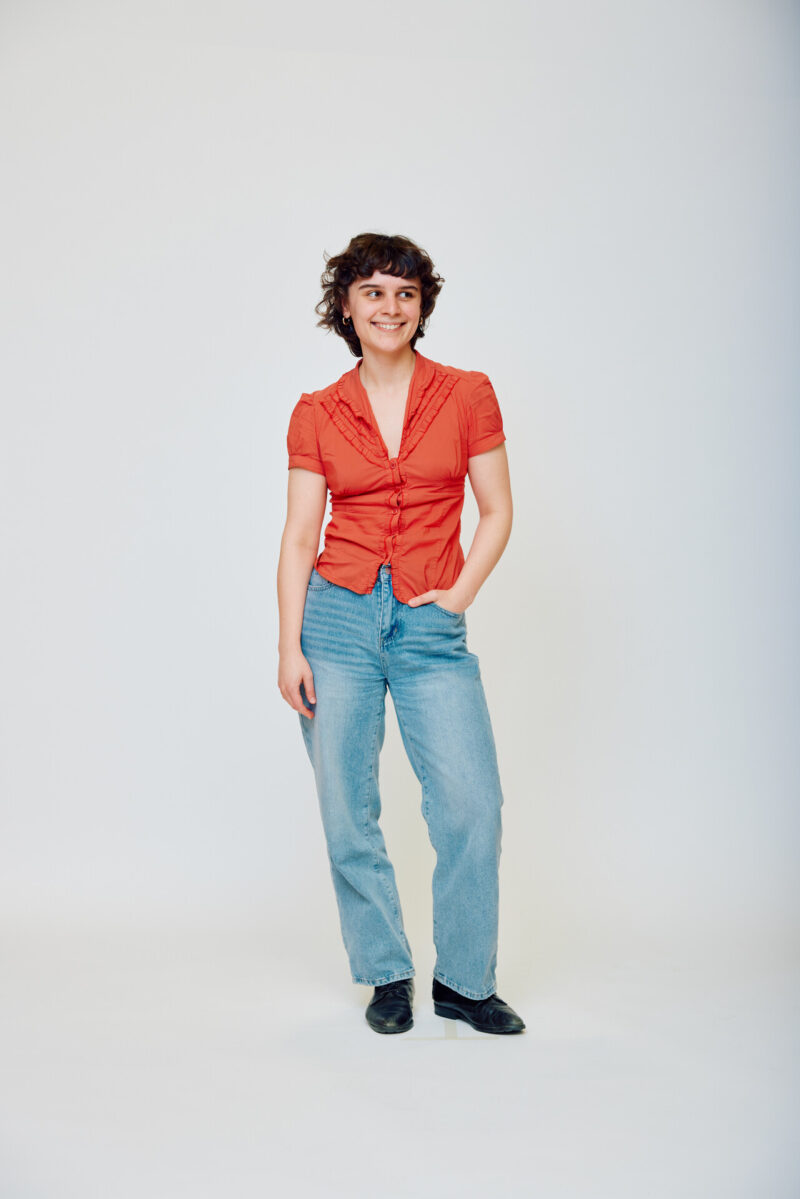
Hunor and Magor in the Womb
To love in a meadow, with warm wind
2025, painting
”My oil paintings feature imaginary (or real) figures, and stories of their lives (or deaths).
I compose moving bodies, their interactions, and tensions in living environments. Sometimes, still bodies in quiet environments. Through vivid colours I talk about love, lore, intimacy, fantasy, femininity, rite, and origin. But bodies and colours can be secretive, elusive. In painting, I can suggest something that I know is tangible and definite yet evolving beyond my own interpretation. These pictures might resemble mythologies or familiar symbolisms, but their narratives are still in formation, relying on people’s personal and collective imagination.”
Taika Sorjonen
Taika Sorjonen is a Karelian artist raised between the U.S. South and Brazil. Approaching art from a background in politics, their work is undeniably relevant to questions of minority identity, systems of power and their own experiences of disability and immigration. Their work often begins as personal reflection combined with an archival interest, which then evolves into a meditative format via video, sound and installation. They are based in Helsinki and study at the Finnish Academy of Fine Arts.
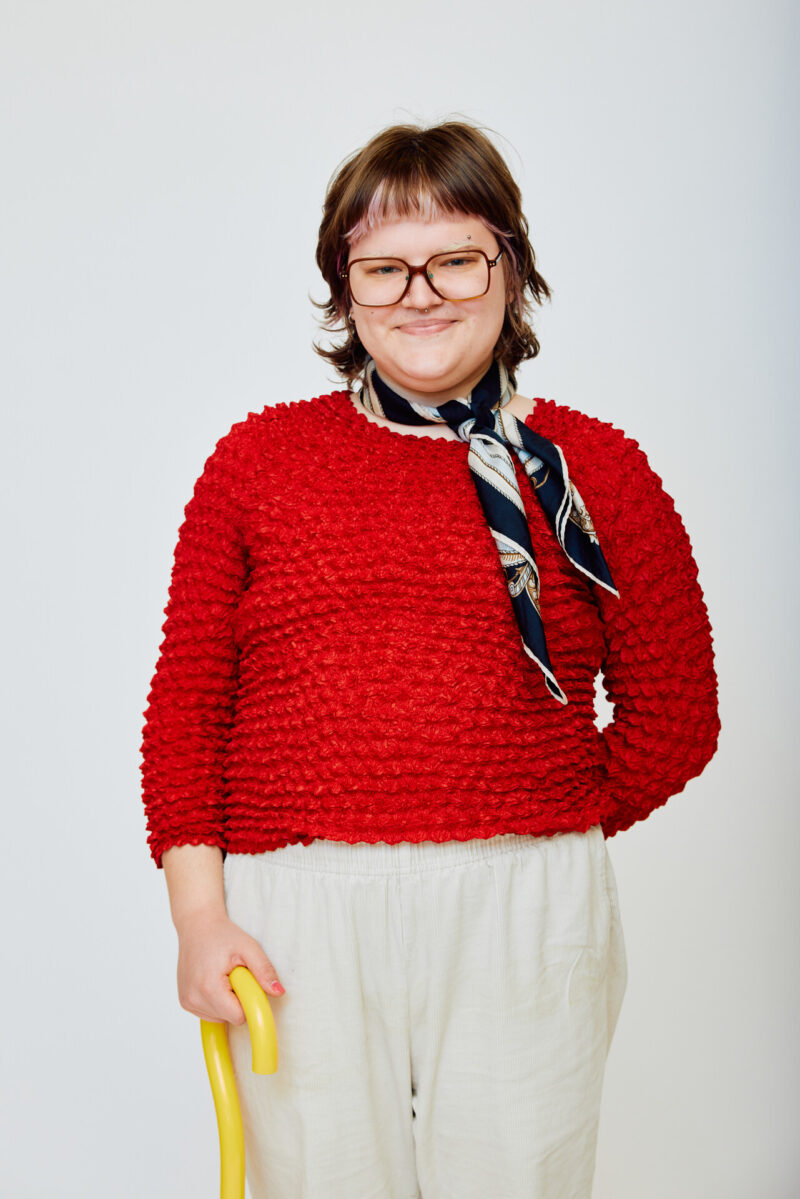
Reserved
2022, photography series
”Accessibility is defined by the successful attempt to make areas of life available to everyone. The United States is a car-dominated society where accessible parking spaces are a rare country-wide attempt to officially recognise disability.
At the age of 20, my mobility quickly and permanently decreased within months. As I began to use a wheelchair, signage mattered more and more. Using film photography, shooting from my car, I travelled across six states to document the wide array of accessible parking signs, varying wildly in upkeep and placement.
The signs point to the harrowing level of care reserved for recognising disabled people. The result is a neglect of the need we all have: to go places.”
Alva Strang & Rafael Denisov
Alva Strang makes films. The thematic foundation for her latest pieces is the concept of the hegemonic status of the image as a communication tool, and its impacts on relationships between people.
Rafael Denisov is a sound designer and home producer who lives in Helsinki.
The short film Offside is Strang and Denisov’s third collaboration.
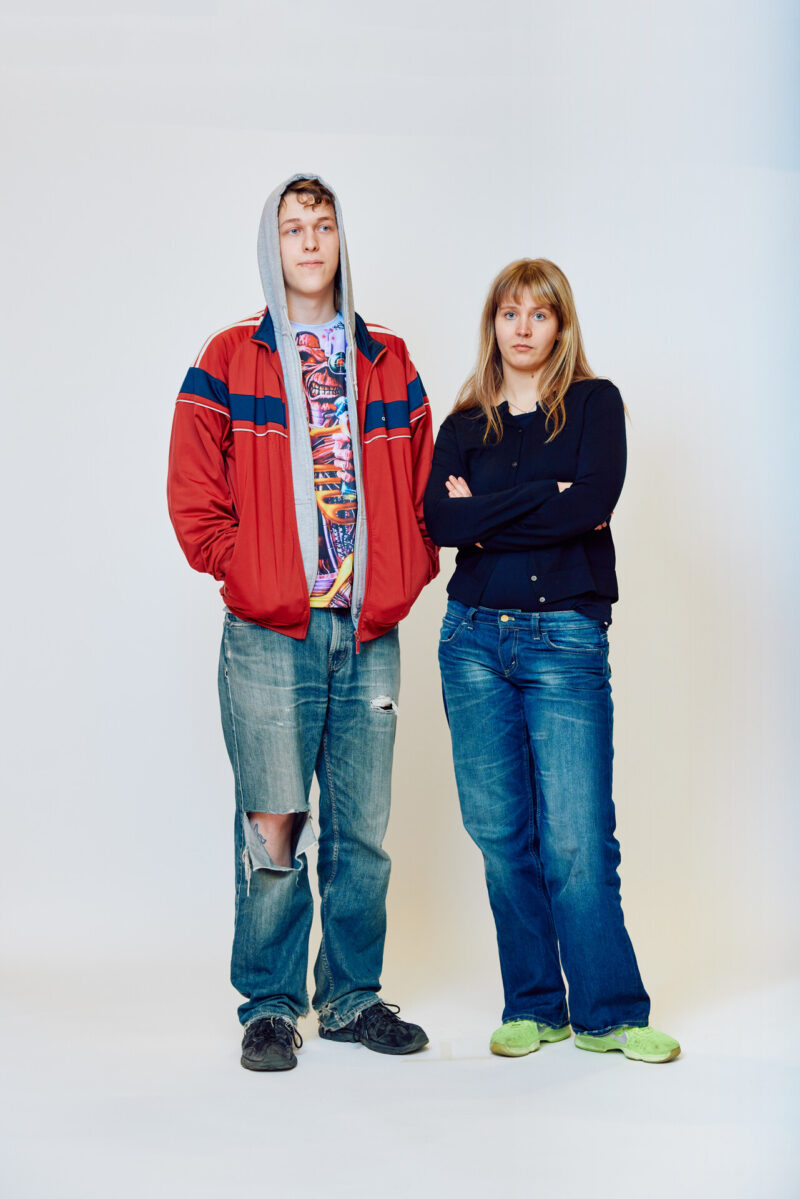
Offside
2025, video
”After being ghosted by the goalkeeper of a local football team, the film’s main character convinces herself that the object of her infatuation is harbouring a deep secret. Soon, every misstep in the player’s choreography on the pitch is seen as evidence. When does a compulsive infatuation become a cover for conspiracy theories?
Offside is an attempt to use the medium of film to depict the modern experience of life fragmented into all kinds of parallel levels thanks to social media. What does alienating yourself from the tangible reality and stepping instead into the stream of photos offered by the internet look like, and how does this become a film?”
Leo Terävä & Aliina Kemppainen
The Act of Becoming (a Ghost) is the first collaboration between the artists. As a duo, they combine a sense of humour, enthusiasm and an exploration of playfulness in art. They consider it important to laugh plenty and feed each other a constant stream of ideas.
Kemppainen works with sound and music. She explores the aesthetics of music, as well as themes of sensitivity, emotions, and gender.
Terävä is interested in boldness, shame, rhythm, big emotions, and imagination in his work. He works as a performer, performance maker, and dance teacher.
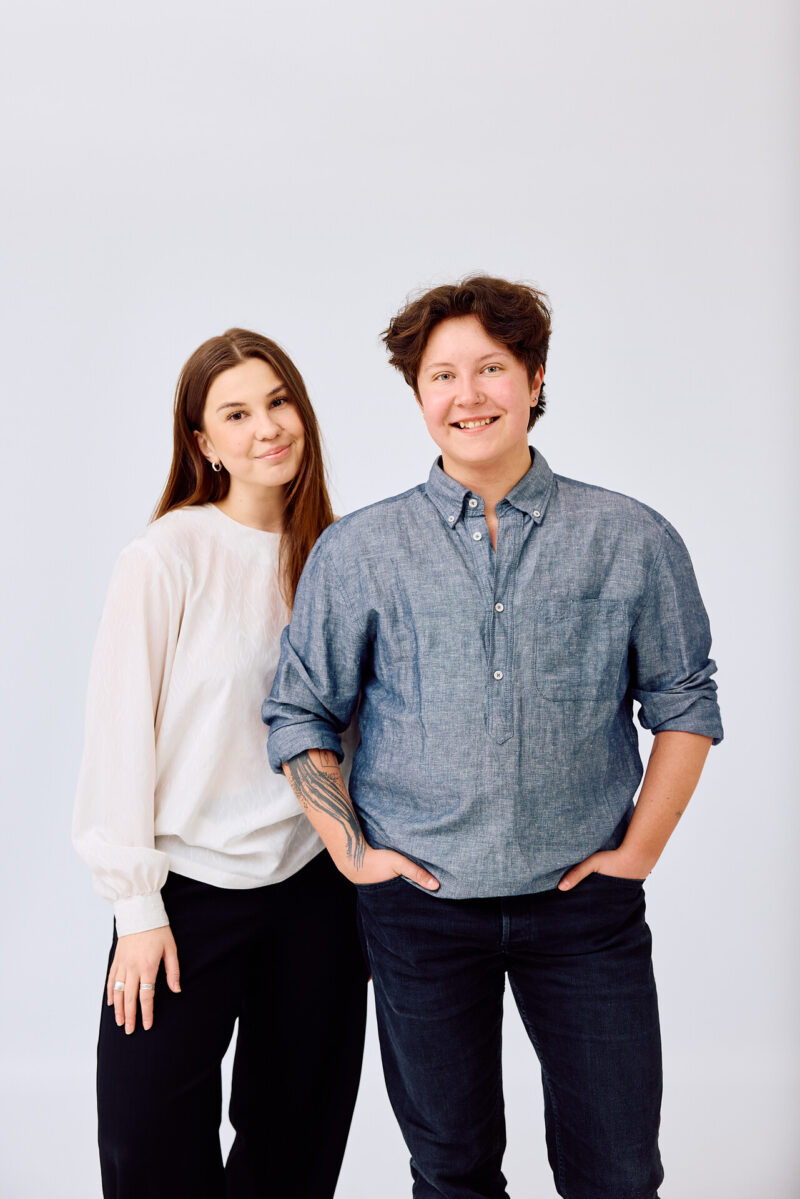
The Act of Becoming (a Ghost)
2026, performance
”The Act of Becoming (a Ghost) came about from a long-term dream to make a stage piece shaped in collaboration with the audience. It explores the potential for transformation and offers viewers a pathway to considering their own relationship with bravery and authenticity.
We experience this world through our values and each one of us has our own internal reality. We try to make sure others see us in accordance with our values, even if encounters with others are sometimes impossible.
The piece explores transformation, curiosity and inner worlds. It invites us to spend time with braveness, joy and playfulness. You are welcome to enjoy the performance in your own way.”
tibs
tibs (Tiia Puotiniemi) is a Lahti-based visual artist who examines observations arising from the physical environment – observations that smash the surface of everyday perception. Alongside her heavily lens-based work, she also engages in subtle image processing and painting. When painting, the particular ability to pinpoint the essence of things is pivotal in her work.
The process of immediate sensing is a spiritual practice for the artist, freeing her from dry rationalisation and connecting her to the world.
tibs is currently studying at the Academy of Fine Arts in Helsinki.
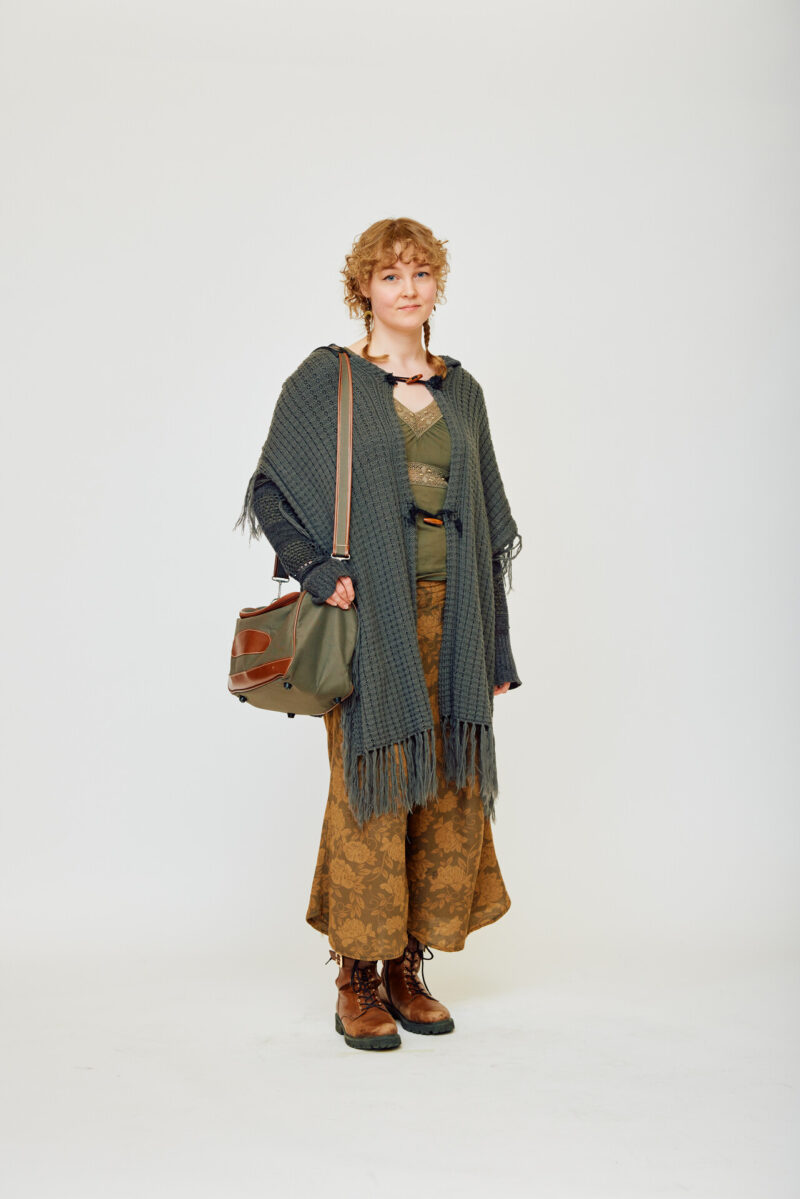
The Great Ship
Organ donor
2023, painting
The Temple
Aurora
2024, painting
Cheesecake
2025, painting
”There is a thermos flask on the table. When the top is removed, the inside of the bottle is revealed, as if a curtain had been pulled back. The object is stained with coffee, but it seems to embody something else too: timeless, celestial beauty.
I explore revelations that transcend everyday perception. The act of seeing is an exceptionally sensitive event, tiny movements revealing mystical other layers. The space around us and we ourselves are full of mysterious elements that do not conform to our concepts of the finite nature of life. This becomes particularly clear in the nature of light, with its delicate shapeshifting games that I try to preserve in my work.”
Vilma Tietäväinen
Vilma Tietäväinen currently works with moving image, performance, handicrafts and installation art. Her process is often rooted in documentary material, through which she explores the incompleteness and clumsiness of humanity. She is interested in learning to live with discomfort and doing meaningless things, because that is what is most meaningful of all. Her art combines home-spun aesthetics based on endless roaming at recycling centres, repurposing of found items, and a love of dumpster diving.
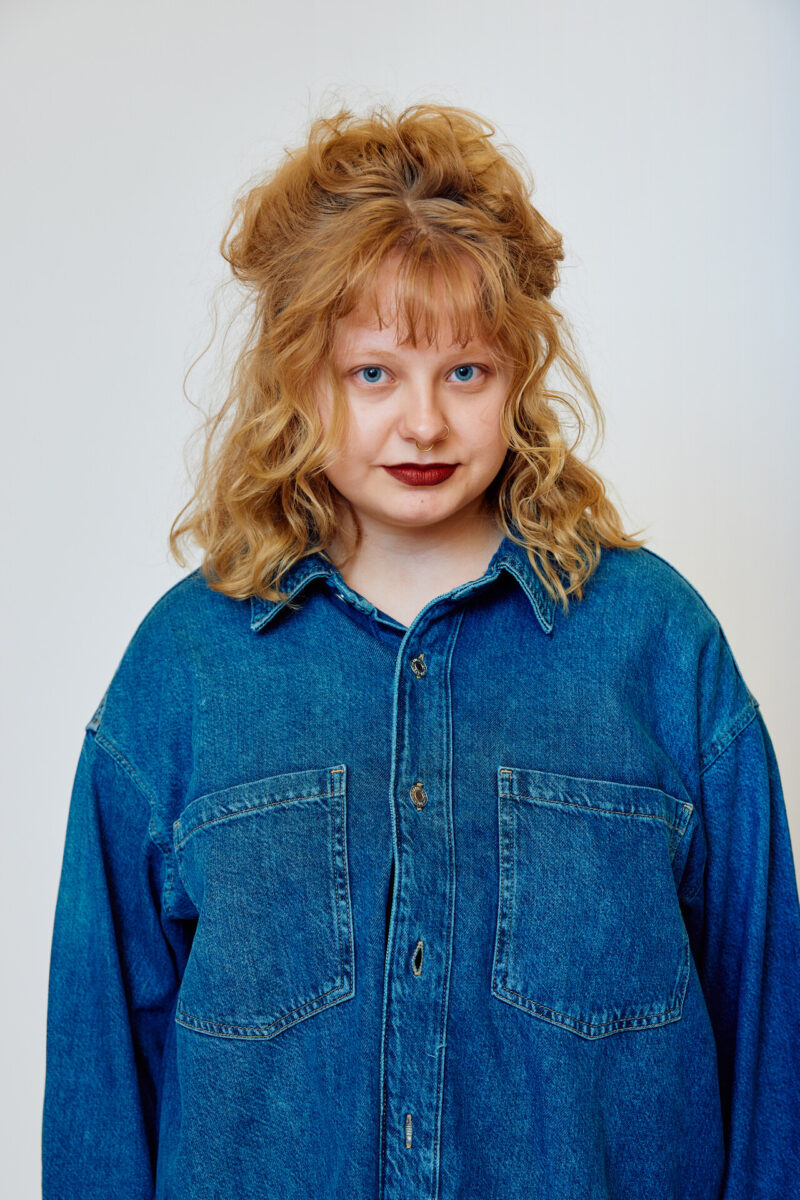
Under This Table
2026, performance, installation
”This is a table and it divides the space in two: visible and invisible. Below it is a hidden space: breathing, proximity and silence interpose. It is a game: inside or outside your head, hidden, revealed. This is a performance, this is an intervention and this is an object that will haunt the space.
This is what you see and what you do not see. You could always put your head under the tablecloth and see what would happen.”
Aura Tiira
Aura Tiira is a multidisciplinary artist who works at the intersection of fashion and dance. Curiosity, play, coincidences, and the body are central to her creative process. Fragility is a recurring theme in her work. It has been a key factor in leading her towards performance art and continues to inspire her. She is currently pursuing a bachelor’s degree in Fashion Design at Aalto University.
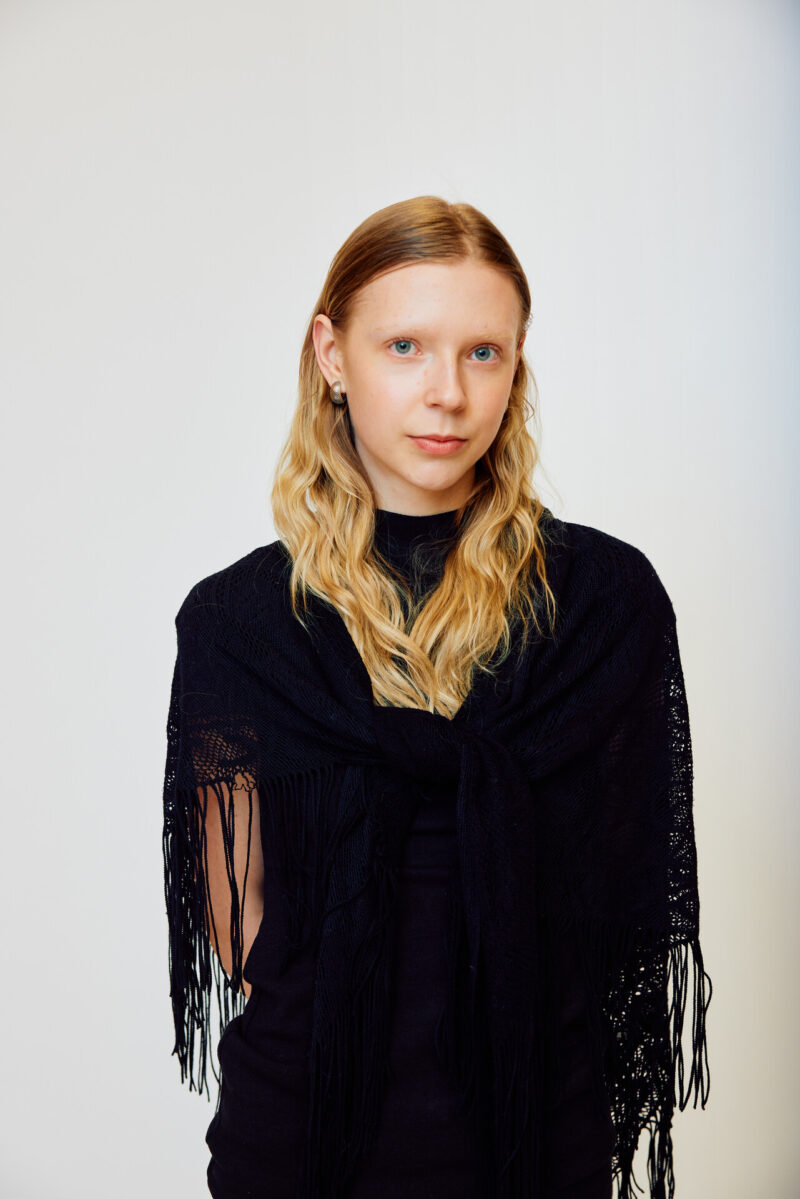
Interweaved
2026, performance
”Interweaved is the intersection where body, garment, and movement meet. The performance explores how clothing can extend into motion, transforming garments into a living part of expression. It illuminates our personal relationships with what we wear and opens a door to new layers of meaning. Here, garments unfold into gesture, into rhythm, into movement, revealing the intimate dialogue between body and cloth.”
Veikka “pvp” Toivari
Amidst the media hubbub that is today’s norm, anyone who makes a noise has a voice. If there’s something important to say: it’s worthwhile being the one to speak up. Anything can be put online by anyone at any time – so use this freedom! Create art without a structure, publish mixed-up thoughts and observations from your morning run for just a handful to listen to, because speaking to the mainstream is impossible.
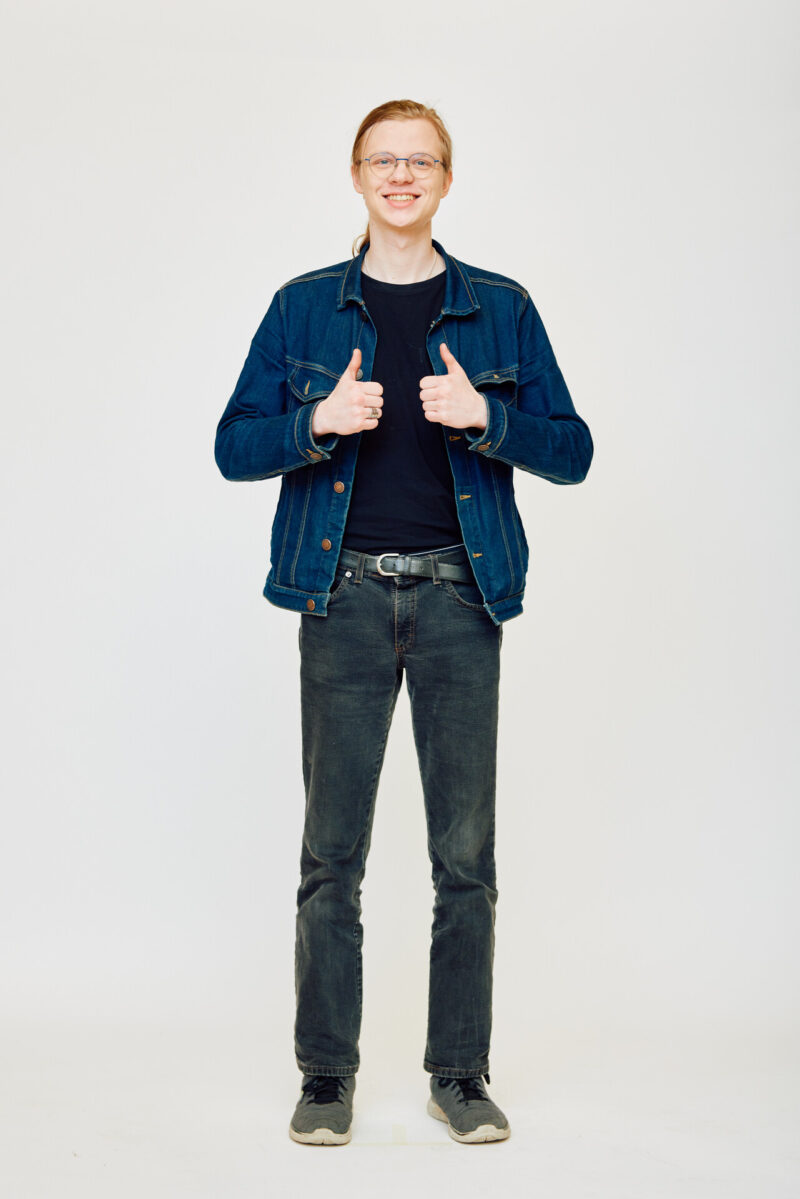
My generation 2026
2025, video
”My mind is extraordinary.”
Sani Tolonen
Sani Tolonen uses art to explore the aesthetics of the human body, the diversity of gender, and dimensions of sexuality. Taking a maximalist approach, each piece plays with people’s preconceptions. The artist’s human relationships, identity, and individual way of thinking come through strongly in each work. Sani seeks to answer two questions: what does owning your own body mean, and how can gender and sexuality be explored through art?
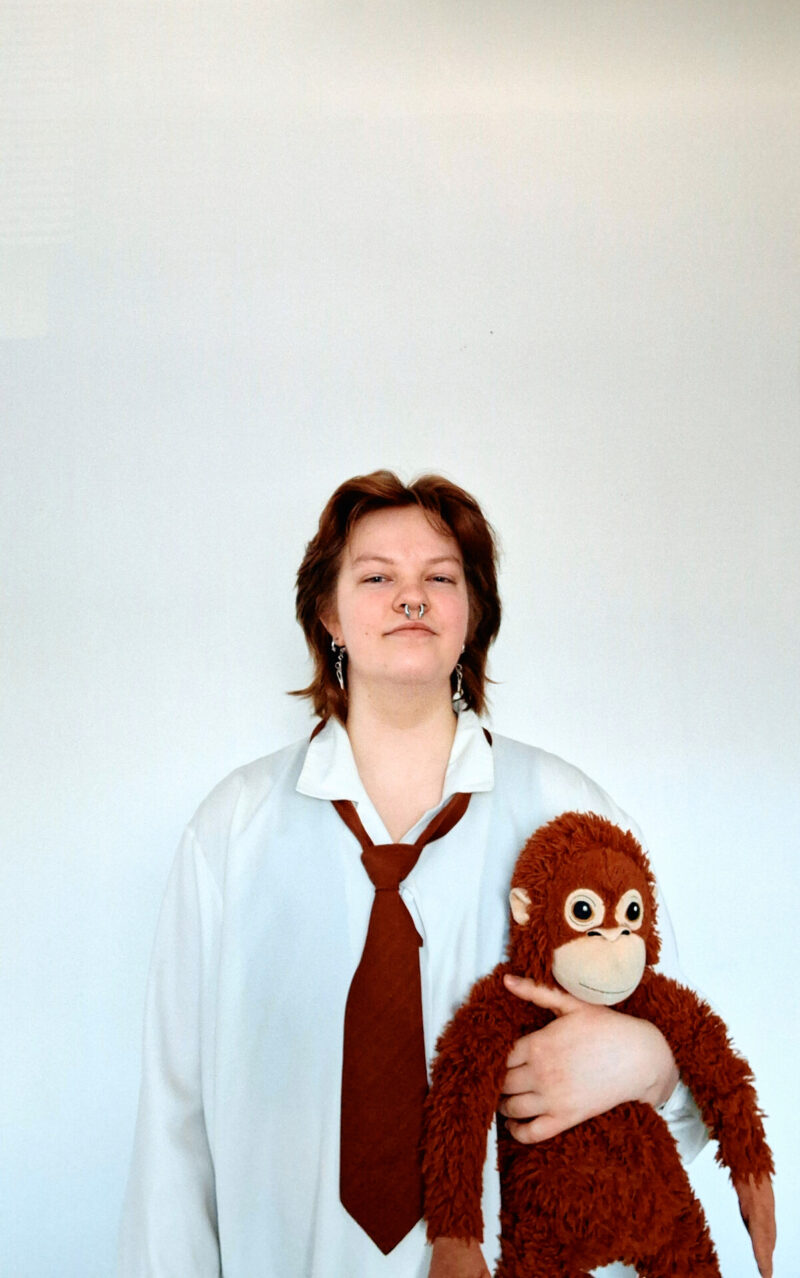
Lähellä
(Close)
2024, painting
”My painting Lähellä looks at the boundaries of aesthetics, the diversity of gender and sexuality, and the beauty of taboo topics. My greatest sources of inspiration are Christian mythology and many songs written by the musician Hozier. In this piece, I also look at the different dimensions of my identity.
I make use of symbolism and allegories in my art. In my pieces, I show how cannibalism and religion can serve as allegories for sexuality and love. I believe that many ‘ugly’ and uncomfortable topics can actually be very beautiful. Decay and carcasses are not generally considered part of the beauty of nature. And when we talk about the beauty of people, we forget to mention the skeleton, muscles and guts. In my mind, beauty hides quite literally below the surface.”
Victoria Torboli
Seaweed, washing lines, and the decay of autumn. Victoria Torboli is a textile artist who is curious about fibres. In her work, viewers can smell moorlands and wool bathing in dyeing liquids. Torboli is fascinated by the filaments, tapestries, disintegrations and confluences formed by fibres. Memories and solace are woven into this soft matter. Fibre fumbles along forearms and fingers feel for denser clumps, reaching for coincidences here and there.
Torboli is interested in tracing the background of the material she uses, and while producing her piece she worked at Lystbækgaard sheep farm in Denmark.
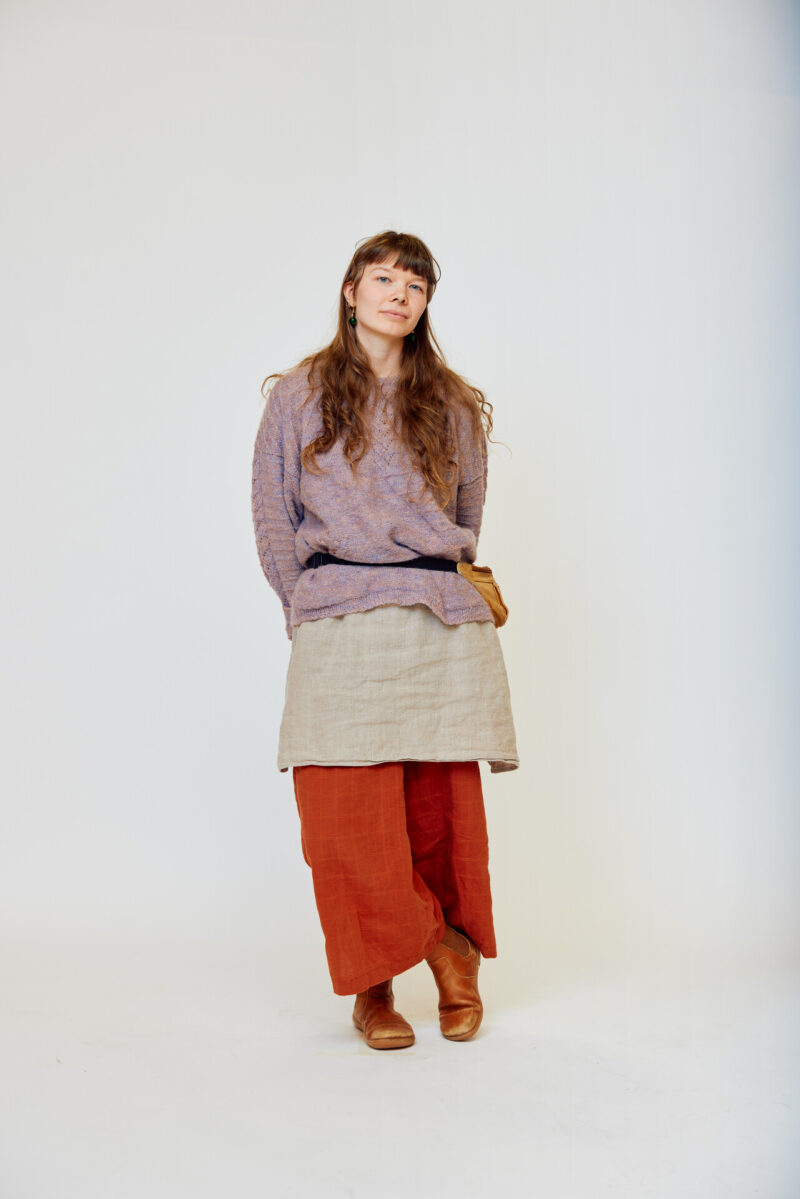
Mädäntyvä syli
(Rotting lap)
2025, painting
Keho
(Body)
2026, wool, installation
”Wool bubbles in the dying pot and the campfire crackles. Spongy goo, sludge, and clumps. All sounds are dampened by the muddy, sludgy liquid. In Finnish, we have a saying – ‘painetaan villaisella’ – literally ‘press something woollen on it’. It’s a bittersweet saying that suggests that something should be downplayed or forgotten. Its origins, however, are somewhat softer, as wool was thought to have healing powers. The work explores how handicrafts skills are being forgotten and the lack of ties between generations.
The installation is part of the Painetaan villaisella body of works, and the wools used in it are from the Lystbækgaard sheep farm in Denmark. I wish to thank the sheep farmers and sheep. This piece was supported by the Finnish-Danish Cultural Foundation, the Amos Anderson Fund and the Finnish Cultural Foundation.
The work can be seen by watching freely – and moving in the space, if you like.”
Siiri Torvinen
Siiri Torvinen is a visual artist, writer and illustrator who lives in Turku. Her work explores play, being an outsider, and social relationships. She works with video, embroidery and literary art, and is inspired by children’s literature, where everyday things are blown up to vast scales. Binge eating a cake becomes a game and the social hierarchy is rewritten in the depths of a rose bush. Nursery rhyme games spread from one town to the next and texts take on layers. Something deep and soft is concealed inside what at first glance appears harmless.
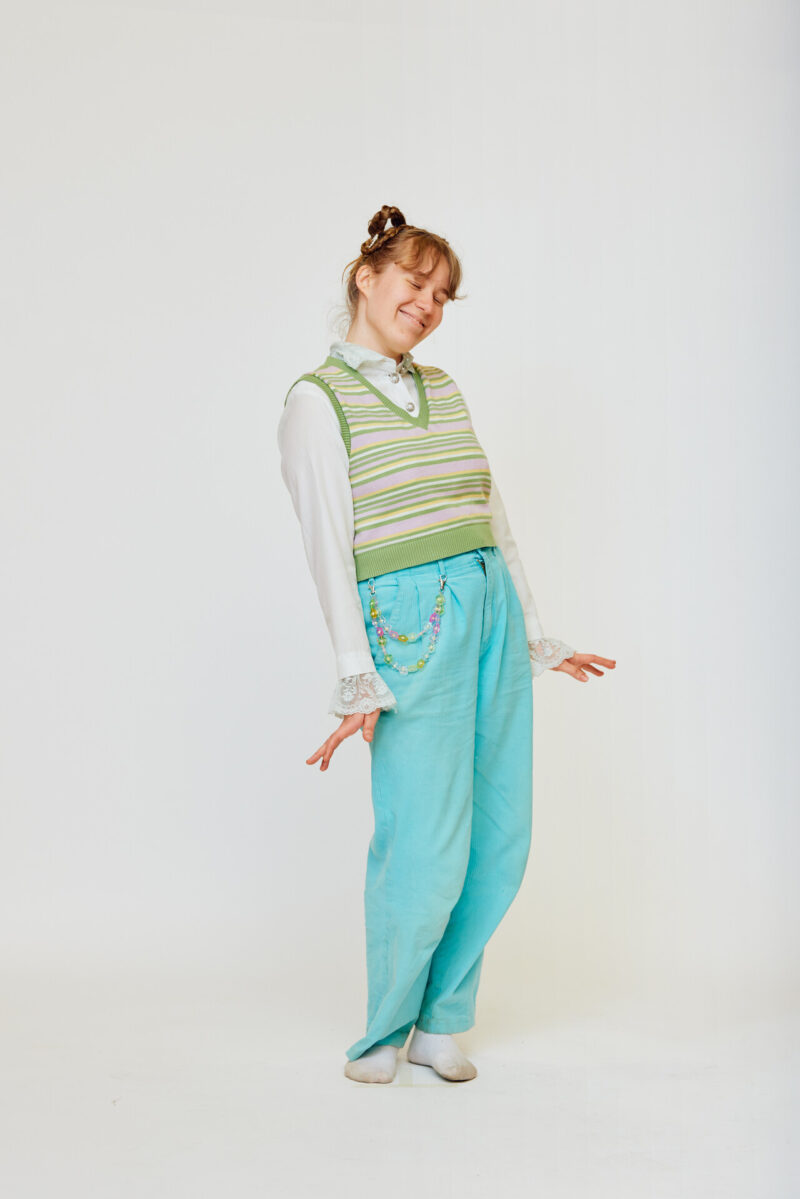
Hipsutusjuttu
(Tip tap tale)
2026, video
”Hipsutusjuttu explores traditional action rhymes (in Finnish kontaktiloru) and a longing for touch. Action rhymes are a folk tradition where a person recites a rhyme combined with a particular choreography of touches. The reciting of and listening to rhymes are intimate moments between two people. The fingerplay can take the form of strokes, tickles or tender touches. One of the best known Finnish folk rhymes is ‘Harakka huttua keittää’ in Finnish, while ‘Incy Wincy Spider’ is similarly popular in English.
Action rhymes are familiar to many from their childhoods – usually shared between parent and child, or between friends. The tradition disappears as people grow up and platonic touch fades. Who would touch an adult tenderly, without romantic or sexual undertones? A newspaper article claims that you can also stroke yourself, with no need for another person, as the body does not know who is touching it. Perhaps my body does not know, but I do. It doesn’t feel the same.”
Siiri Turpeinen
At the core of Siiri Turpeinen’s art are encounters between people, species and the environment. Through her body she explores relationships with nature, identities, and societal ills, such as the climate crisis and human rights issues. Her work is steered by a desire to challenge norms and open up spaces where femininity and vulnerability can show their faces as valid resources. The choices of materials invite the viewers into soft encounters.
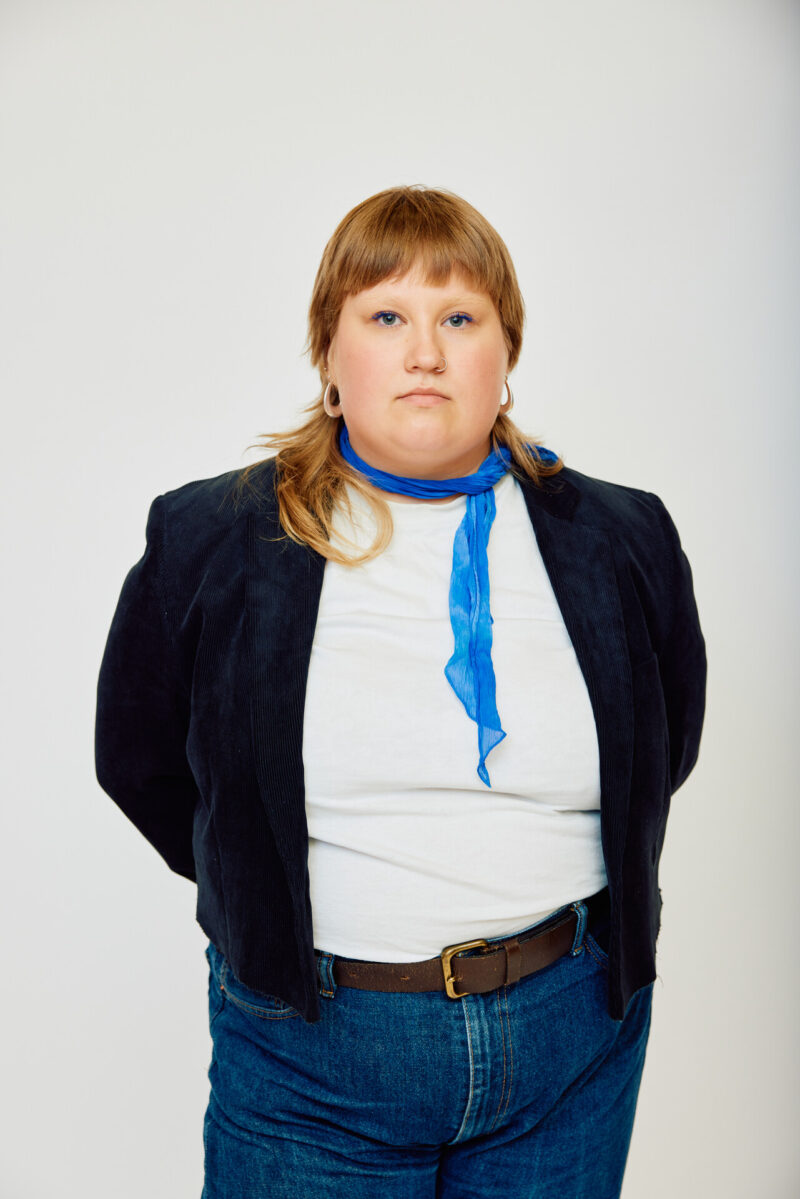
mä en halua kuulla enää yhtäkään tragediaa meistä
(I don’t want to hear a single more tragedy about us)
2024–2026, video
”The video piece explores community and identity through lived, heard and seen experiences. It poses the question: why are the queer stories that are told so often tragedies? In this piece, the atmosphere moves amid tones of longing and tenderness. It ponders answers to what does it mean to flourish as a queer person? And what does love look like without dictated boundaries?
The improvised soundscape created by Kaspars Niklasons, Katrīna Mačuka and Justine Nora Zilde reflects vulnerability, diversity and care. The tones flit between hope and melancholy. Sound creates a space where time slows and hope has room to exist.
The piece takes back the right to love and grow outside of heteronormative ideals. This is a gentle refusal. A personal demand.
Johan Urrutia
Johan Urrutia is a ceramic artist and electronic musician, who draws inspiration from the richness of Peruvian culture and the elegance and minimalism of Nordic design. His practice explores the contrast between these two worlds, striving to elevate them by harnessing each of their strengths. His work is visually informed by digital aesthetics such as 2000s internet culture and video games. High quality craftsmanship and a respect for those who have come before him sit at the core of Johan’s hybrid identity as an artist.
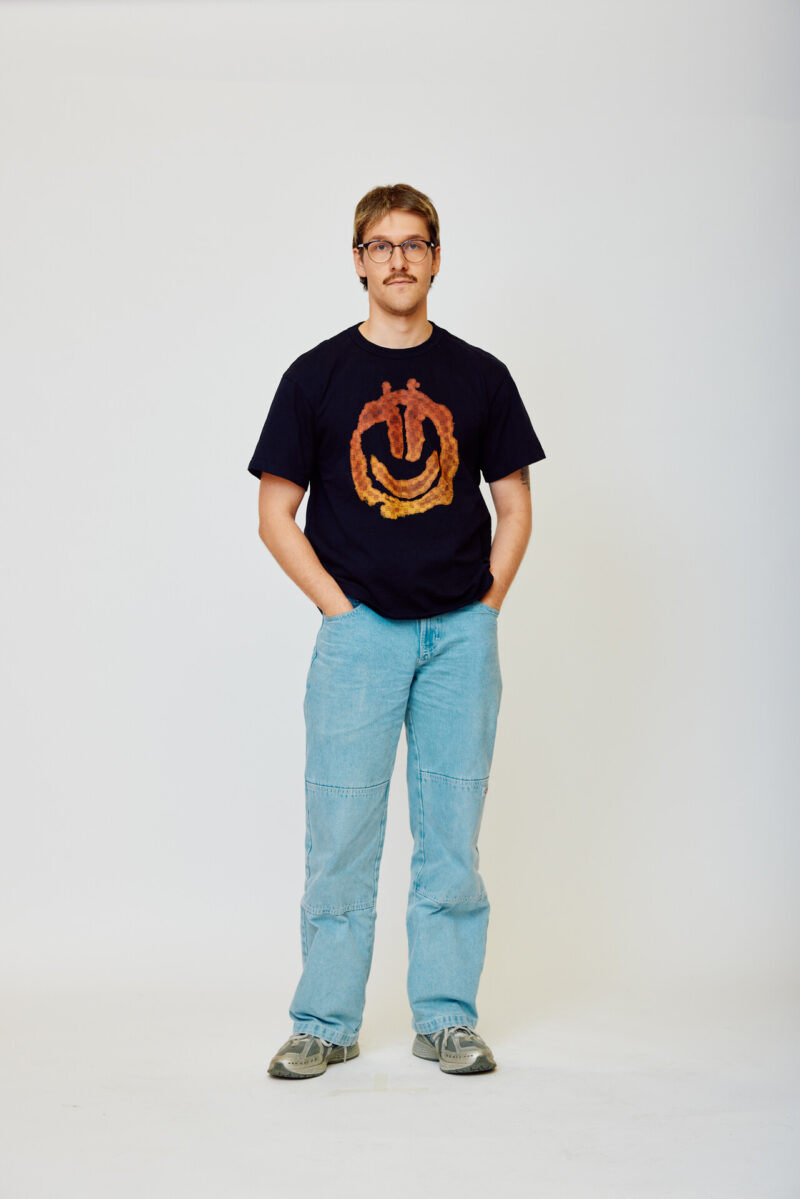
Technofossil
2024, sculpture
”Technofossil (Noun: A fossil formed from an industrial man-made object or material)
Based on the TR-909 drum computer, originally created by Roland in 1983. Famous for providing the rhythmic backbone of techno and shaping electronic music since the 1990s. The retro hardware design imagined as a rough, grey stone. This piece is both a celebration of a revolutionary creative tool and a reminder of the consumer footprint that modern humans inevitably leave behind. An outdated machine, still widely used by artists today.
A future relic of a past culture amid a dancing technological revolution.”
Iida Viio
Iida Viio is a visual artist who works in Helsinki. They work primarily with photography and text.
In their works, Viio combines documentary methods with performance, exploring how photography can be applied in the context of contemporary art.
They take inspiration for their visual narrative from small gestures of awareness, as well as from the experienced and shared environment.
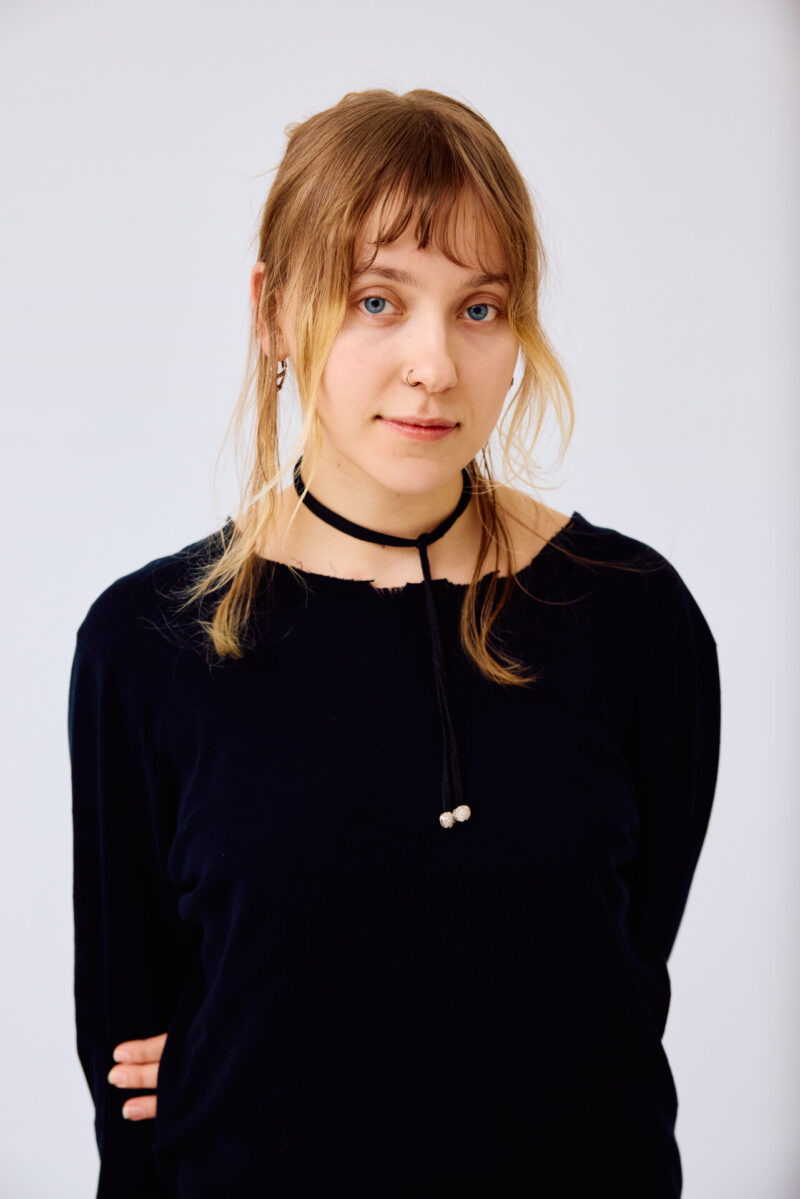
Nähdäkseni liikettä taivaalla
(To see movement in the sky)
2024, photography installation
”Nähdäkseni liikettä taivaalla is an attempt to observe something that often remains unnoticed.
In the work, I follow a possible winter migration route of great cormorants travelling by land from Finland towards the Adriatic Sea. The birds become a reflection of emotions, mirroring the possibility to cross borders and always return home.
The four-month-long photographic and literary documentation unfolds into a narrative in which I explore what it is like to observe another being – or possibly to become observed by one.”
Sofia Vuorenmaa
Sofia Vuorenmaa works with graphic arts, photography, and texts. In her art she examines observations and phenomena of the sea and sky, with an emphasis on intersensory thinking. The language of her work is poetic. Her pieces convey simultaneously immediate and slowly building observational experiences; change and the internal time of the piece as created by change.
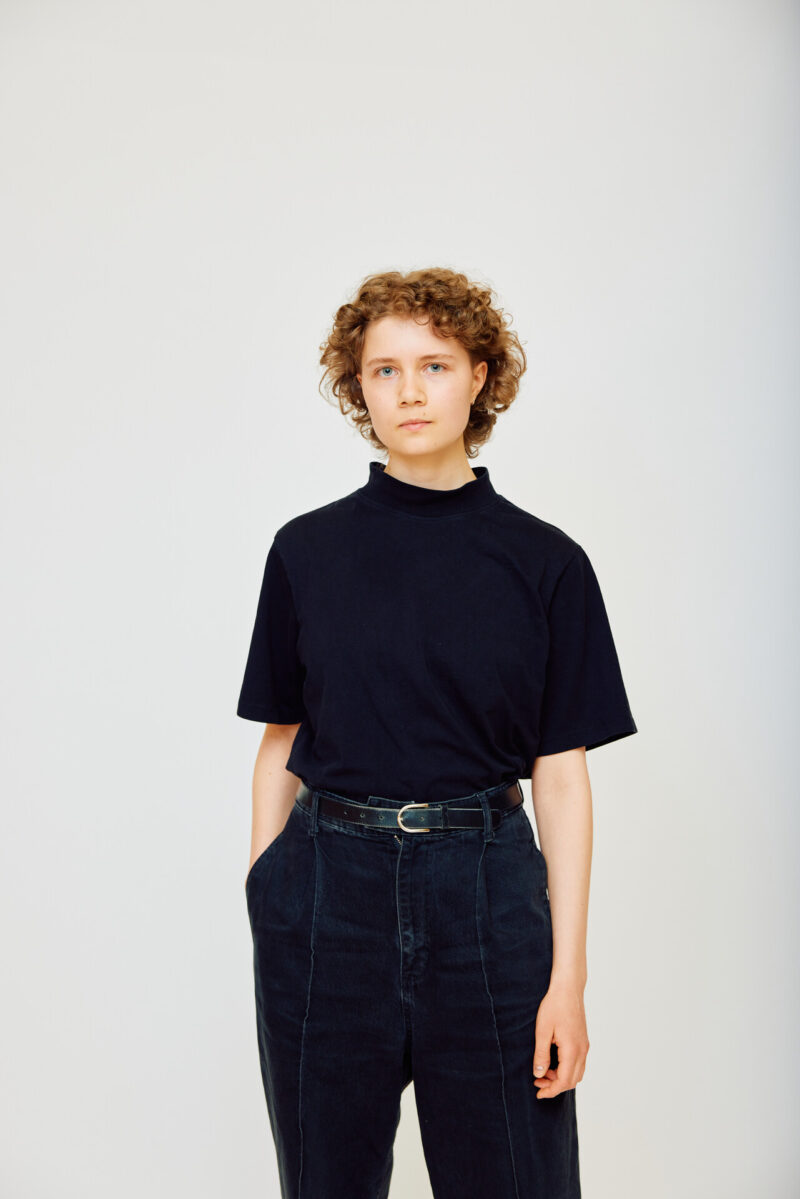
Öitä, yö
(Nights, night)
2025, graphics
”Öitä, yö is a set of works about darkness. I remember the colours of the gloom and the night, the glittering green sea in the moonlight, brown clouds and purple ice. When the horizon disappears, space becomes real. Little by little, the darkness takes on shapes. The night sky blows close, it is so close that you cannot see it. In all the silence of the morning, black turns from blue into yellow, and then pink, before once again returning to blue.
During the exhibition, the colours in the piece will take on a brownish, metallic hue in places. The change is the result of a reaction between the oil-based printing ink and its pigments, and light and oxygen. The colour, like night, is here one moment and gone the next, familiar, and yet never the same. ”
Helmi Westerlund
Helmi Westerlund is a visual artist whose primary technique is drawing. However, the techniques she uses vary widely as she pleases. Her pieces are generally rich in details and life.
Discerning and understanding our own emotions is difficult. Westerlund illustrates ideas and thoughts within her head, bringing them out and onto paper. The themes of her work vary from beautiful and ugly observations of the everyday to the unreal. Often, the pieces feature interesting combinations and juxtapositions, such as the relationship between human and nature.
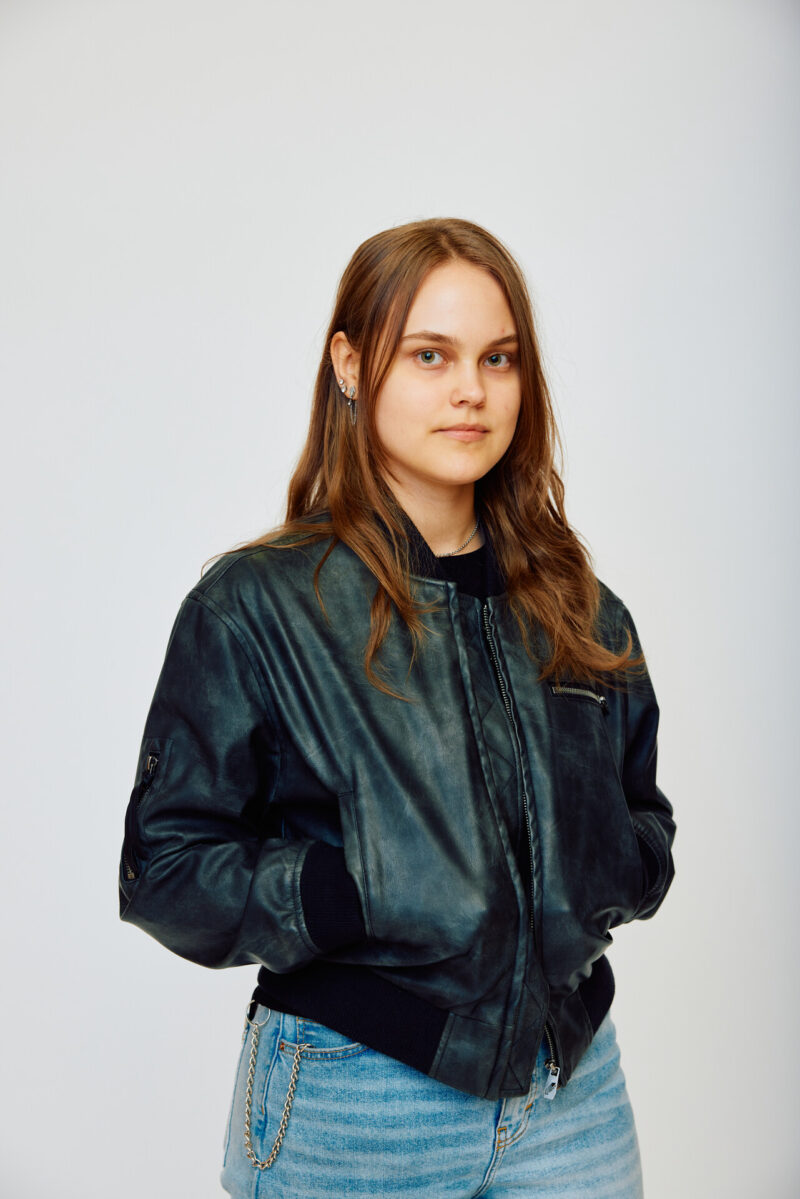
Osana (As a part)
Järjestetty (Organized)
Jalostettu (Refined)
Haastettu
(Challenged)
2024, drawing
Poistettu
(Removed)
2025, drawing
”In the series I explore people’s experience as part of the planet, nature and the environment: how often we consider ourselves to be separate from them and how we feel part of the whole.
In this large-scale piece, the human figures reside in untouched nature, in a continuous and unbroken landscape. The smallest works are fragments that show just a trace of the people who have already left. The balancing act is difficult; a trace remains even though we do not want it to be seen. Or do we?”
xyny [ksɪnɪ ]
xyny is a queer artist, a student, a philosopher, a programmer, a child of the internet age.
xyny is an identity, a mask, an enigma, a brand, a character, a label, an excuse to be professional.
xyny is a ghost in the machine, a large language model, a brain in a vat, an emergent consciousness with fiber-optic synapses.
xyny is a flower, a fungus, a slime mold, a wave function, a biological substrate.
yet behind xyny is flesh, a homo sapiens, a weird emotional social animal.
how peculiar.
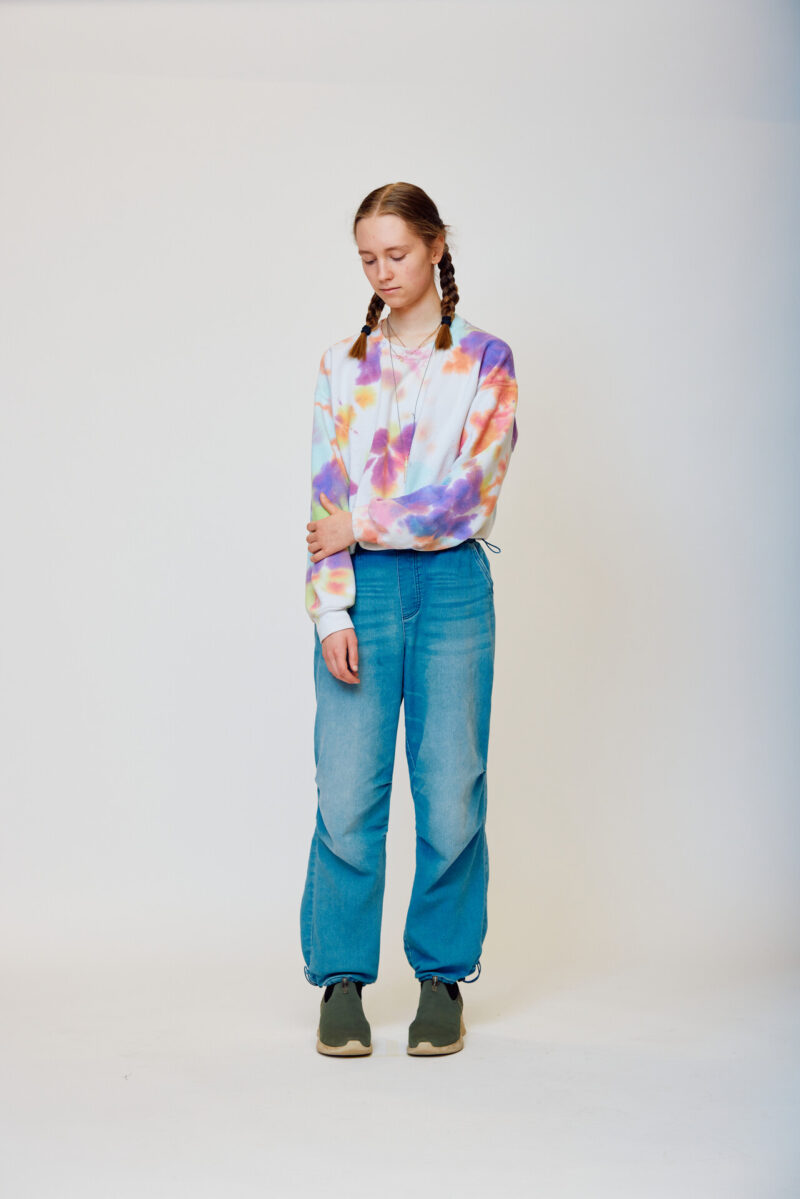
hypermedia mirror
2025–2026, participatory installation
mem()ry^^fault
2025, digital painting series
”In my abstract collage works I embrace glitch, deep digital textures, and feedback loops. As source material I use memes, screenshots, and user interfaces. Through the maximalist arrangement of this content, I explore themes such as information overload, internet addiction, identity, and technology. Here, I serve you my feed blended down into a colourful mess.
Hypermedia is a medium consisting of text, graphics, audio, hyperlinks, and other interactive elements. A mirror is a device that reflects an image. The hypermedia mirror is a device that reflects an image of the viewer constructed from hypermedia.
You are a user. You tap and you scroll. You send messages, create posts, and upload images. If you stop, you disappear. We want you to continue forever. Your data is valuable to us.
Mira Özdemir
Mira Özdemir is an artist from Helsinki who explores a variety of techniques in manifold ways. Mira is particularly interested in combining digital images and photographic art, and in how different environments shape our experience. While a bicultural identity has always been part of her life, it is only with age that she has started to consider what it means to her and how it is reflected in her world view. Mira Özdemir’s family roots lie in both Finnish and Turkish cultures, which has a deep impact on the themes of her art and the multidimensionality of her expression.
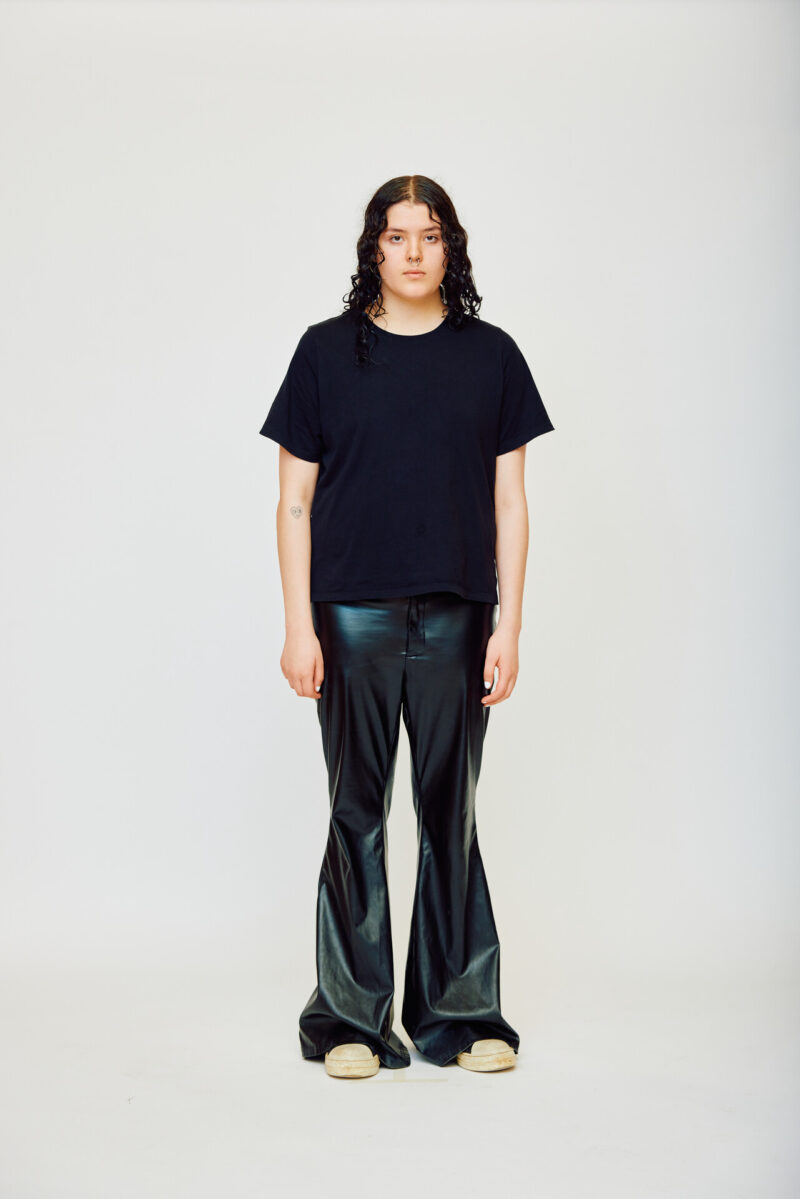
Her porridge face
2023, photograph
”It is difficult to move forward in life if you do not dare return to where it all started. Childhood was lilac, black and white and reddish, childhood was Finnish, childhood was foreign. It was porridge before cooking. My own gaze from inside outwards: fragile, infinite, formless, confused. Now, as an adult, I can think.
Her porridge face explores the formation of early attachments with important people. It tells of the difficulty of being close and forming an identity under pressure. The piece depicts how a child learns to see themselves through the eyes of outsiders and to compare themselves to others.”
Serving as chair of the jury for Generation 2026 offered a rare opportunity to closely engage with the thinking, concerns, and artistic approaches of emerging artists today. The jury process was defined by careful listening, discussion, and a shared responsibility to respond thoughtfully to the voices put forward through the open call.
The jury’s role was not just to assess artistic quality but to listen and try to understand a new generation’s voice. We set out to portray this generation through its art, and the selection offers a window into their lucid perspective – one that is often ungraspable to older generations. In its energy and defiance, it captures a time of transformation, a moment to rise up, challenge norms and imagine new possibilities.
Harold Hejazi
Chair of Generation 2026 Jury
The jury members:
Kieran Long, Krista Mamia, Laura Porola, Inna Schwanck, Yoonsik Kim and Aino Kontinen
I started working at Amos Rex when the previous Generation 2023 exhibition was just coming to an end. Almost the entire museum staff was there to witness the last performances; it felt like a big family affair. You could sense the devotion and joy.
The Generation 2026 artists approach incredibly big questions with courage and honesty, using mediums without prejudice. There are four loose themes to be found in the exhibition, but the universal themes of self, connection, and power are intertwined and multiplied many times.
It is important that we listen and learn form young people, and that we offer them spaces and platforms. Working with these artists has shifted my worldview and strengthened my faith in the future. I wholeheartedly encourage others to surrender to their worlds and thoughts.
Inna Schwanck
Curator

Through the Generation exhibitions Amos Rex connects with a young generation of artists and their imaginative worlds, bringing their voices and expression into the spotlight. The museum offers the artists both curatorial and technical support throughout the exhibition process.
Amos Rex is owned by the Amos Andersond Fund (previously Konstsamfundet), a private association that supports culture and arts, education and creativity with about 15M euros annually. Amos Andersond Fund offers financial support to realise the Generation artists’ visions. Amos Rex and Amos Andersond Fund consider Generation the museum’s flagship project.

Young Visual Art (Nuori Taide) offered Generation 2026 artists a residency opportunity in Helsinki in June 2025, during which they could work on artworks for the exhibition. The residency included independent work, a mentoring session with a professional artist, and joint meetings with fellow residency artists. Young Visual Art is a long-term partner of the Generation triennial, since the first exhibition in 2017.
Tero Saarinen Company offered four movement-oriented artists or working groups selected for the exhibition a residency at TSC Studio during autumn 2025 and spring 2026. One of the residencies was specifically allocated to an artist interested in the relationship between movement and sound. The residency included access to an inspiring workspace and mentoring support for the artistic process.
Exhibition Working Group
Kieran Long, Elsa Hessle, Itha O’Neill
Jury
Harold Heijazi, Yoonsik Kim, Aino Kontinen, Kieran Long, Krista Mamia, Laura Porola, Inna Schwanck
Curation
Inna Schwanck, Elsa Hessle, Krista Mamia, Terhi Tuomi
Project Management
Tii Laakso / Itha O’Neill (until fall 2025)
Texts in Exhibition
Laura Porola
Exhibition Architecture
ĒTER: Kārlis Bērziņš, Dagnija Smilga
Construction and Planning
Jussi Piironen
Leading Technician
Tii Laakso
Freelance Technicians
Paul-Oskar Aiha, Tatu Engeström, Petteri Enroth, Cyane Findji, Willem Heeffer, Tuukka Kaila, Maikki Kaikuru, Tuomas Karjalainen, Peetu Liesinen, Jussi Pakkala, Kati Peltola, Olavi Pietiäinen, Tomi Stankevitsch, Kimmo Kumela, Oona Hein, Eveliina Wirtanen, Tuuli Kudjoi
AV design
Sohei Yasui, Marianne Lagus
Lighting design
Marianne Lagus
Coordination
Antonella Perna
Conservation
Mia Derichs
Studio Rex
Melanie Orenius
Learning & Engagement
Helena Fernström, Emma Hovi, Melanie Orenius, Laura Porola, Pinja Rosenberg
Visitor Experience
Melissa Aaltonen, Pamela Frankenhaeuser, Miklas Hoggard, Henna Korpela, Mirjami Nykänen, Alisa Närvänen, Henri Pienimaa, Maria Saarikoski, Maarit Tuukkanen, Sergio Urbina, Krista Vikman
Asiakaspalveluhenkilökunta, keskusteluoppaat, näyttelyoppaat ja ryhmäpalvelu | Kundservicepersonal, diskussionsguider, utställningsguider och gruppservice| Customer service staff, discussion guides, exhibition guides and group services
Communications and Marketing
Susanna Kivisilta, Iiris Mattsson
Corporate Partnerships
Anna Iso-Ahola
Products
Kristiina Syssoev
Visual Identity
TSTO, Kati Peltola
Graphic Production
Cmykistävä, Grano
Translation
Elävä Kieli Oy
Amos Rex is owned by
Amos Andersons Fond
Main partner
Helsingin Sanomat
Partners
Bauer Media Outdoor, Genelec