

Accessibility

Amos Rex is an autism-friendly destination. Each year, we implement at least one new initiative to improve autism accessibility.
In Brief
An accessible entrance is located on Lasipalatsi Square.
All exhibition spaces are on level -1 (K1) and can be accessed by elevator.
Accessible toilets are located on the exhibition level.
Visitors holding an EU Disability Card can purchase an admission ticket for €5. Personal assistants are admitted free of charge.
Guide dogs are welcome.
Seating and a wheelchair are available to borrow at the museum.
Detailed information is provided in the sections below.
If you have any questions about visiting the exhibition or attending events, you can contact our service advisor:
Pamela Frankenhaeuser
Before your visit
You can purchase tickets in advance online or on-site at the museum.
Tickets are sold in the street-level lobby. Our staff are happy to assist you with purchasing your ticket. Please let us know if you have a Museum Card or are eligible for any discounts. You can also find the full ticket price list on the Tickets page.
We accept debit and credit cards, cash, cultural benefit payments, and the Museum Card.
If you have purchased your ticket online in advance, you will receive an entry sticker at the museum upon arrival by showing your QR code to staff at the ticket desk.
- Our staff are here for you—please feel free to ask them for assistance.
- For safety reasons, do not touch artworks or exhibition structures unless explicitly instructed to do so. Works that may be touched are clearly marked.
- Food and drinks are not allowed in exhibition spaces to protect the artworks. You may eat your own snacks in the lobby areas, ask our staff for more information. Breastfeeding and bottle-feeding are allowed throughout the museum, including exhibition spaces. Please use benches where possible.
- Please leave backpacks and bags in the lockers. Small bags (max. 30 × 20 × 50 cm) that can be carried in front or by hand may be taken into the exhibition. Tote bags for small items are also available.
- Photography and video recording are allowed without flash. Please be mindful of other visitors. Professional equipment and commercial photography require a permit, please contact Amos Rex communications in advance.
- Children under 12 must be accompanied by an adult in exhibition spaces.
The Amos Rex ticket lobby is located at street level. All exhibition spaces are on level -1 (K1).
You may stay in the museum as long as you wish during opening hours.
Visitor numbers vary throughout the day. Weekday evenings are usually quieter, while weekends tend to be busier.
If you would like more information about accessibility, facilities, or visitor numbers, please contact our service advisor:
Pamela Frankenhaeuser
+358 50 305 0941
(Mon, Wed, Thu, Fri 11 am – 4 pm)
Getting around Amos Rex
Entrances
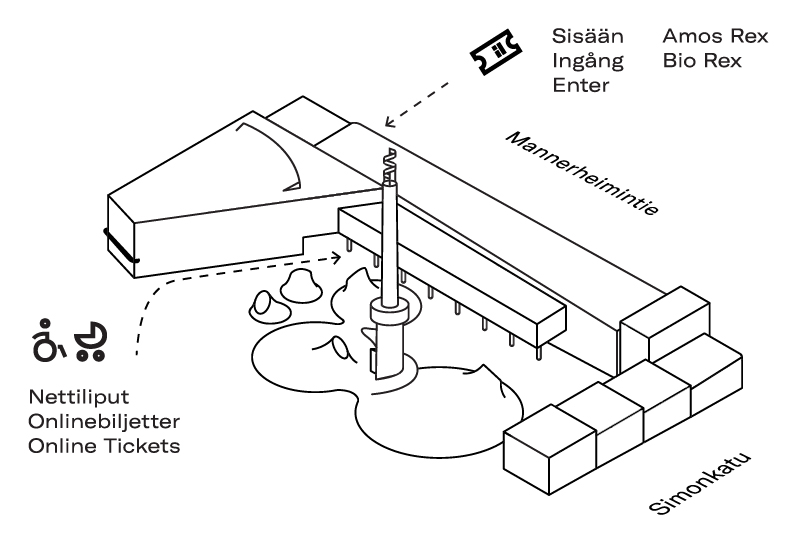
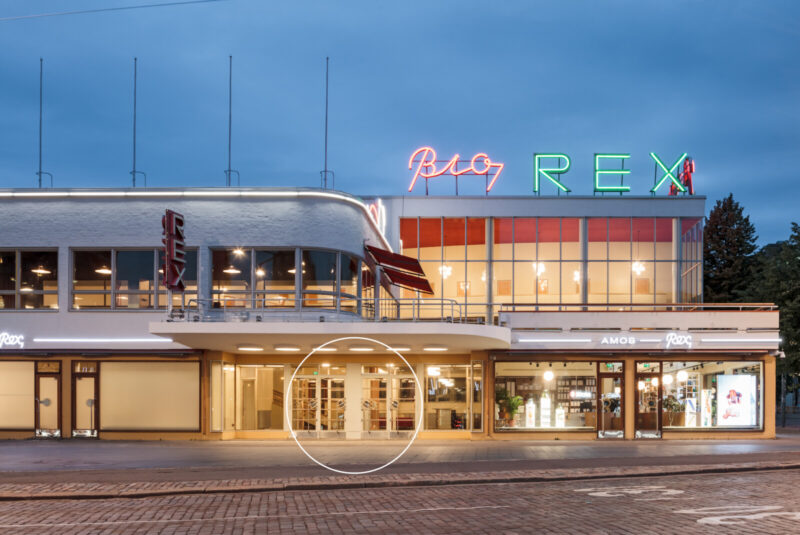
There are three entrances to Amos Rex: two on Mannerheimintie and one on Lasipalatsi Square.
The main entrance on Mannerheimintie is not accessible. The doors are heavy and do not open automatically. The Amos Rex Shop entrance on Mannerheimintie is narrow and also not automatic. Door thresholds are approximately 25 mm high.
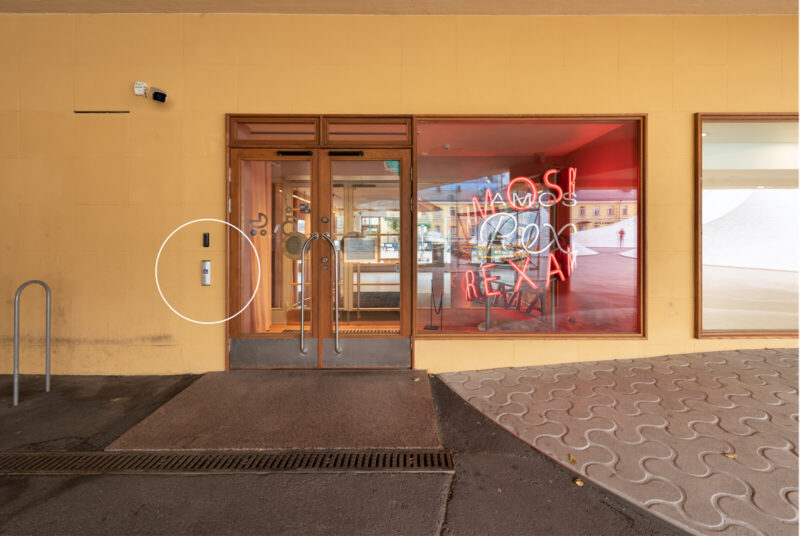
Visitors who need an accessible entrance can find it on the Lasipalatsi Square’s side of the building. The accessible entrance has automatic double doors operated by a button, and the doorway is step-free. The same entrance is also used by guided tour groups, museum professionals with an ICOM card and people with a press card.
If you purchased your ticket online, you can exchange it for an entry sticker at the museum shop, which is easily accessed via the accessible entrance.
Elevators and stairs
There are two elevators located in the lobby next to the museum shop checkout. They are accessible, spacious, and have buttons at an accessible height.
The elevator walls are made of translucent material and are illuminated. Colored lights move but do not flash. A quiet soundscape is also present.
The elevators have doors on both sides, allowing wheelchair users to exit without reversing.
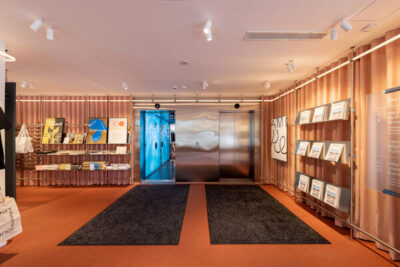
You can also access the exhibition level from street level by elevator.
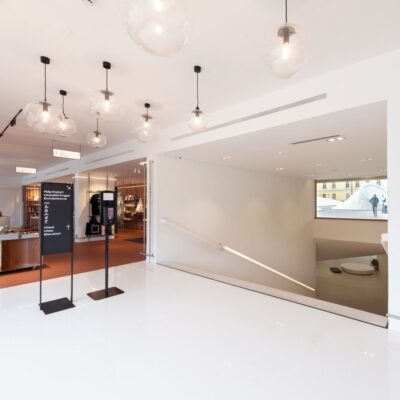
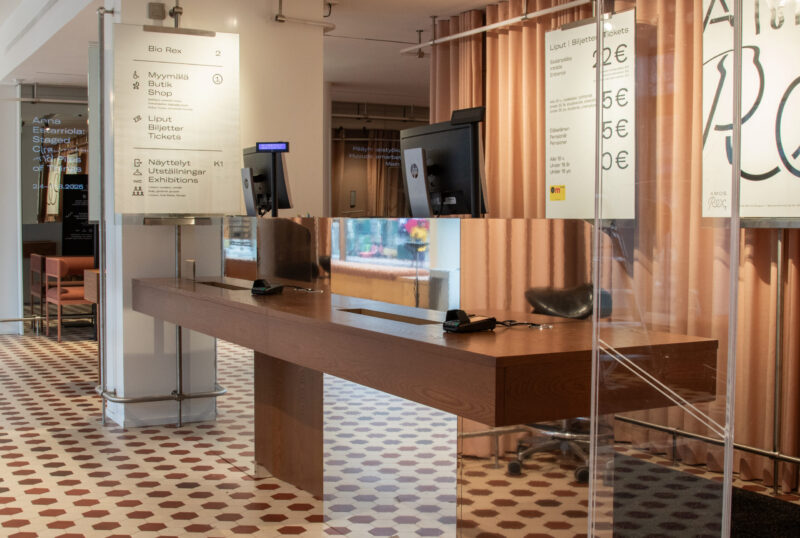
Tickets are sold on-site in the lobby at street level, accessible through the main doors on Mannerheimintie. The ticket desk is located to the left when entering.
If purchasing tickets on-site, ask staff which ticket you need and inform them if you have a Museum Card or qualify for a discount. Prices are available online and at the ticket desk.
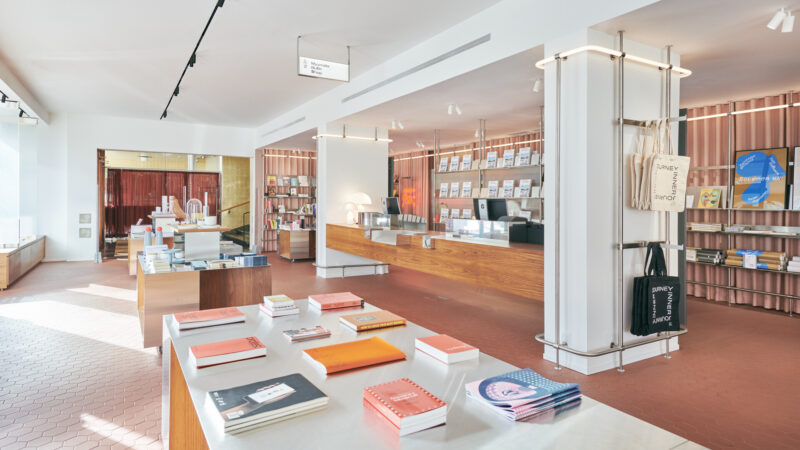
The Amos Rex shop is located at street level. The floor is even, and there are no stairs. The cashier desk is accessible.
From the shop, you can take the elevators or stairs down to the exhibition level (-1 / K1).
If you purchased your ticket online, you can collect your entry sticker at the shop’s counter by showing your QR code.
All exhibition spaces are located underground on level -1 (K1).
There are no stairs or thresholds in the exhibition spaces, and rooms are fully accessible.
The exhibition lobby is bright and light-filled, with natural light entering through a large skylight on sunny days. Exhibition halls are typically darker, creating a strong contrast between the lobby and exhibition spaces.
Self-service cloakroom and lockers
The cloakroom and lockers are located near the exhibition spaces. Lighting is dimmer here than in other parts of the museum.
Lockers come in various sizes. The largest measures 36 (depth) × 44 (width) × 94 cm (height).
Please leave backpacks and large bags in the lockers. Small bags (max. 30 × 20 × 50 cm) may be taken into the exhibition if carried in front or by hand. Tote bags are available for small items.
Lockers are free of charge and operate with a four-digit code of your choice.
To lock a locker:
1. Place your items inside and close the door.
2. Enter your chosen four-digit code and press the arrow button.
3. Ensure the door is locked.
To open, enter the same code again. If you enter the wrong code, press C and start over.
Staff are happy to assist if needed.
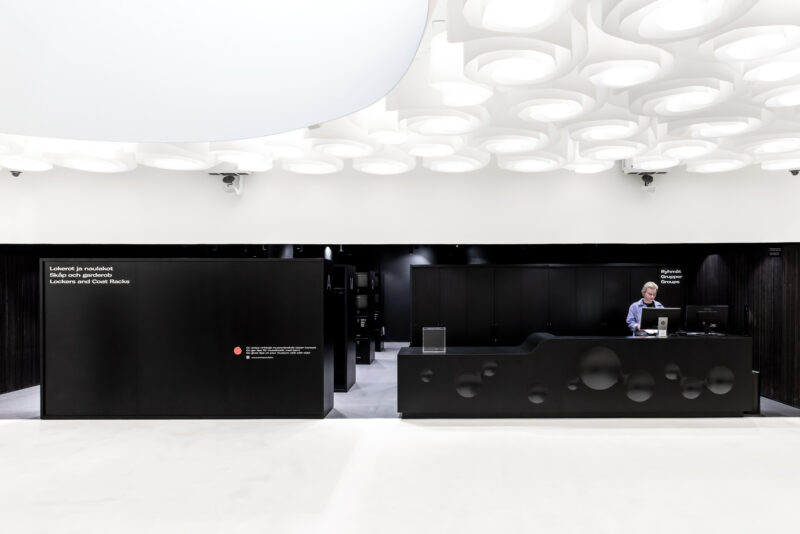
Photo: Stella Ojala
Toilets
Toilets are located on level -1, in the same area as the cloakroom and lockers.
There are two gender-neutral toilets to the left of the lockers. Each includes an accessible toilet at the back.
A separate childcare room with a changing table and potty is located nearby.
There are no toilets on the street-level floor.
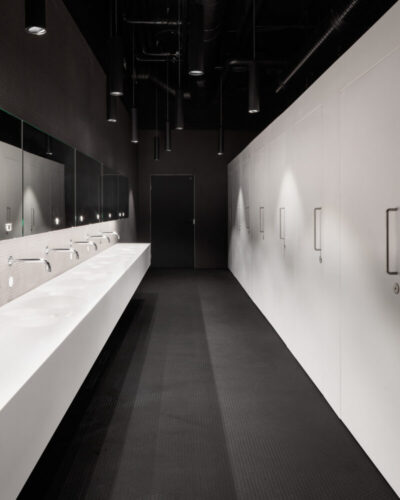
Photo: Tuomas Uusiheimo
Exhibition entrance
Exhibition spaces are accessed through dark sliding doors on level -1 (K1), marked “IN”.
The lobby area is bright, but the exhibition spaces beyond the doors are darker with dim lighting.
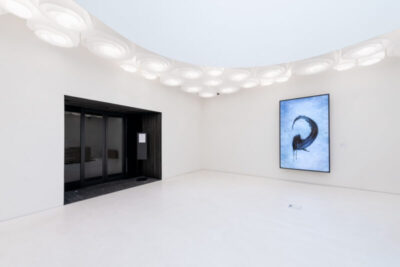
Photo: Sergio Urbina
A staff member is present at the entrance. Please show your entry sticker.
If you have a large bag or restricted item, staff will ask you to store it in a locker before entering. They may also provide guidance on exhibition rules.
Sometimes a Securitas guard is present to assist visitors.
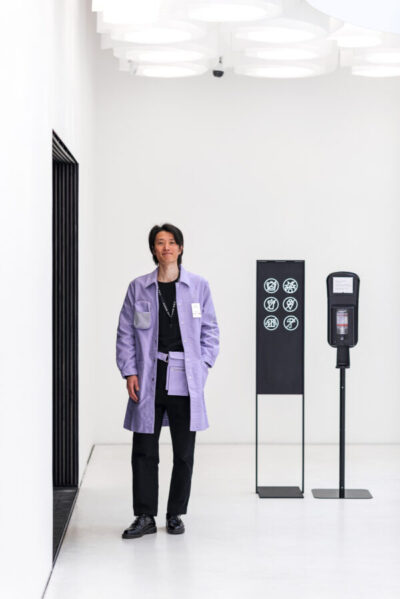
Photo: Sergio Urbina
Exhibition floor
The exhibition floor is made of wood blocks, creating an intentionally uneven surface. This improves acoustics and makes standing more comfortable.
There are also metal plates embedded in the floor, which may make a sound when stepped on. It is safe to walk on them.
Bio Rex is located in the same building as Amos Rex. It is not fully accessible.
Entrance, elevators and stairs
Bio Rex’s entrance is the same as the museum’s main entrance. It is located on the Mannerheimintie side. The doors are heavy and do not open automatically. The door also has a small threshold which is about 2.5 cm high.
An accessible entrance is situated on the Lasipalatsi (Glass Palace) Square side. The accessible entrance’s double doors open automatically when the open button is pushed.
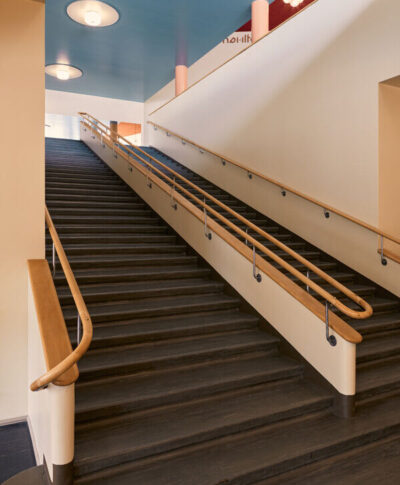
Bio Rex, located on the second floor of the Lasipalatsi, is reached by gently sloping, wide but long staircase. You can find the stairs in the museum ticket hall by the main entrance of Amos Rex. The staircase has handrails in the middle and on the sides.
Bio Rex can be reached with an accessible elevator from the museum lobby, next to the museum shop. After the elevator, there are double doors on the left that are difficult to open. The door also has a small threshold, about 2 cm high. When one of the doors is open, the width of the door opening is about 77 cm. When both doors are open, the width is about 158 cm.
Lobby areas, toilets and terrace
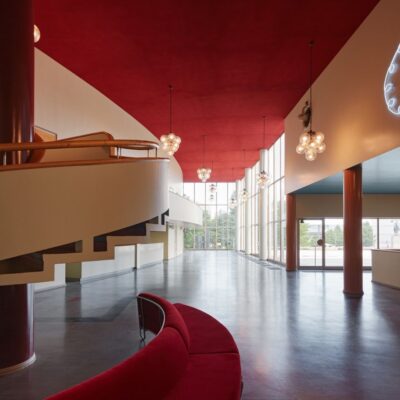
Bio Rex’s lobby has several soft benches and high tables. Some of the benches have backrests.
The only access to Bio Rex’s balcony and boxes in the main hall is via a spiral staircase.
The toilets adjacent to Bio Rex’s foyers are not accessible. There is an accessible toilet on the Lasipalatsi restaurant side of the Bio Rex floor. This toilet is not accessible from the cinema or foyers, because there are doors in between that do not open automatically. It may not always be possible to reach this accessible toilet. When the museum is open, the accessible toilets on the exhibition level (-1) are available to Bio Rex customers.
The door leading out to the Bio Rex terrace has a 6.5-cm threshold. The terrace door is not automatic. The terrace also has a narrow, fixed ramp, which does not however guarantee full accessibility. Leading to the ramp from the terrace door is a passageway that is 96 cm wide. The ramp is 89 cm wide and 220 cm long.
Henry Moore’s sculpture Moon Head is on display in the Bio Rex lobby. When standing, the work is at about eye level, and if seated a bit higher. Access to the sculpture is via the Bio Rex stairs or the accessible lifts, described above.
Hearing support
Bio Rex does not have an induction loop.
Bio Rex auditorium
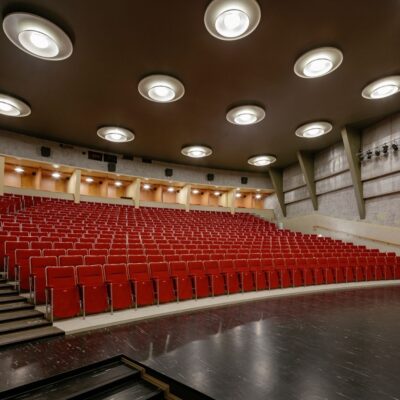
Bio Rex’s hall has an ascending, terraced auditorium. There are wide, gently rising, low steps on the sides of the auditorium. There is a handrail on the stairs. The auditorium seats are upholstered and have armrests. They are traditional cinema seats, in which the seat part must be folded down.
There is access to the stage of the Bio Rex’ cinema from the doors on the side of Lasipalatsi Square/Mauno Koivisto Square. The doors are not automatic and have small thresholds of 3.5 cm and 3 cm high. A few steps lead to the stage, which can be covered by a ramp. The construction of the ramp must be agreed separately.
Accessible space for wheelchairs is located on row 9, where the hall’s seats are removable and arrangeable. Please contact the event organizer before hand, and we can then ensure everything is ready and set for your visit.
The first door leading into the hall has a small 3-cm threshold, but otherwise access to the hall is unobstructed.
Support and services at the museum
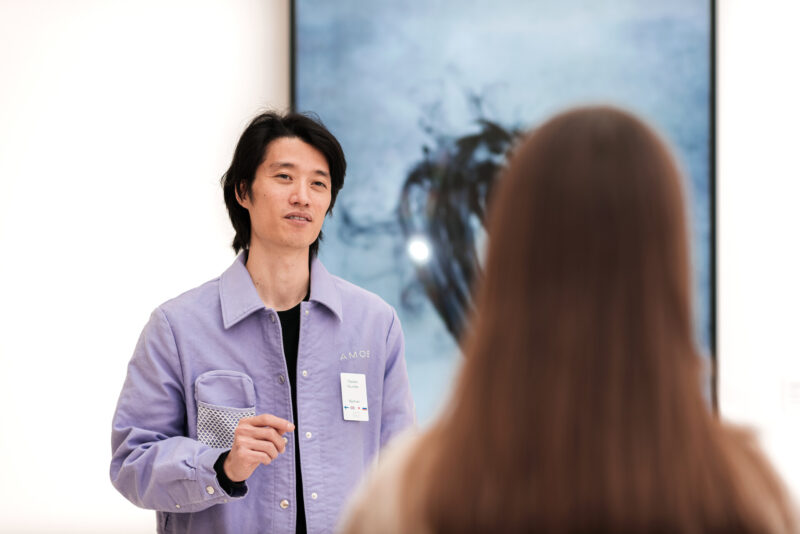
You will encounter our staff throughout the museum. They are available to help with questions related to accessibility, exhibitions, facilities, or your visit. You can approach them at any time.
A range of staff work at Amos Rex, including customer service staff, discussion guides, freelance guides, security personnel, and cleaners. Staff are present in exhibition spaces, lobbies, the square, and the museum shop, and they have a good overall understanding of the museum’s exhibitions, spaces, and events, as well as the Lasipalatsi block.
You can borrow a lightweight wheelchair, rollator, or stroller for the duration of your visit. Please ask staff about availability.
You can also borrow a tote bag for small items or an OU cushion for children.
Lightweight folding stools are available, and there are also benches in the exhibition.
Hearing protectors are available to borrow, please ask staff if you need them.
You are welcome to take a break at any time during your visit. Seating is available both in the exhibition spaces and in the lobby areas.
If you experience sensory overload, you can move to the accessible toilet near the cloakroom on the exhibition level to calm down. The accessible toilet is located at the back of the gender-neutral toilet.
Please ask staff for assistance, they will guide you to the appropriate space.
Exhibition content and sensory experience
This section provides information about the content advisories, sensory environment, and accessibility of the current exhibition.
Generation 2026 is a group exhibition featuring 50 artists and collectives.
The works must not be touched, with the exception of participatory works. Participatory works are marked with the Participatory symbol.
The exhibition includes performance art works that can only be seen at certain times.
The exhibition contains one work that is not suitable for children. For visitors with children, we recommend Amos Rex for kids, where you will find tips for your visit.
Amos Rex collaborates with Kynnys ry and Kaiao on accessibility work. An accessibility survey and a sensory walk are carried out for the exhibitions.
This work is not suitable for children.
Age recommendation: 18 and over.
The work can be experienced by one person at a time.
The audio of this work contains detailed depictions of violence and addresses domestic and sexual violence, abuse, and suicide.
Love Box is a sound work situated in a small room, which is entered through a door. The work is intended to be felt throughout the body and to provoke feelings of discomfort in the listener. Sound emanates from every corner of the small room, and a further sound comes from the centre of the space, directed straight at the listener. Inside the room it is dark, and in the middle of the space there is a chair.
A rope hangs from the ceiling with a noose tied at its end. The rope connects to the work’s broader social dimension. The artists invoke the writer and philosopher Albert Camus’s idea of collective suicide. In his work, The Rebel, first published in 1951, Camus writes about the significance of revolt for human action and morality. In his view, a society indifferent to violence, murder, and suicide destroys itself – committing collective suicide. Through their work, the artists call into question the normalisation of violence and the passivising nature of artificial intelligence. Our current society fails to protect individuals from the violent imagery that recurs online, or to restrict violent speech. If there is no need to exercise one’s own critical thinking, what remains of us?
The sound work lasts one hour. It consists of short, personal narratives about various forms of psychological violence, read aloud by different voices – human and AI. The influence of the internet and AI can be discerned behind each of the narratives. Interspersed among them are violent sounds, including gunfire from a video game and the death rattle of a sick animal.
If you need help:
- MIELI Mental Health Finland’s Crisis Helpline is available around the clock. You can call anonymously and confidentially. In English: 09 2525 0116 (Fridays 9 am–1 pm) In Finnish: 09 2525 0111 (24/7) In Swedish: 09 2525 0112 (Mon & Wed 4–8 pm, Tue, Thu & Fri 9 am–1 pm)
- In an emergency, call 112. The advisory out-of-hours medical helpline 116 117 is available in many hospital districts.
- If you are at school or in further education, you can ask for help from your school’s psychologist, counsellor, or school nurse.
- For young people (aged 12–29) Sekasin chat and Sekasin Gaming (Available in Finnish and Swedish. English-language chat is not currently available.) (Finnish chat: Mon–Fri 9 am–midnight, Sat–Sun 3–midnight. Swedish chat: daily 3–7 pm)
- For children in English and Swedish (aged 7–12) hjalpen.fi / SOS Children’s Villages (Sun–Wed 2–6 pm) For children in Finnish (aged 7–15) apuu.fi / SOS Children’s Villages (daily 9 am–10 pm)
- WhatsApp chat (aged 13–21) tel. +358 50 313 5160 / Save the Children’s nettinuorisotalo Netari (in Finnish, Sun–Fri 6–8 pm) Netari is also on TikTok.
- For under-25s Nuorten Tukilinja for those in acute need of support / MLL In Finnish: 116 111 (every evening 8 pm–midnight) (No English-language phone service available)
- For aged 12–29: crisis support via the Nettiturvis service (by appointment, available in Finnish, Swedish and English) / Finnish Red Cross
- For adults MIELI Crisis Chat (by appointment via tukinet.fi, available in English)
- For parents and guardians vanhemmuudenapuu.fi / SOS Children’s Villages (in Finnish, daily 5–10 pm) Vanhempainnetti / MLL (in Finnish)
The work is an interactive projection that is six meters wide and is displayed on a wall. The work contains flashing images.
The work is an installation consisting of a room, a sound piece, and diary entries. The English-language sound piece, listened to through headphones, deals with difficult childhood experiences with references to abuse. The sound piece is also available as text in the space in Finnish, Swedish and English. The texts in the diary on the table address topics such as substance dependency and sex, and mention suicide. The diary is in English.
Some of the interview videos in the work address queerphobia.
The game contains strong colours and contrasts.
The video work briefly shows naked people.
Autism-Friendly descriptions of the performance artworks
We aim to describe the performance artworks in the Generation 2026 exhibition as accurately as possible, but the actual course of a performance may differ slightly from the description. Performance art can change at the last minute, and individual performances may vary somewhat from one another.
The descriptions have been produced in collaboration with consultant Saara Reiman.
Some of the performance artworks take place in the exhibition galleries, others in the lower foyer or elsewhere in Amos Rex. The exact location is given in the detailed description of each work.
Inside the Generation 2026 exhibition, there is an open performance space at the centre, with a dance floor in the middle. Rising tiered seating surrounds the floor, where the audience can sit. Depending on the performance, there may also be objects in the space such as cushions and props. The floor of the exhibition space and the audience seating are made from colourful recycled rubber material. The dance floor is black. A skylight lets natural light into the space. It is also possible to stand in the space, and to leave at any point during a performance.
In the lower foyer of Amos Rex, there is a work by Paavo Kärki titled Crowd Control. It is an artwork made up of fence-like elements and is part of the exhibition rather than one of the performance artworks.
Visitors to Amos Rex are welcome to borrow earmuffs from the group services desk in the lower foyer – please ask a member of staff for more information.
All performances can be attended with a same-day museum ticket. No advance booking is required.
DANCE OF SILENCE
Duration: 15-20 min
Schedule:
27 May at 6 pm
4 July at 1 pm
12 Aug at 5 pm
In this performance, the artist explores her Nigerian heritage through dance. Dance holds great importance in Nigerian culture. She dances through the exhibition space in a costume she has made and crocheted herself. The skirt of the costume combines crocheted sections with traditional Nigerian fabric and features beads that make a sound as the artist moves. There is no other background music or accompaniment.
The work begins in the museum’s foyer. The artist marks her path on the floor with flower petals (artificial). The audience follows along with her and is welcome to join in the dancing. The path leads through the exhibition space.
A performance for two
Schedule:
Part 1: 23 May at 1 pm, duration 4 h 30 min
Part 2: 27 May at 4 pm, duration 15 min
Part 3: 10 June at 6 pm, duration 45 min
Part 4: 19 Aug at 5 pm, duration 1 h
The work is a performance in four parts, each presented only once. The chairs and table made by the artist are on display in the exhibition gallery throughout the entire exhibition. The tape figure constructed in the first part remains seated on the chair until the fourth part’s performance.
Part 1
The first part lasts 4 hours and 30 minutes. During this time, the artist constructs a life-size figure made fxgrom tape, and visitors can watch it take shape.
The artist does not interact with the audience. Handling the tape produces rustling and crackling sounds. Museum visitors are free to come and go, and to check on the progress of the artist’s work during their visit.
Part 2
In the second part, the artist holds a conversation with the tape figure. The artist speaks, and the tape figure has its own pre-recorded lines.
Part 3
In this part, there is a vintage tape recorder with a long tape running through it. During the performance, the artist destroys the tape by sanding it with sandpaper, causing the sound to become progressively more grainy and distorted, until the tape eventually snaps and breaks. Finally, the artist cuts a mouth into the tape figure and places the broken tape inside it.
Part 4
In the fourth and final part, a bowl containing an extremely long noodle has been placed inside the tape figure, with the noodle emerging from the figure. The artist eats this noodle. The eating takes approxim ately 40–50 minutes. Having finished, the artist tapes themselves inside the figure and dances out of the museum space. The tape figure is left behind and comes apart during the dance.
In this part, the artist eats. The sounds of eating may be a sensory challenge for those with misophonia. Earplugs or earmuffs may help.
The work can be followed for just part of the performance time, and you are free to leave whenever you wish.
Sulaminen
Duration: 15 + 35 min
Schedule:
3 June at 6 pm
12 Aug at 6 pm
The work explores inherited trauma, particularly the wartime trauma experienced by the artist’s grandparents. The performance is dance-based and takes place in the museum’s lower foyer.
Fifteen minutes before the dance performance begins, the artist builds an altar in the foyer. On the altar are placed a reindeer jawbone, pieces of reindeer antler, lava from Italy, a rabbit named Kaapo, a candle from a friend’s grave, a piece of jewellery that serves as the artist’s personal so-called totem, another piece of jewellery that forms part of the costume, an amber earring, two earrings of deep personal significance, two stones from Malta, and one stone from Ruka. The costume also includes a headpiece and a hand-forged iron Hannunvaakuna (Saint Hannes cross) pendant.
The artist’s performance costume is a dark red dress with black shoes and jewellery.
At the start of the work, the artist gives a piece of reindeer antler to a member of the audience. Threads are attached to it, and the artist braids these together. The performance itself is dance-based, and the dance section lasts approximately 35 minutes. The dance is accompanied by a soundscape that includes natural sounds. The soundscape may be challenging for those who are sensitive to natural sounds. Earplugs or earmuffs may help.
At the close of the work, the artist repeats a mantra and hopes the audience will join in.
Rituals for living with
Duration: 60 min
Schedule:
15 Aug at 4 pm
19 Aug at 6 pm
The exhibition includes a permanent sound installation made up of metal plates that produce ambient sound. For the performance, the installation is moved close to the performance space in the exhibition galleries.
The work consists of text, performance, and a sound piece. The text is presented in Finnish in the exhibition space on a long piece of fabric and in a printed booklet.
The performance is dance-based. The performer dances in the performance space dressed in black. The soundscape accompanying the dance is mostly ambient in character but varies somewhat. The work uses a rustling plastic tarpaulin as a prop, which can produce loud sounds. Visitors with sensitive hearing may wish to use earmuffs or earplugs.
SOFT BLAST vol. 2
Duration: max 30 min
Schedule:
18 May at 6 pm
23 May at 12 pm
19 Aug at 4 pm
The work begins at the top of the stairs leading to the lower foyer, from where the artist dances through the foyer and leads the audience to the performance space at the centre of the exhibition galleries. There, she changes costume before beginning the second dance section. The work ends when the artist leaves the space. The introduction features classical music, which then transitions into soft instrumental pop.
Act of Becoming a Ghost
Duration: approximately 30 min
Schedule:
5 Aug at 6 pm
12 Aug at 4 pm
15 Aug at 2 pm
“If you were a ghost, performing might feel less nerve-wracking.”
This is a solo work performed by Leo Terävä. Sound designer Aliina Kemppainen does not perform but is present during the performance.
The work begins in the museum’s lower foyer. At the start, the artist invites the audience to join in small, playful tasks, such as blowing soap bubbles. If you would prefer not to participate, you can indicate this by placing your hands behind your back, and the artist will not attempt to involve you. In the first part, the performer occasionally speaks into a microphone. Most of the performance, however, consists of dance movement.
From the foyer, everyone moves together to the performance space in the exhibition galleries, where the second part of the performance takes place. Cushions are arranged on the floor around the dance mat, and Kemppainen is seated there at this point. The second part consists primarily of dance movement.
Any sound at the beginning will be quiet and ambient. The sound throughout is calm, building to a climax at the moment when Leo becomes a ghost. The work may also be accompanied by a live instrument.
Under This Table
Duration: 50 minutes, approximately 10–15 minutes per visitor
Schedule:
27 May at 5 pm
5 Aug at 5 pm
“The need to be seen is just as strong as the desire to hide.”
A table is on permanent display in the exhibition, beneath which the performance takes place on two occasions during the exhibition period. It is a fairly large dining table with a patterned tablecloth that reaches the floor, creating a tent-like space underneath. Vases of dried flowers sit on top of the table. The artist is dressed in neutral, everyday clothes.
The work can be experienced by one person at a time, meaning only a few visitors can take part within the 50 minutes. Museum staff will guide each participant and explain how to participate. Both the artist and the participant lie down on the floor with their heads under the tablecloth. They are simultaneously visible and invisible to everyone except each other. Under the table, they may make eye contact or chat, but this is not required; simply being there is enough. You may look as closely as you like, but please do not touch the artist.
Participants decide for themselves when they are ready to come out. Museum staff are present throughout, provide instructions, and ensure the safety of participants.
The artist imagines the time might be spent in conversation or shared silence. The experience is created by the visitor and the artist sharing a small space under the table for a moment – hidden, yet seen by each other.
The work can also be observed from a distance during performance times, for those who do not wish to participate by going under the table with the artist.
Interweaved
Duration: 15-20 min
Schedule:
18 May at 5 pm
5 Aug at 4 pm
15 Aug at 1 pm
In this dance work, the artist explores how the fabrics, materials, cuts, and colours of clothing affect how the wearer moves and navigates space. The artist wears a different costume at each performance. One performance includes musician Elia Lombardini, who plays the electric violin. They use effects in their music, and the volume can become quite loud. Visitors with sensitive hearing are advised to use earplugs or earmuffs.