
Accessibility

Amos Rex is an autism-friendly destination. Each year, we implement at least one new initiative to improve autism accessibility.
In Brief
An accessible entrance is located on Lasipalatsi Square.
All exhibition spaces are on level -1 (K1) and can be accessed by elevator.
Accessible toilets are located on the exhibition level.
Visitors holding an EU Disability Card can purchase an admission ticket for €5. Personal assistants are admitted free of charge.
Guide dogs are welcome.
Seating and a wheelchair are available to borrow at the museum.
Detailed information is provided in the sections below.
If you have any questions about visiting the exhibition or attending events, you can contact us at:
Before your visit
You can purchase tickets in advance online or on-site at the museum.
Tickets are sold in the street-level lobby. Our staff are happy to assist you with purchasing your ticket. Please let us know if you have a Museum Card or are eligible for any discounts. You can also find the full ticket price list on the Tickets page.
We accept debit and credit cards, cash, cultural benefit payments, and the Museum Card.
If you have purchased your ticket online in advance, you will receive an entry sticker at the museum upon arrival by showing your QR code to staff at the ticket desk.
- Our staff are here for you—please feel free to ask them for assistance.
- For safety reasons, do not touch artworks or exhibition structures unless explicitly instructed to do so. Works that may be touched are clearly marked.
- Food and drinks are not allowed in exhibition spaces to protect the artworks. You may eat your own snacks in the lobby areas, ask our staff for more information. Breastfeeding and bottle-feeding are allowed throughout the museum, including exhibition spaces. Please use benches where possible.
- Please leave backpacks and bags in the lockers. Small bags (max. 30 × 20 × 50 cm) that can be carried in front or by hand may be taken into the exhibition. Tote bags for small items are also available.
- Photography and video recording are allowed without flash. Please be mindful of other visitors. Professional equipment and commercial photography require a permit, please contact Amos Rex communications in advance.
- Children under 12 must be accompanied by an adult in exhibition spaces.
The Amos Rex ticket lobby is located at street level. All exhibition spaces are on level -1 (K1).
You may stay in the museum as long as you wish during opening hours.
Visitor numbers vary throughout the day. Weekday evenings are usually quieter, while weekends tend to be busier.
If you would like more information about accessibility, facilities, or visitor numbers, please contact our service advisor:
Pamela Frankenhaeuser
+358 50 305 0941
(Mon, Wed, Thu, Fri 11 am – 4 pm)
Getting around Amos Rex
Entrances
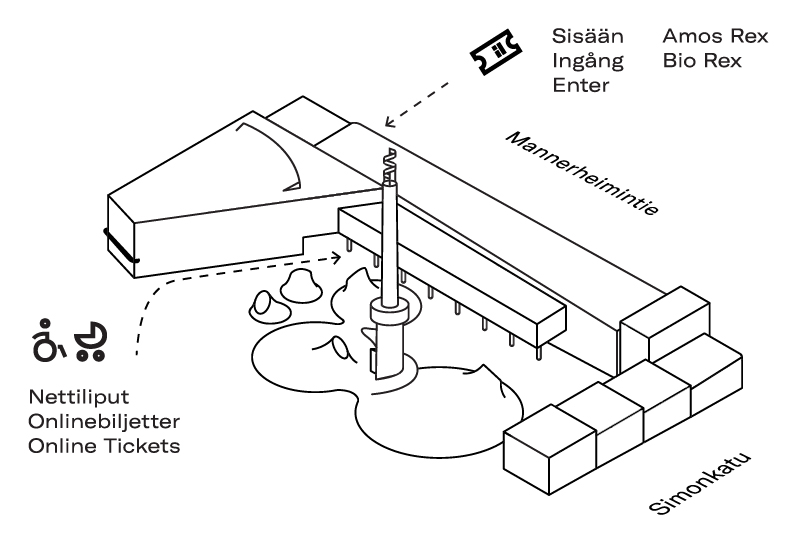
There are three entrances to Amos Rex: two on Mannerheimintie and one on Lasipalatsi Square.
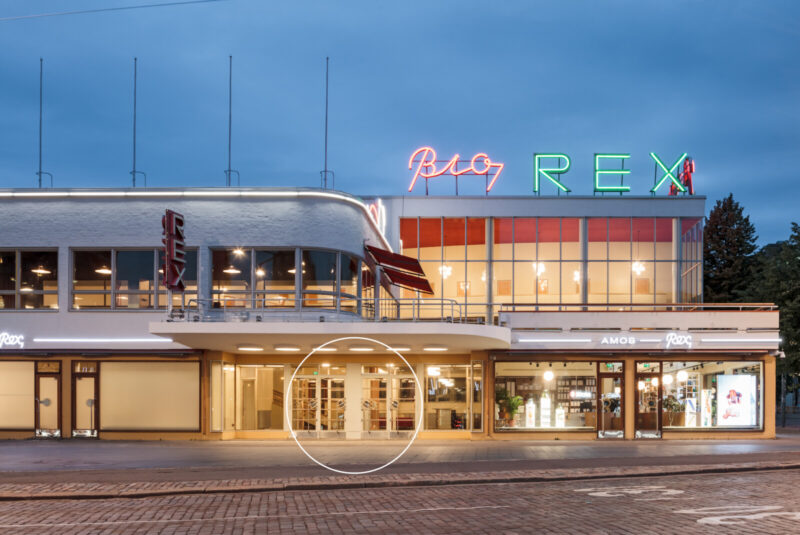
The main entrance on Mannerheimintie is not accessible. The doors are heavy and do not open automatically. The Amos Rex Shop entrance on Mannerheimintie is narrow and also not automatic. Door thresholds are approximately 25 mm high.
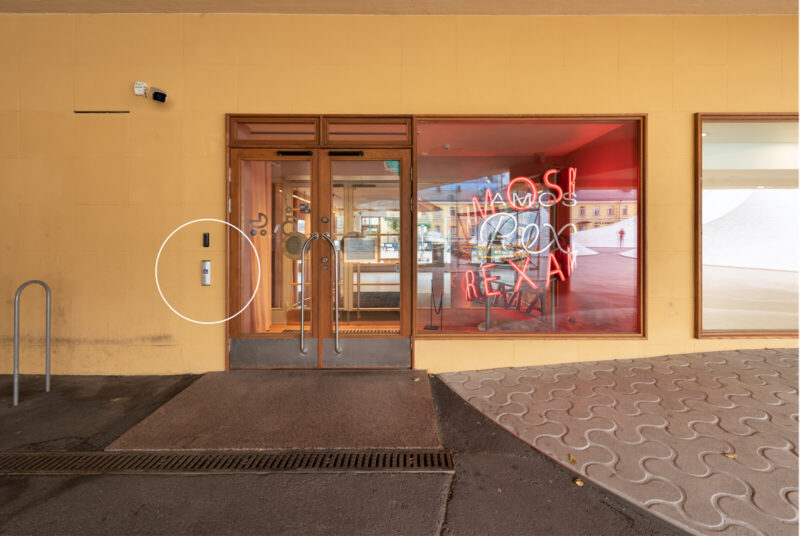
Visitors who need an accessible entrance can find it on the Lasipalatsi Square’s side of the building. The accessible entrance has automatic double doors operated by a button, and the doorway is step-free. The same entrance is also used by guided tour groups, museum professionals with an ICOM card and people with a press card.
If you purchased your ticket online, you can exchange it for an entry sticker at the museum shop, which is easily accessed via the accessible entrance.
Elevators
There are two elevators located in the lobby next to the museum shop checkout. They are accessible, spacious, and have buttons at an accessible height.
The elevator walls are made of translucent material and are illuminated. Colored lights move but do not flash. A quiet soundscape is also present.
The elevators have doors on both sides, allowing wheelchair users to exit without reversing.
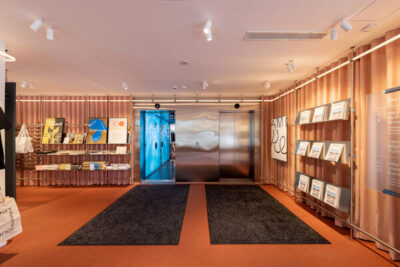
You can also access the exhibition level from street level by elevator.
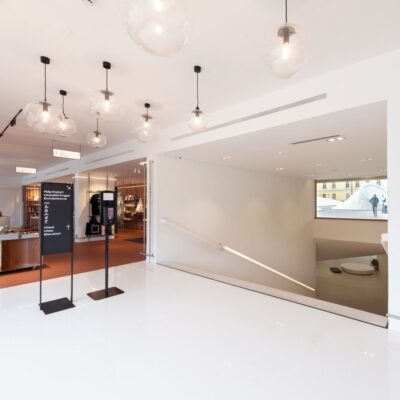
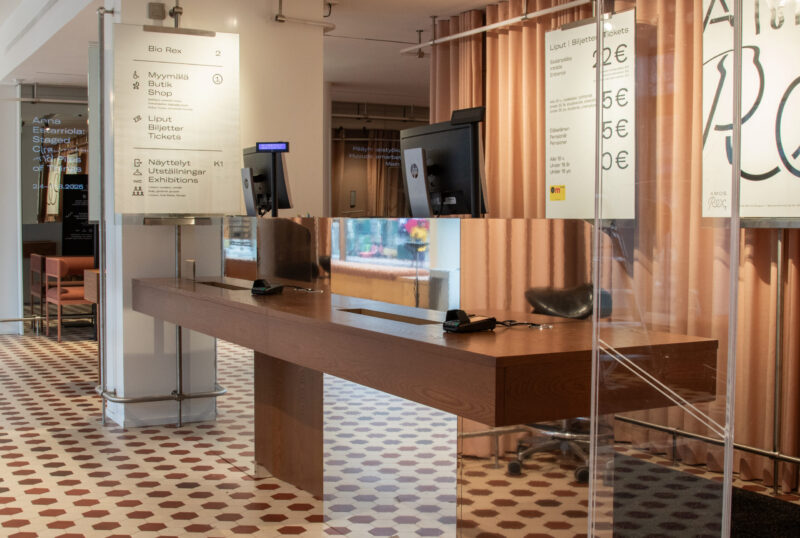
Tickets are sold on-site in the lobby at street level, accessible through the main doors on Mannerheimintie. The ticket desk is located to the left when entering.
If purchasing tickets on-site, ask staff which ticket you need and inform them if you have a Museum Card or qualify for a discount. Prices are available online and at the ticket desk.
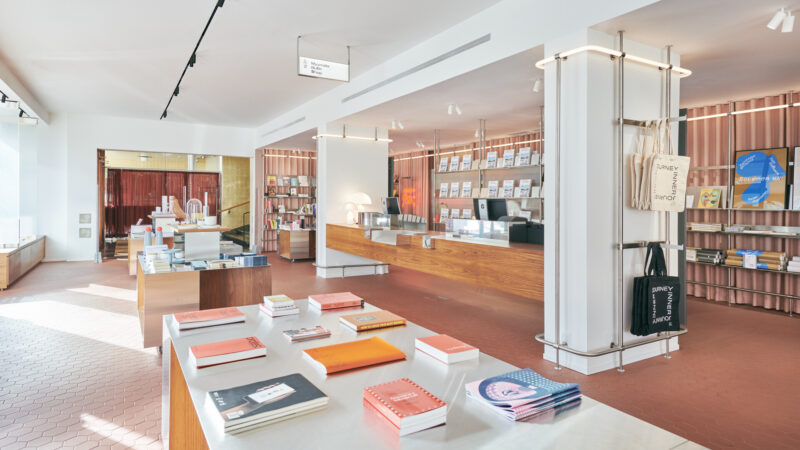
The Amos Rex shop is located at street level. The floor is even, and there are no stairs. The cashier desk is accessible.
From the shop, you can take the elevators or stairs down to the exhibition level (-1 / K1).
If you purchased your ticket online, you can collect your entry sticker at the shop’s counter by showing your QR code.
The museum shop also sells perfumes.
All exhibition spaces are located underground on level -1 (K1).
There are no stairs or thresholds in the exhibition spaces, and rooms are fully accessible.
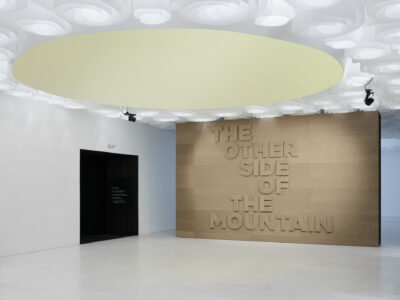
The exhibition lobby is bright and light-filled, with natural light entering through a large skylight on sunny days. Exhibition halls are typically darker, creating a strong contrast between the lobby and exhibition spaces.
Self-service cloakroom and lockers
The cloakroom and lockers are located near the exhibition spaces. Lighting is dimmer here than in other parts of the museum.
Lockers come in various sizes. The largest measures 36 (depth) × 44 (width) × 94 cm (height).
Please leave backpacks and large bags in the lockers. Small bags (max. 30 × 20 × 50 cm) may be taken into the exhibition if carried in front or by hand. Tote bags are available for small items.
Lockers are free of charge and operate with a four-digit code of your choice.
To lock a locker:
1. Place your items inside and close the door.
2. Enter your chosen four-digit code and press the arrow button.
3. Ensure the door is locked.
To open, enter the same code again. If you enter the wrong code, press C and start over.
Staff are happy to assist if needed.
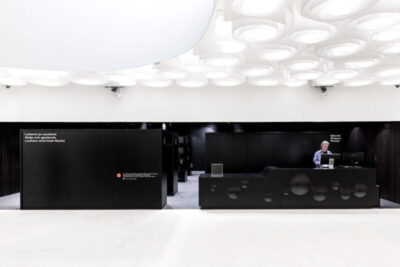
Photo: Stella Ojala
Toilets
Toilets are located on level -1, in the same area as the cloakroom and lockers.
There are two gender-neutral toilets to the left of the lockers. Each includes an accessible toilet at the back.
A separate childcare room with a changing table and potty is located nearby.
There are no toilets on the street-level floor.
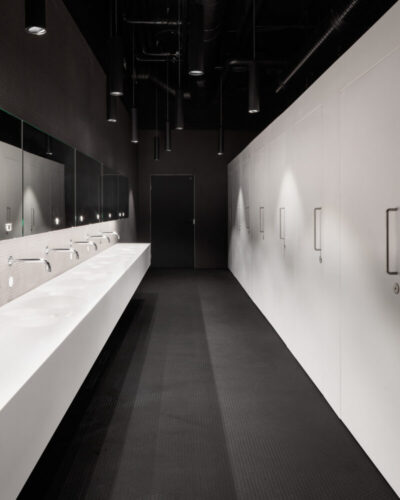
Photo: Tuomas Uusiheimo
Exhibition entrance
Exhibition spaces are accessed through dark sliding doors on level -1 (K1), marked “IN”.
The lobby area is bright, but the exhibition spaces beyond the doors are darker with dim lighting.
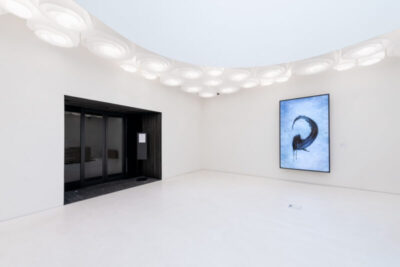
Photo: Sergio Urbina
A staff member is present at the entrance. Please show your entry sticker.
If you have a large bag or restricted item, staff will ask you to store it in a locker before entering. They may also provide guidance on exhibition rules.
Sometimes a Securitas guard is present to assist visitors.
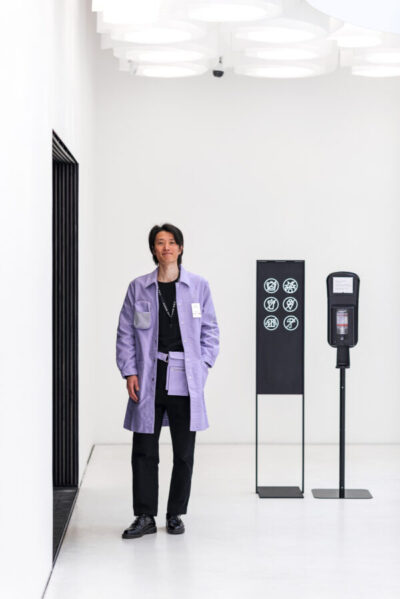
Photo: Sergio Urbina
Exhibition floor
The exhibition floor is made of wood blocks, creating an intentionally uneven surface. This improves acoustics and makes standing more comfortable.
There are also metal plates embedded in the floor, which may make a sound when stepped on. It is safe to walk on them.
Bio Rex is located in the same building as Amos Rex. It is not fully accessible.
Entrance, elevators and stairs
Bio Rex’s entrance is the same as the museum’s main entrance. It is located on the Mannerheimintie side. The doors are heavy and do not open automatically. The door also has a small threshold which is about 2.5 cm high.
An accessible entrance is situated on the Lasipalatsi (Glass Palace) Square side. The accessible entrance’s double doors open automatically when the open button is pushed.
Bio Rex, located on the second floor of the Lasipalatsi, is reached by gently sloping, wide but long staircase. You can find the stairs in the museum ticket hall by the main entrance of Amos Rex. The staircase has handrails in the middle and on the sides.
Bio Rex can be reached with an accessible elevator from the museum lobby, next to the museum shop. After the elevator, there are double doors on the left that are difficult to open. The door also has a small threshold, about 2 cm high. When one of the doors is open, the width of the door opening is about 77 cm. When both doors are open, the width is about 158 cm.
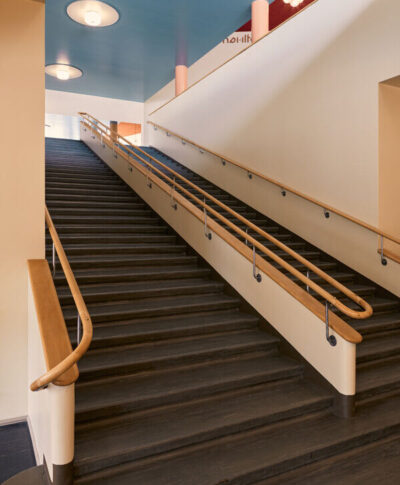
Lobby areas, toilets and terrace
Bio Rex’s lobby has several soft benches and high tables. Some of the benches have backrests.
The only access to Bio Rex’s balcony and boxes in the main hall is via a spiral staircase.
The toilets adjacent to Bio Rex’s foyers are not accessible. There is an accessible toilet on the Lasipalatsi restaurant side of the Bio Rex floor. This toilet is not accessible from the cinema or foyers, because there are doors in between that do not open automatically. It may not always be possible to reach this accessible toilet. When the museum is open, the accessible toilets on the exhibition level (-1) are available to Bio Rex customers.
The door leading out to the Bio Rex terrace has a 6.5-cm threshold. The terrace door is not automatic. The terrace also has a narrow, fixed ramp, which does not however guarantee full accessibility. Leading to the ramp from the terrace door is a passageway that is 96 cm wide. The ramp is 89 cm wide and 220 cm long.
Henry Moore’s sculpture Moon Head is on display in the Bio Rex lobby. When standing, the work is at about eye level, and if seated a bit higher. Access to the sculpture is via the Bio Rex stairs or the accessible lifts, described above.
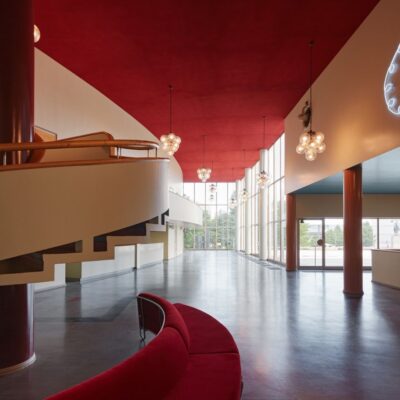
Hearing support
Bio Rex does not have an induction loop.
Bio Rex auditorium
Bio Rex’s hall has an ascending, terraced auditorium. There are wide, gently rising, low steps on the sides of the auditorium. There is a handrail on the stairs. The auditorium seats are upholstered and have armrests. They are traditional cinema seats, in which the seat part must be folded down.
There is access to the stage of the Bio Rex’ cinema from the doors on the side of Lasipalatsi Square/Mauno Koivisto Square. The doors are not automatic and have small thresholds of 3.5 cm and 3 cm high. A few steps lead to the stage, which can be covered by a ramp. The construction of the ramp must be agreed separately.
Accessible space for wheelchairs is located on row 9, where the hall’s seats are removable and arrangeable. Please contact the event organizer before hand, and we can then ensure everything is ready and set for your visit.
The first door leading into the hall has a small 3-cm threshold, but otherwise access to the hall is unobstructed.
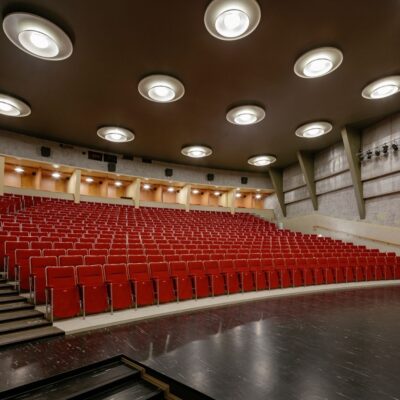
Support and services at the museum
You will encounter our staff throughout the museum. They are available to help with questions related to accessibility, exhibitions, facilities, or your visit. You can approach them at any time.
A range of staff work at Amos Rex, including customer service staff, discussion guides, freelance guides, security personnel, and cleaners. Staff are present in exhibition spaces, lobbies, the square, and the museum shop, and they have a good overall understanding of the museum’s exhibitions, spaces, and events, as well as the Lasipalatsi block.
You can borrow a lightweight wheelchair, rollator, or stroller for the duration of your visit. Please ask staff about availability.
You can also borrow a tote bag for small items or an OU cushion for children.
Lightweight folding stools are available, and there are also benches in the exhibition.
Hearing protectors are available to borrow, please ask staff if you need them.
You are welcome to take a break at any time during your visit. Seating is available both in the exhibition spaces and in the lobby areas.
If you experience sensory overload, you can move to the accessible toilet near the cloakroom on the exhibition level to calm down. The accessible toilet is located at the back of the gender-neutral toilet.
Please ask staff for assistance, they will guide you to the appropriate space.
Exhibition content and sensory experience
This section provides information about the content advisories, sensory environment, and accessibility of the current exhibition.
The works must not be touched, with the exception of participatory works. Participatory works are marked with the Participatory symbol.
Amos Rex collaborates with Kynnys ry and Kaiao on accessibility work. An accessibility survey and a sensory walk are carried out for the exhibitions.
- The work has a petrol-like smell.
- The work is in its own room. The room is marked on the exhibition map. You do not have to go into the room.
- The work is in the museum staircase. The staircase goes down from street level to the exhibition floor.
- The work has sharp needles. Do not touch the work.
- The handrail keeps you at a safe distance from the work.
- The work also contains rubber. The work smells of rubber.
- If you want to avoid the work, you can take the lift down to the exhibition floor.